How Do You Adjust a Recipe to Your Taste?
Published measures are a starting point rather than an instruction. Adjusting properly means moving one thing at a time in steps you can taste.
By Drink Recipes Team
4 Aug 2026

Jigger sizes, ml to oz conversions and the handful of ratios most cocktails are built on.
Published measures are a starting point rather than an instruction. Adjusting properly means moving one thing at a time in steps you can taste.
The same word means different volumes in different places. Four differences account for most of the confusion in international recipes.
Kitchen equipment covers most cocktail measures with a little arithmetic. It is slower and less accurate than a jigger, and far better than guessing.
A cocktail served up should come to around 110ml. If yours fill a 250ml glass, something has gone wrong before the ice went in.
A cocktail in a small glass can carry as much alcohol as a strong pint. The calculation takes ten seconds and is worth knowing.
Parts, wineglasses and pony measures all appear in old books. Converting them is straightforward once you know what each one was.
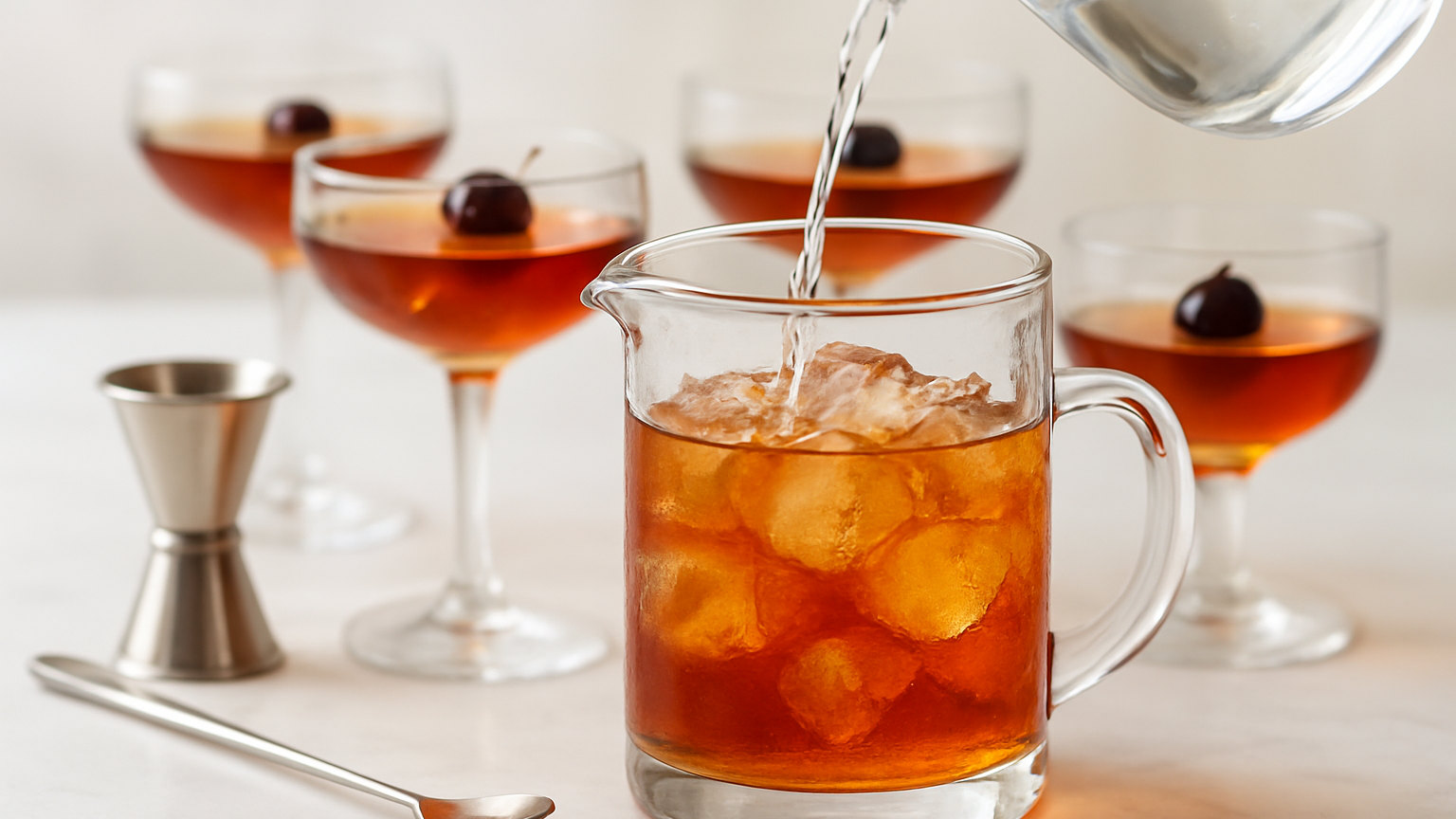
Multiplying the ingredients is the easy part. The missing ingredient is water, and leaving it out is why batched drinks taste harsh.
UK bars serve 25ml or 35ml singles by law. Cocktail recipes use neither, which is why a home-made drink is often stronger than expected.
A dash is roughly 0.8ml, which sounds too small to matter. In a spirit-forward drink it is the difference between finished and unfinished.
A bar spoon is about 5ml, and about is doing real work in that sentence. Where it matters and where it does not is worth knowing.
Three structures account for most of a bar list. Recognising which one you are making tells you immediately what to adjust when it tastes wrong.
American recipes work in ounces and most European ones in millilitres. Five conversions cover nearly everything, and one of them trips people up.
Five quantities cover almost every classic cocktail. Learning them means most recipes stop needing to be looked up at all.