
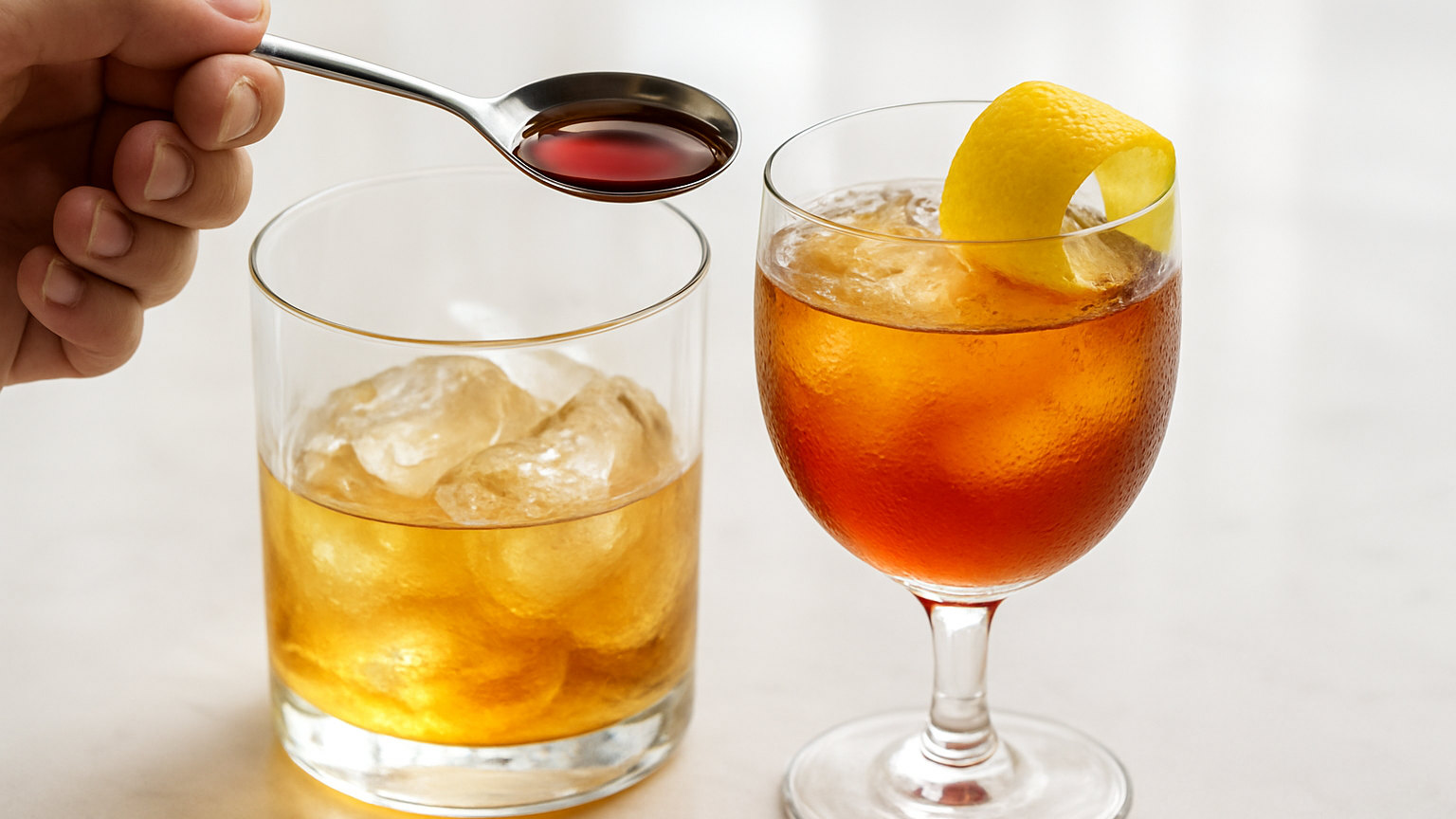
Recipes call for a bar spoon of syrup, a bar spoon of maraschino, half a bar spoon of absinthe. It reads like a precise instruction and it is closer to a convention, since bar spoons are not manufactured to any standard volume.
How much does one actually hold?
Around 5ml, which is the same as a metric teaspoon. That is the figure recipes assume.
In practice they range from about 2.5ml to about 7ml depending on the maker and the design. A shallow twisted spoon holds noticeably less than a deeper one, and the difference is enough to matter in a drink using two or three of them.
When does the variation matter?
When the ingredient is potent. A bar spoon of absinthe, maraschino, green Chartreuse or a strongly flavoured amaro is doing a lot of work in a small volume, and being 2ml out changes the drink noticeably.
A bar spoon of simple syrup in an old fashioned is far more forgiving, since sugar is a broad adjustment rather than a sharp flavour.
How do you check yours?
Fill it and tip it into a jigger with a 15ml line, three times. If three spoons reach the line, yours holds 5ml. If they overshoot or fall short, you know the offset and can adjust.
It takes thirty seconds and it is worth doing once, since you will use the same spoon for years.
What should you use for accuracy?
A metric teaspoon, which is 5ml by definition, or a jigger with a 5ml graduation. Both remove the question.
For anything below 5ml, a graduated jigger or a small measuring spoon set is more reliable than trying to judge half a bar spoon by eye.
What do the other small units mean?
- Barspoon: about 5ml.
- Teaspoon: 5ml metric, and 4.9ml in the US, which is the same thing in practice.
- Tablespoon: 15ml metric, 20ml in Australia.
- Dash: roughly 0.8ml from a standard dasher.
- Rinse: a few millilitres swirled around the glass and discarded.
The Australian tablespoon is the one worth watching for in recipes from that part of the world, since 5ml extra in a small drink is significant.
What is a rinse and how much is it?
Pouring a small amount into the glass, swirling it to coat the inside, and tipping the excess away. Used for absinthe in a sazerac and for peated whisky in some drinks.
The quantity left behind is perhaps 1 or 2ml, which is the point. A full bar spoon of absinthe in a sazerac would overwhelm it, and the rinse gives aroma without volume.
Does the spoon design matter otherwise?
For stirring, yes. The twisted handle lets the spoon rotate between your fingers so the bowl travels around the inside of the glass rather than through the ice.
For measuring, the bowl shape is what matters, and a deeper bowl holds more. If you use the same spoon for both, the twist is what you should choose it for and the volume is what you should calibrate.
Is it worth owning a set of measuring spoons?
For anyone using potent modifiers regularly, yes. A cheap set of metric spoons covering 1.25ml, 2.5ml and 5ml removes all the guesswork from the small end of a recipe, which is where guesswork does the most damage.
What about recipes that say a splash or a touch?
Treat a splash as roughly 5 to 10ml and a touch as less than a bar spoon. Both are vague by design, usually because the ingredient is being added to taste rather than to a formula.
Where a recipe uses these terms for something potent, start at the low end. It is far easier to add another few millilitres than to rescue a drink that has too much absinthe in it.
Does it matter which end you use?
Only the bowl holds a measurable volume. The flat or teardrop end is for layering, and the twisted handle is for stirring, so a spoon has one measuring surface and two other functions.


