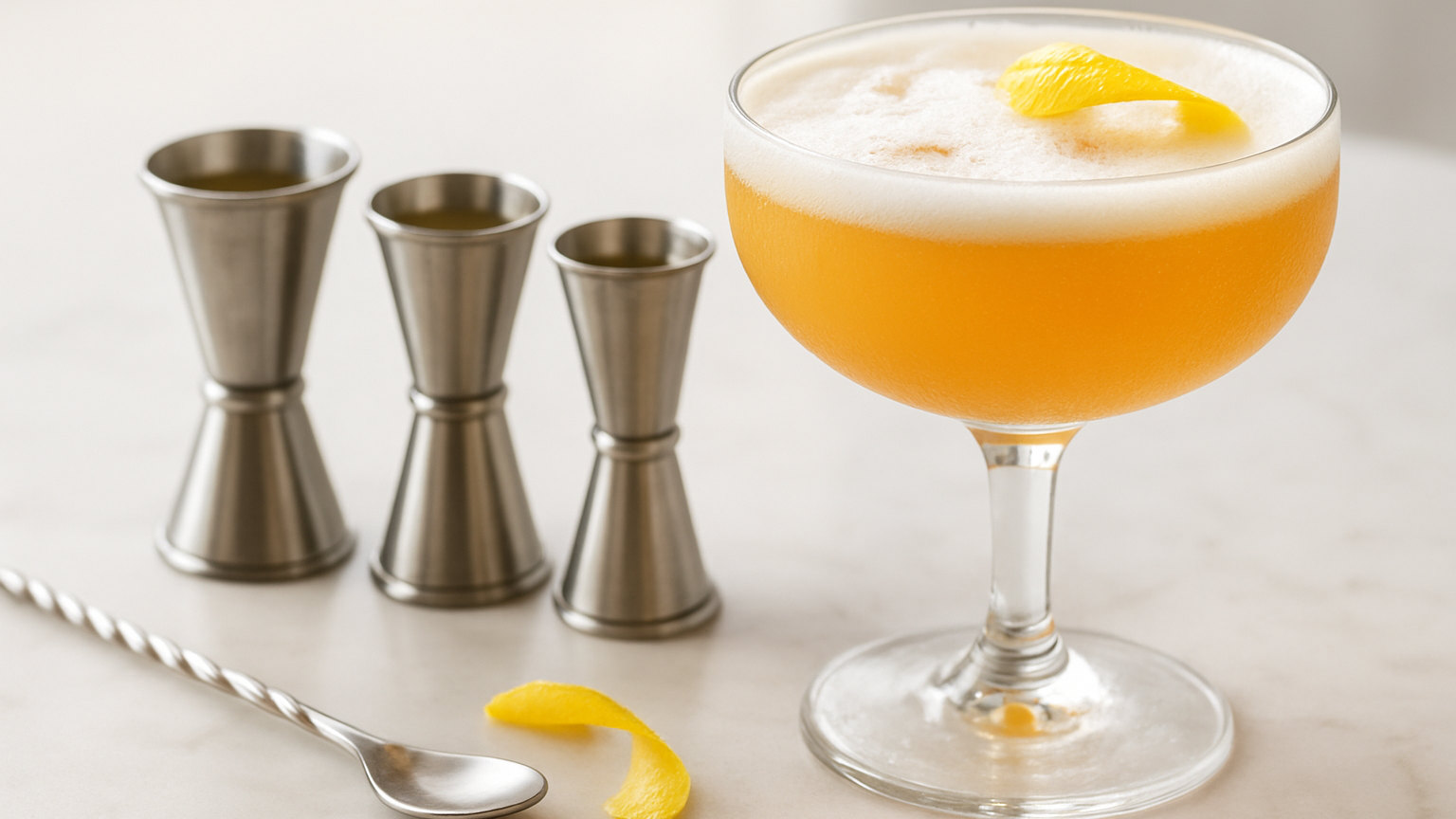
The shaken martini is the most argued-about drink in bartending, and much of the argument rests on a phrase that does not describe anything real. Shaking does change the drink, in four specific and measurable ways, and none of them involves damaging the gin.
Does shaking bruise the gin?
No. Bruising is a term borrowed from herbs, where cell walls rupture and release bitter compounds. Gin is a liquid with no cell structure, and agitation cannot damage it.
The phrase persists because people can taste a difference and reach for an explanation. The difference is real and the mechanism is something else entirely.
What actually changes?
- Temperature. A shaken martini ends up two or three degrees colder.
- Dilution. Shaking adds more water, typically 25 per cent against 20.
- Aeration. Thousands of tiny bubbles are forced into the liquid.
- Ice fragments. Shards pass through the strainer and keep diluting in the glass.
Together those produce a colder, more dilute, cloudier drink with a lighter and slightly rougher texture.
Why does the aeration matter here?
Because a martini is meant to feel heavy, cold and silky. Aeration makes a drink feel lighter and frothier, which is the opposite of the intention. In a daiquiri that lightness is welcome; in a martini it removes the quality that defines the drink.
Why does it turn cloudy?
Air bubbles and ice fragments both scatter light. In a drink expected to be crystal clear, that reads immediately as a fault, and it is why a shaken martini looks wrong even to someone who cannot articulate why.
It clears within a few minutes as the bubbles rise and the shards melt, by which point the drink has warmed and further diluted.
Does colder make it better?
It depends what you want. Colder suppresses aroma, so an extremely cold martini gives up less of the gin’s botanicals and tastes crisper and more austere.
Anyone drinking a martini for the character of a particular gin loses some of it. Anyone drinking it for the cold, clean hit gains. That is a legitimate preference rather than an error, and it is worth being honest that the case for stirring is partly about texture and clarity rather than flavour alone.
What about the vodka martini?
The argument weakens considerably. Vodka has little aroma to suppress, so the loss from extra cold is smaller, and some people genuinely prefer the shaken texture with a neutral spirit.
The cloudiness and the ice shards remain, and double straining handles the shards.
How should you stir one instead?
Sixty millilitres of gin and 10ml of dry vermouth, stirred with plenty of large ice for thirty seconds in a mixing glass, strained into a chilled glass. Lemon twist expressed over the surface, or an olive.
Thirty seconds is longer than it feels necessary. Frost on the outside of the mixing glass is the signal, and most people stop well before it appears.
Is there any reason to shake one deliberately?
If you prefer it, which is reason enough. Double strain it, use a properly chilled glass, and accept that it will be cloudy for the first minute.
The technique is not a mistake so much as a different drink. Knowing what it changes lets you choose rather than follow a rule.
What about the vermouth ratio?
A separate argument with a similar shape. Six to one is dry by historical standards and about where most bars sit. If a martini tastes harsh, adding vermouth usually helps more than changing the method, and a wetter three to one is a more forgiving drink.
How do you settle it for yourself?
Make one of each with the same gin, the same vermouth and the same ice, and taste them side by side. The difference is easy to perceive and it takes five minutes to test, which is quicker than reading any further argument about it.
Does the garnish change the comparison?
Enough to be worth controlling. Use the same garnish for both, since an expressed lemon peel adds a substantial aroma that could easily be mistaken for a difference in method.