
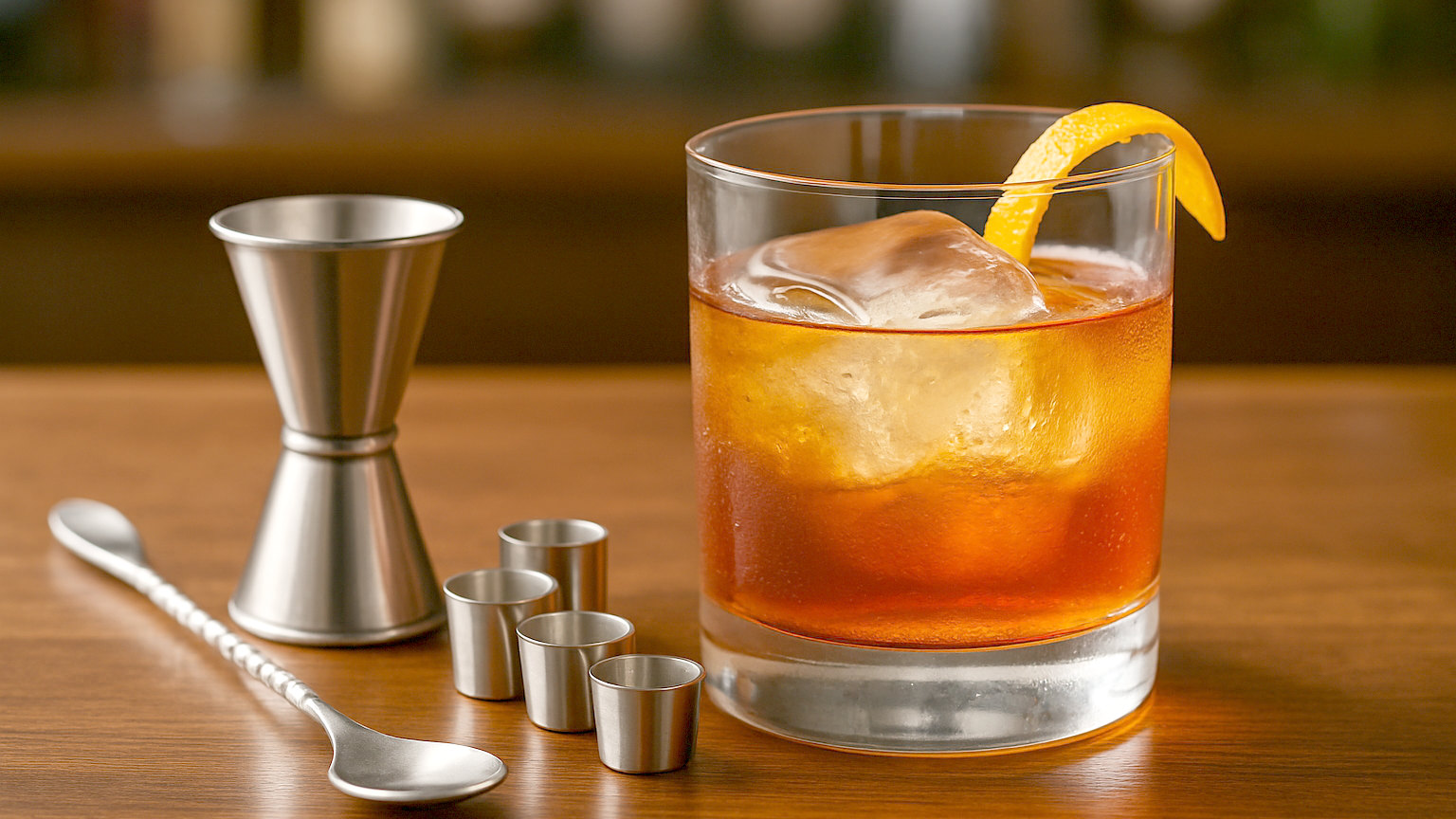
Cocktail recipes look like a long list of different numbers and are mostly built from a handful of repeating quantities. Once those are familiar, a great many drinks can be made from memory, because the measures follow patterns rather than being arbitrary.
What are the five that matter?
- 60ml. A full spirit measure in a shaken or stirred drink.
- 45ml. A lighter spirit measure, or a base in a drink with several spirits.
- 30ml. Half measures, liqueurs, vermouth, a second spirit.
- 20ml. Syrup in most sours.
- 15ml. Modifiers, small liqueur additions, egg white.
Between them those five build a daiquiri, a Manhattan, an old fashioned, a whiskey sour, a margarita, a negroni and a martini. A sixth, 25ml, appears frequently for citrus.
What is a single and a double?
In UK bars a single is 25ml or 35ml, and a double is 50ml or 70ml, depending on which the premises has chosen. That is a licensing measure for spirits served on their own rather than a cocktail measure.
Cocktail recipes generally work in 60ml, 45ml and 30ml, which come from the American ounce rather than from UK licensing. This is why a home-made cocktail often contains more spirit than a single measure at a bar, and it is worth being aware of.
Does that make home cocktails stronger?
Frequently, yes. A 60ml pour is roughly 2.4 units at 40 per cent, against 1 unit for a 25ml single. Two home-made Manhattans is close to five units, which is a third of the weekly guideline of 14 units spread over three or more days.
How do the measures fit together?
Most classics follow one of three shapes:
- The sour: 60ml spirit, 25ml citrus, 20ml syrup.
- The spirit-forward: 60ml spirit, 30ml modifier, dashes of bitters.
- Equal parts: 30ml of three ingredients.
Recognising which shape a recipe belongs to means you can reconstruct it without looking it up, and it also tells you what to adjust when it tastes wrong.
What size should a finished drink be?
A shaken or stirred cocktail served up comes out at around 100 to 130ml after dilution. A drink over ice is similar before the ice. A long drink with a mixer runs 200 to 250ml.
If your cocktails routinely come out at 180ml served up, something has been over-measured, and the drink will taste diluted and unbalanced.
Which measures should a jigger cover?
A double-ended 30ml and 60ml jigger with internal graduation lines at 15, 20 and 45 covers every quantity above with one tool.
The stubby type that measures only its two extremes forces constant estimation for everything in between, which is where most home measuring error comes from.
What about bar spoons and dashes?
A bar spoon is roughly 5ml, the same as a metric teaspoon. A dash from a standard bitters bottle is roughly 0.8ml, and it is consistent enough not to need measuring.
Recipes calling for a barspoon of syrup mean about 5ml, which is a quarter of a standard 20ml syrup measure. It is a small quantity doing precise work rather than an approximation.
Do you need to measure everything?
Everything that goes into a shaker or a mixing glass. For the mixer in a long drink, 20ml either way in 150ml of tonic makes no perceptible difference, so eyeing it is fine.
The distinction is whether the ingredient is part of a ratio. In a three-ingredient cocktail a 10ml error is a large proportion of the whole, which is why accuracy matters there and not in a highball.
Which measure should you learn first?
The sour ratio, because it unlocks the largest number of drinks from one pattern. Sixty millilitres of spirit, 25ml of citrus and 20ml of syrup gives you a daiquiri, a whiskey sour, a gimlet and a margarita depending on what goes in.
Once that is automatic, the spirit-forward pattern of 60ml and 30ml covers the Manhattan, the martini and their relatives. Two patterns and most of a bar list is available without opening a book.


