
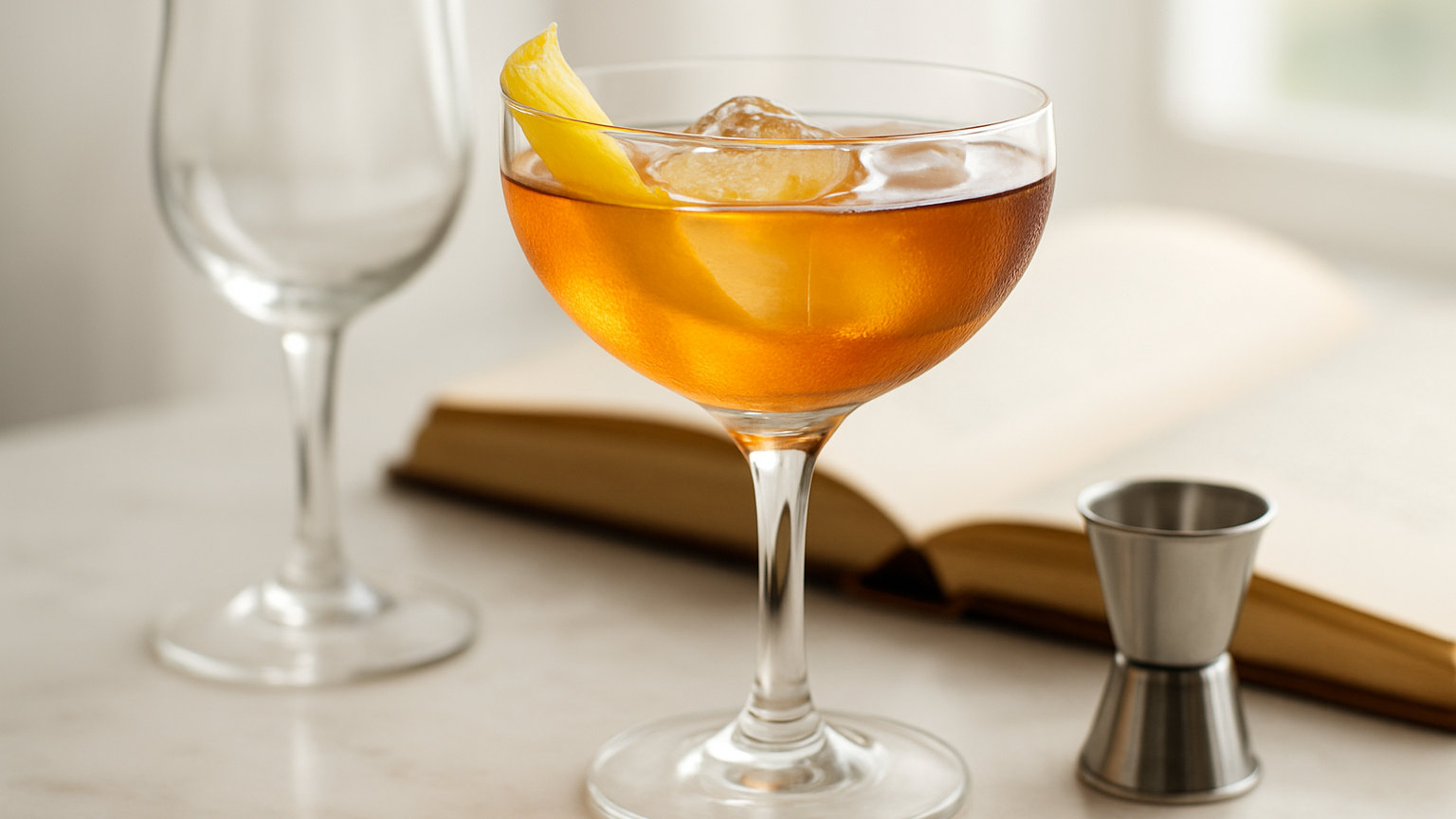
Open a cocktail book from before the Second World War and the measures are unfamiliar: one wineglass of brandy, two parts gin to one of vermouth, a pony of maraschino. None of it is deliberately obscure, and once the units are decoded the recipes work perfectly well.
Why parts rather than volumes?
Because parts describe the ratio, which is the actual recipe, and leave the size of the drink to the person making it. A drink at two parts to one works at any scale.
It was also practical when measuring equipment was not standardised. A bar with a particular set of glasses could use them consistently without anyone needing to know what they held.
Modern recipes give volumes because they are unambiguous, and modern jiggers are consistent enough to make that possible.
What were the historical units?
- Wineglass: around 60ml, or 2oz.
- Jigger: around 45ml, or 1.5oz, rather than the tool of the same name today.
- Pony: around 30ml, or 1oz.
- Dash: as now, roughly 0.8ml.
- Barspoon: around 5ml.
The wineglass is the one that surprises people. It refers to a small stemmed glass of the period rather than anything you would drink wine from now.
Did these vary?
Considerably, between books and between countries. A pony is fairly consistent at an ounce; a wineglass is quoted anywhere from 50 to 60ml. Treat old measures as approximate and taste as you go.
Why were drinks smaller?
They frequently were not. A wineglass of brandy is 60ml, which matches a modern cocktail measure closely. What changed is the surrounding structure rather than the base spirit.
Where drinks were genuinely smaller is in the early cocktails proper: a mixture of spirit, sugar, water and bitters served in a small glass, closer to 70ml finished than the 110ml a modern old fashioned comes to.
How do you convert a parts recipe?
Decide what one part is and multiply. For a spirit-forward drink, one part equals 30ml works well:
- Two parts gin, one part vermouth becomes 60ml and 30ml.
- Equal parts of three becomes 30ml each.
- Three parts to one becomes 60ml and 20ml.
For a long drink, one part equals 50ml gives a more sensible finished volume.
What else changes in old recipes?
Sugar quantities are often higher, since palates were sweeter and spirits were rougher. Ice was scarcer and more expensive, so dilution assumptions differ. And several ingredients no longer exist in the same form, particularly older styles of gin and vermouth.
A historical recipe made exactly as written frequently tastes too sweet to modern taste. Reducing the sugar by a quarter is a reasonable starting adjustment.
Are old books worth using?
Very much so, as sources of structure rather than exact instructions. They contain a great many drinks that never made it into modern circulation, and the ratios usually hold up even where the quantities need updating.
Treat them the way you would a Victorian cookbook: the technique and the proportions are sound, and the sugar and the salt want adjusting for a modern palate.
Which old measures still appear today?
Parts, dashes and barspoons remain in current use. The wineglass and the pony have gone entirely, and the word jigger has been repurposed to mean the tool rather than the volume, which is a genuine source of confusion when reading older text.
Should you convert or work in parts?
Convert once, then work in millilitres. Parts are elegant for describing a ratio and hopeless for reproducing a drink exactly, which is what most people actually want.
Where can you find them?
Several pre-1930 cocktail books are long out of copyright and freely available as scans. They are worth reading for the drinks that never entered modern circulation, and worth treating as historical documents rather than as tested recipes.
What has genuinely changed?
Ice, mostly. Reliable ice was expensive and inconsistent, so historical dilution assumptions differ from ours, and many old drinks were served with far less of it than a modern bar would use.


