
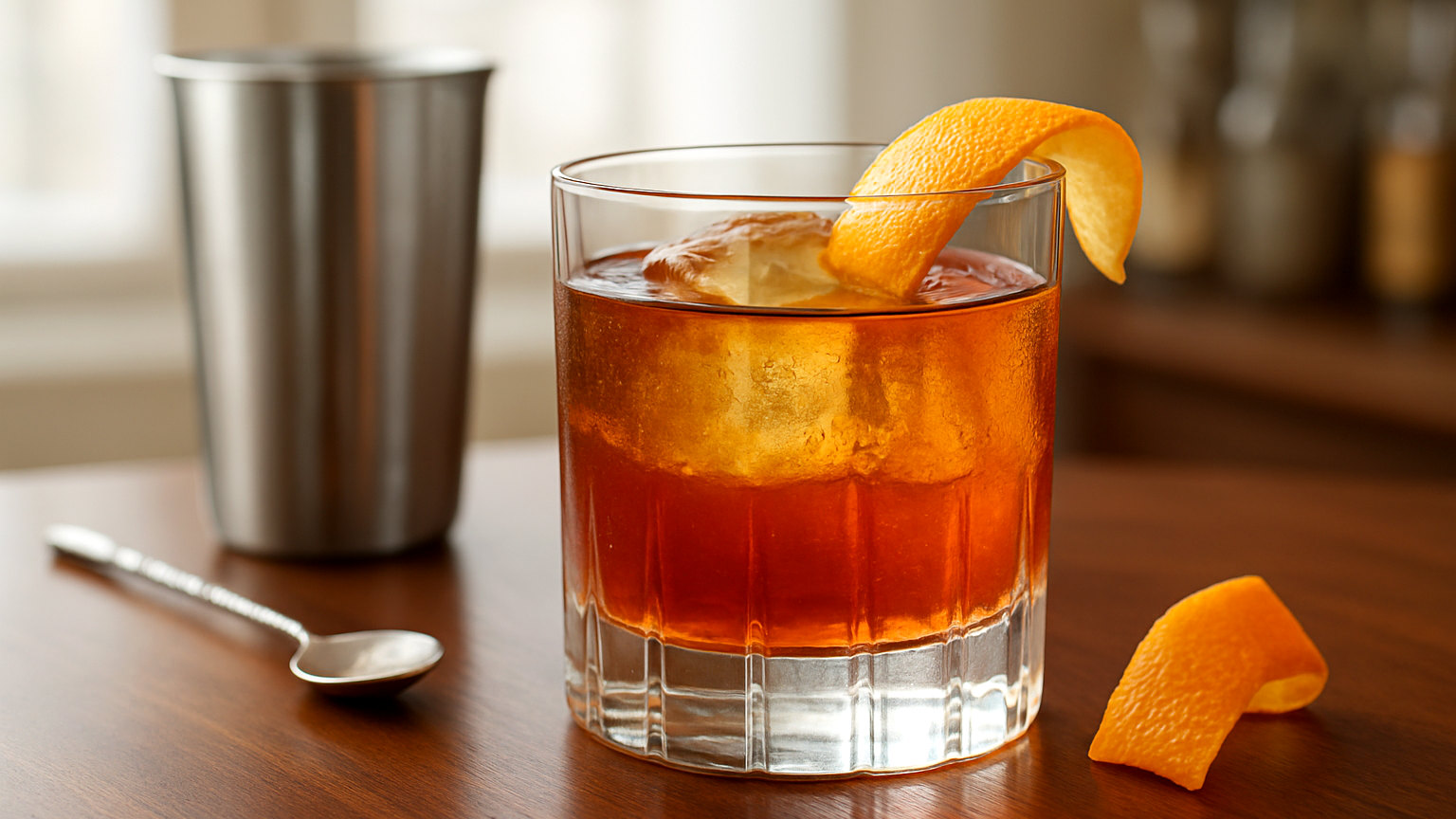
The old fashioned is the oldest cocktail template still in regular use, and it is the drink most often ruined at home. There is nowhere for a mistake to hide. Four ingredients, no citrus, no shaking, and a finished drink that is close to eighty per cent whiskey by the time it reaches you. If it tastes harsh, or watery, or oddly sweet, the fault is almost always in the stirring rather than the recipe.
What goes into a proper old fashioned?
The classic build is 60ml of whiskey, one teaspoon of sugar or a single sugar cube, two to three dashes of Angostura bitters, and a strip of orange peel. That is the whole list. Anything else you have seen added — muddled cherries, orange slices, soda water — belongs to a mid-century variation that most bars have since abandoned.
In ounces, that is 2oz whiskey to roughly one bar spoon of sugar. The ratio matters more than the exact figures. Sugar is there to soften the edges of the spirit, not to make the drink sweet, so if you can taste it as sweetness you have used too much.
Which whiskey works best?
Bourbon and rye both work, and they make noticeably different drinks. Bourbon brings vanilla and corn sweetness, which suits anyone who finds the drink austere. Rye brings pepper and a drier finish, which is what most bartenders reach for. Either way, choose something at 45 per cent alcohol or above. Standard 40 per cent bottlings are thin by the time the ice has done its work.
Price is less important than strength here. A mid-range bottle at higher proof will beat an expensive one at 40 per cent in this particular drink, because the dilution is substantial and a lower strength spirit simply disappears.
Why does the stirring matter so much?
This is the step that separates a good old fashioned from a bad one. Stirring does two jobs at once: it chills the drink and it adds water. Both are essential. An undiluted old fashioned is unpleasantly hot with alcohol, and a properly made one is somewhere between 20 and 25 per cent water by volume.
Stir with plenty of ice for around thirty seconds, until the outside of the mixing glass is uncomfortably cold to hold. Most people stop after ten seconds because it feels like long enough, and the result tastes raw.
How do you know when it is right?
Taste it before you strain. If the whiskey still hits the back of your throat before you have registered any flavour, keep stirring. If it tastes flat and slightly hollow, you have gone too far. The window is wider than people fear, and a few seconds either side will not spoil it.
When should you use a sugar cube instead of syrup?
A sugar cube muddled with bitters is traditional and gives a slightly textured drink, because some sugar never fully dissolves. Simple syrup dissolves instantly and is more consistent. Neither is wrong.
If you use syrup, remember it is already half water. Roughly 7.5ml of simple syrup replaces one teaspoon of sugar, and that extra water counts towards your dilution, so stir slightly less.
What does the orange peel actually do?
More than it looks. Squeezing a strip of orange peel over the surface releases a fine spray of citrus oil that sits on top of the drink, and you smell it on every sip. It changes the perceived flavour considerably without adding any juice or sweetness.
Cut a wide strip with a vegetable peeler, avoiding as much white pith as you can. Hold it skin side down a few centimetres above the glass and squeeze. You should see the oil catch the light. Then drop it in or rub it around the rim.
Which mistakes ruin an old fashioned most often?
- Not stirring long enough, which leaves the drink hot and unbalanced.
- Using small or wet ice, which dilutes fast and unevenly.
- Adding too much sugar, turning a spirit-forward drink into a sweet one.
- Skipping the peel, which removes most of the aroma.
Can you make a batch ahead of time?
Yes, and it works better than most cocktails do. Combine whiskey, sugar and bitters in the right proportions, then add water equal to around 22 per cent of the total volume, and refrigerate. Pour over ice and add fresh peel to serve. For a party the result is more consistent, because the dilution is measured rather than guessed.


