
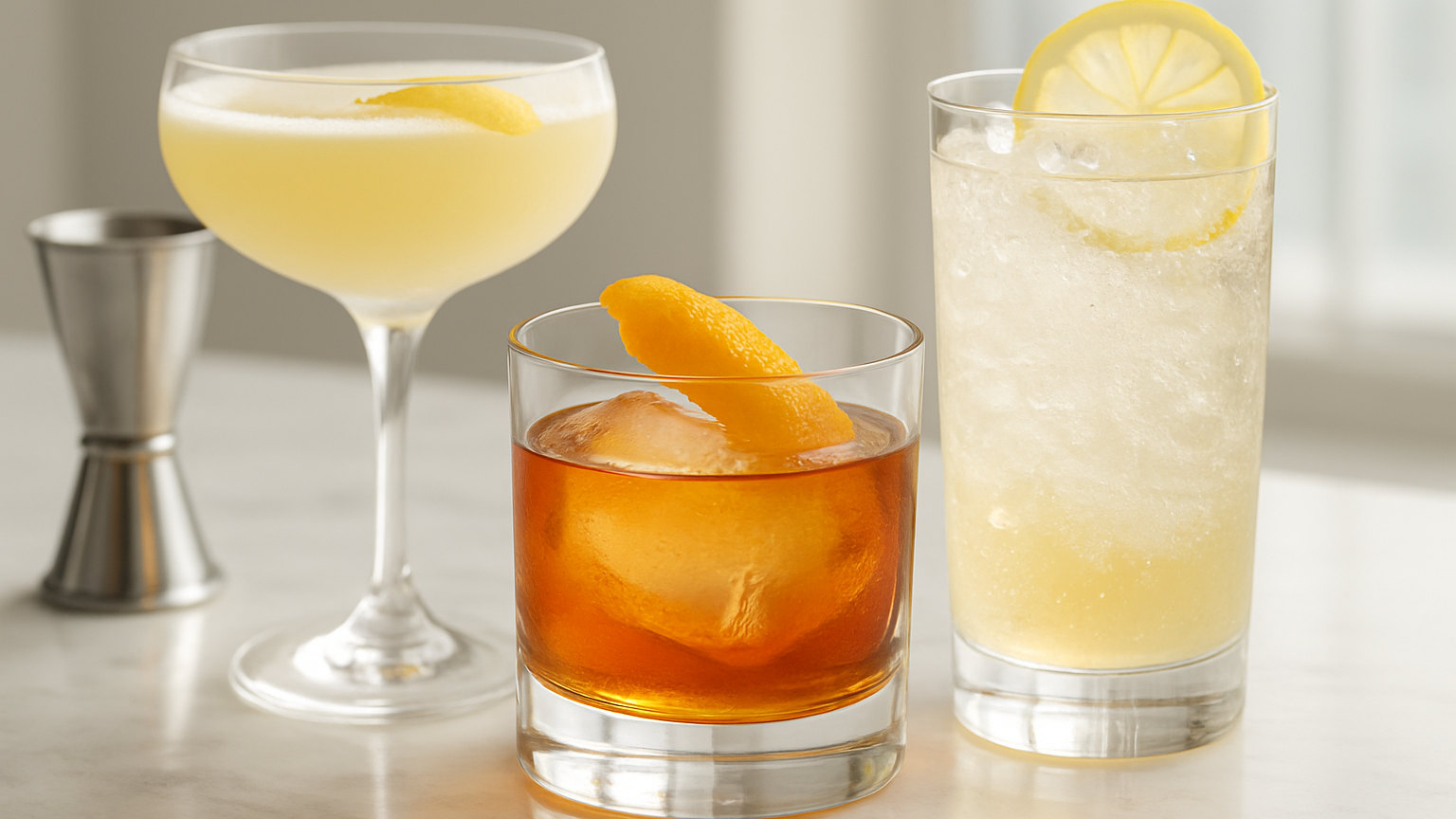
A long cocktail list is usually a short one wearing different clothes. Three structural patterns account for the majority of classic drinks, and learning the patterns is far more useful than memorising twenty recipes, because it tells you how to fix a drink as well as how to build one.
What is the sour ratio?
Two parts spirit, one part citrus, one part sugar. In practice most bars run slightly drier: 60ml spirit, 25ml citrus, 20ml syrup.
Change the spirit and the citrus and the name changes with it:
- Rum and lime: daiquiri.
- Bourbon and lemon: whiskey sour.
- Gin and lime: gimlet.
- Tequila and lime with orange liqueur: margarita.
- Brandy and lemon with orange liqueur: sidecar.
The structure never moves. That is five drinks from one ratio.
What is the spirit-forward ratio?
Two parts spirit, one part modifier, plus bitters. So 60ml of spirit, 30ml of vermouth or a bitter aperitif, and two or three dashes.
A Manhattan is rye and sweet vermouth. A martini is gin and dry vermouth, usually much drier at six to one. A rob roy is scotch and sweet vermouth. All are stirred, clear, and served up or over a single large cube.
Why is the martini so much drier?
Fashion, mostly. Historical martinis ran three to one or even one to one, and the ratio drifted drier through the twentieth century. A three-to-one martini is a more forgiving drink and worth trying if the modern version tastes harsh.
What is the equal parts ratio?
One part each of three ingredients, typically 30ml. The negroni is the definitive example: gin, Campari and sweet vermouth.
Equal parts works when all three ingredients are assertive and none needs to dominate. The boulevardier swaps the gin for bourbon, the sbagliato swaps it for sparkling wine, and the white negroni uses lighter bitter and dry vermouth. The structure holds in every case.
How do you recognise which one you are making?
Look at the ingredients. Citrus juice present means a sour. Clear and spirit-only with a wine-based modifier means spirit-forward. Three ingredients of similar strength and assertiveness means equal parts.
That also tells you the method: sours are shaken, the other two are stirred.
How does knowing the ratio help you fix a drink?
- Sour tastes sharp: increase syrup by 5ml, not decrease citrus.
- Sour tastes sticky: increase citrus by 5ml.
- Spirit-forward tastes harsh: increase the modifier, or stir longer.
- Equal parts tastes too bitter: shift to 30ml, 20ml, 30ml rather than substituting anything.
Adjusting the ingredient you want more of, rather than removing the one you want less of, keeps the drink at the right volume and strength.
What about drinks that fit none of these?
Tiki drinks are the main group, and they are usually two or three of these structures layered together, with several spirits and several sweeteners. They look complicated because they are, rather than because they follow a different logic.
Long drinks are the other group, and they are simply a spirit and a mixer at one to three, built in the glass.
What is the practical benefit?
You can make a drink from a bottle you have never used before. Given any spirit, citrus and syrup, the sour ratio gives you something balanced on the first attempt, which is a more useful skill than remembering the name of a cocktail.
Do the ratios hold at different strengths?
They need adjusting. A higher strength spirit at 47 per cent carries more perceived heat, so a sour built with one usually wants the syrup at 25ml rather than 20ml. A 38 per cent spirit wants slightly less.
The ratio is a starting point calibrated for a 40 per cent base, which is what most recipes assume without saying so.
How do you use this with an unfamiliar bottle?
Apply the sour ratio and taste. Sixty millilitres of anything, 25ml of citrus and 20ml of syrup will produce something balanced on the first attempt, which is a more useful skill than knowing the name of a cocktail you cannot make.


