
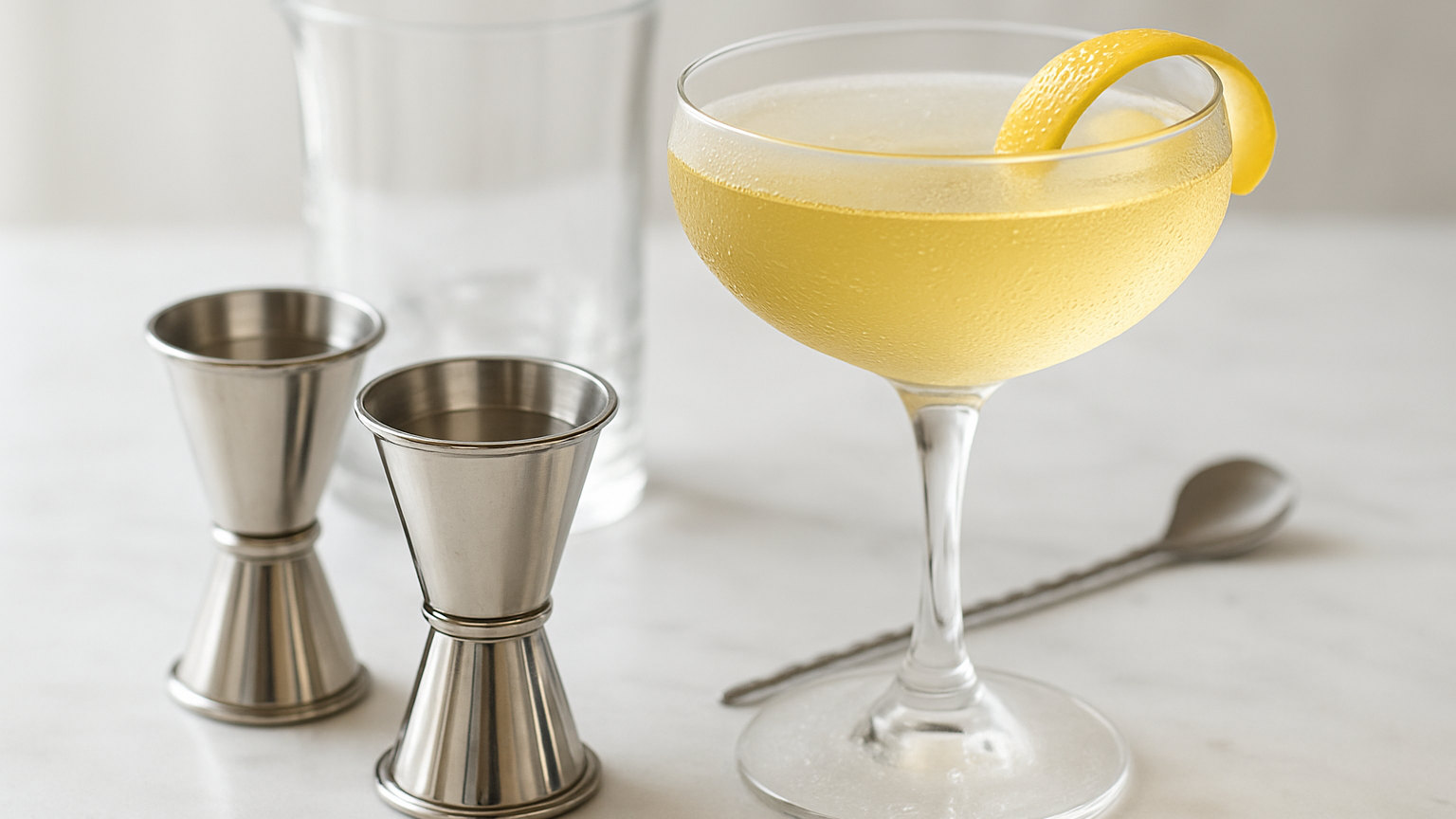
There is a legal answer to this question in the UK and it is not the answer cocktail recipes use. The gap between the two is the reason a home-made Manhattan contains considerably more alcohol than a single whisky at a pub, and it is worth understanding rather than discovering later.
What does the law require?
Premises licensed to sell gin, rum, vodka and whisky must serve them in measures of 25ml or 35ml, or multiples of those. A venue must choose one and display which it uses.
So a single is either 25ml or 35ml depending on where you are, and a double is 50ml or 70ml. Other spirits such as brandy and tequila are not covered by the same requirement, though most premises apply the same measures anyway.
Does it apply to cocktails?
No. The requirement covers spirits sold on their own or with a mixer. Cocktails containing several ingredients are outside it, which is why a bar can pour 50ml or 60ml into a shaken drink without any conflict.
What do cocktail recipes use?
Mostly 60ml, 45ml and 30ml, which derive from the American fluid ounce at roughly 30ml rather than from UK licensing. Some European recipes use 50ml and 25ml, which is the same logic in metric.
A 60ml pour is more than twice a 25ml single. That is not an error in the recipe, and it does mean a cocktail is a substantially larger serving of spirit than a pub single.
How many units is that?
Units are calculated as volume in millilitres multiplied by strength, divided by 1000.
- 25ml at 40 per cent: 1 unit.
- 35ml at 40 per cent: 1.4 units.
- 50ml at 40 per cent: 2 units.
- 60ml at 40 per cent: 2.4 units.
- 60ml at 47 per cent: 2.8 units.
A Manhattan with 60ml of rye and 30ml of vermouth at 16 per cent comes to roughly 2.9 units. Two of those is close to six units, against a weekly guideline of no more than 14 spread over three or more days.
Why does this catch people out?
Because a cocktail does not look like a large drink. A Manhattan in a coupe is around 110ml of liquid, which appears modest next to a pint, and it contains roughly the same alcohol as a strong pint of beer.
Drinks with several spirits compound it further. A long island iced tea contains four or five spirit measures and can exceed five units in one glass.
Should you scale cocktail recipes down?
It is a reasonable option and it changes the balance, since the citrus and syrup scale too. Making a daiquiri at 45ml, 20ml and 15ml gives a smaller drink with the same ratios, which works perfectly well.
Long drinks are the easier answer. A highball at 50ml of spirit and 150ml of soda is around 2 units in 200ml of liquid, and it takes longer to drink.
How do you know the strength of what you are pouring?
The label. Spirits range from 37.5 per cent at the legal minimum for most categories up to 50 per cent and beyond, and the difference matters. A navy strength gin at 57 per cent delivers 3.4 units in a 60ml pour.
Home-made drinks such as country wine and liqueurs carry no label at all, which is why a hydrometer reading is worth taking if you make them.
What is the practical takeaway?
Measure, and know the figure. Not to ration anything, but because a cocktail is a genuinely larger serving than a pub single and it is easy to lose track when the glass is small and the drink is good.
Does wine and beer use the same system?
Different units, same calculation. A 175ml glass of 13 per cent wine is 2.3 units and a pint of 5 per cent beer is 2.8. That puts a standard cocktail squarely between them, which surprises people who think of cocktails as small drinks.


