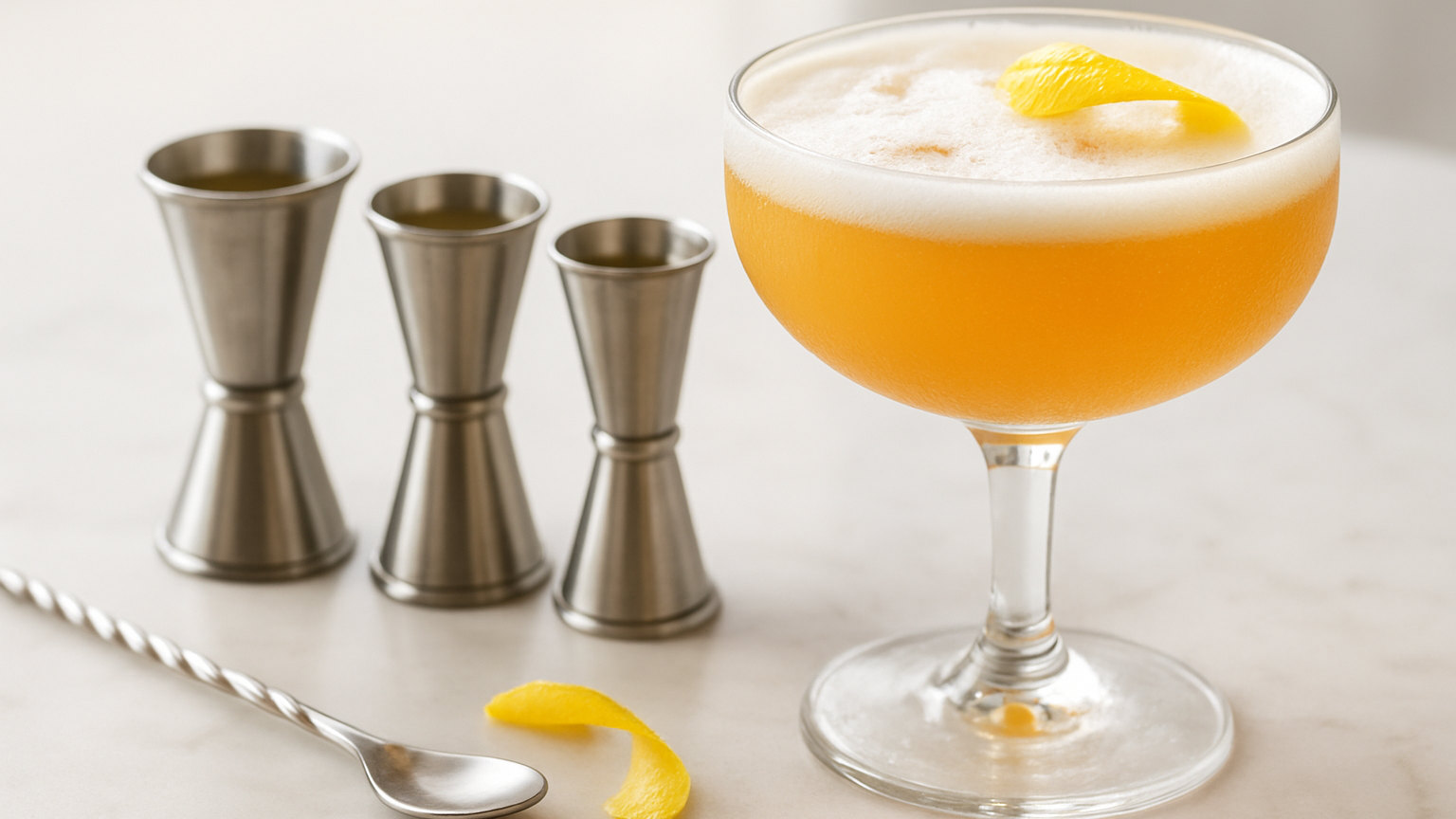
Making two cocktails one after another is slow, and shaking both together is the obvious solution. It works, within limits, and the limits are set by the size of the shaker rather than by anything about the recipe.
Can you double a recipe in one shaker?
Usually yes, if you have a standard 700ml large tin. Two shaken sours come to around 250ml of liquid, which leaves adequate room for ice.
Three drinks is where it stops working. At that volume there is no space for the ice to travel, and the ice movement is what chills and aerates. The result is two or three under-chilled, under-diluted drinks rather than one good one.
How much ice should you use?
Proportionally more than you think, but the shaker still needs to be no more than two thirds full overall. That is the binding constraint.
If doubling the liquid means the ice has to be reduced to fit, you have reached the limit. Use two shakers, or make them one at a time.
Does the shake time change?
Slightly longer, around fifteen to eighteen seconds rather than twelve to fifteen. There is more liquid to chill relative to the ice available, so it takes a little more work.
Use the frost test rather than the clock. When the tin is uncomfortable to hold, it is ready regardless of how many drinks are in it.
How do you split it evenly?
Pour in two passes. Fill the first glass roughly halfway, then the second glass halfway, then return to top up the first and finish the second.
Pouring one glass full and then the other guarantees an uneven result, because the last of a shaker is always more dilute and carries the foam. Two passes shares both.
What about drinks with foam?
Doubling works and the split matters more, since the foam concentrates at the end of the pour. The two-pass method is essential rather than optional.
A dry shake with double the volume needs longer, around twenty seconds, because there is more liquid for the same effort to aerate.
When should you use two shakers?
Whenever you are making more than two of anything, and whenever precision matters. Two large tins and one small tin lets you shake two shakers in sequence quickly, which is the practical setup for a small party.
A second large tin is a more useful purchase than a second complete shaker, since the smaller tin can serve both.
What should you do for larger numbers?
Stop shaking and start batching. For six or more of the same drink, pre-mix the ingredients with the appropriate water added, chill thoroughly, and pour over ice.
The water is the part people miss. Shaking adds around 25 per cent dilution, and a batch poured straight from a bottle has had none. Add water at that proportion to the batch and chill it properly.
Does anything not scale?
Foam. A batched sour cannot carry a head, because the texture is created at the moment of shaking and cannot be stored.
The workable answer for a party is to batch the base, then shake individual servings with the egg white or aquafaba to order. That still saves most of the work and takes about fifteen seconds per drink.
Does the ratio change when doubling?
No. Multiply every ingredient exactly. The only adjustment is the shake time, and that is judged by frost rather than calculated.
What if the second glass gets less foam?
Pour in two passes rather than filling one glass at a time. Foam concentrates at the end of the pour, so a single continuous pour gives the first glass the liquid and the second glass the head.
Is it worth buying a larger shaker?
Only if you routinely make three or more at once, and at that point batching is usually the better answer. A second standard tin is more useful than one oversized one, since two shakers can be worked in sequence.