
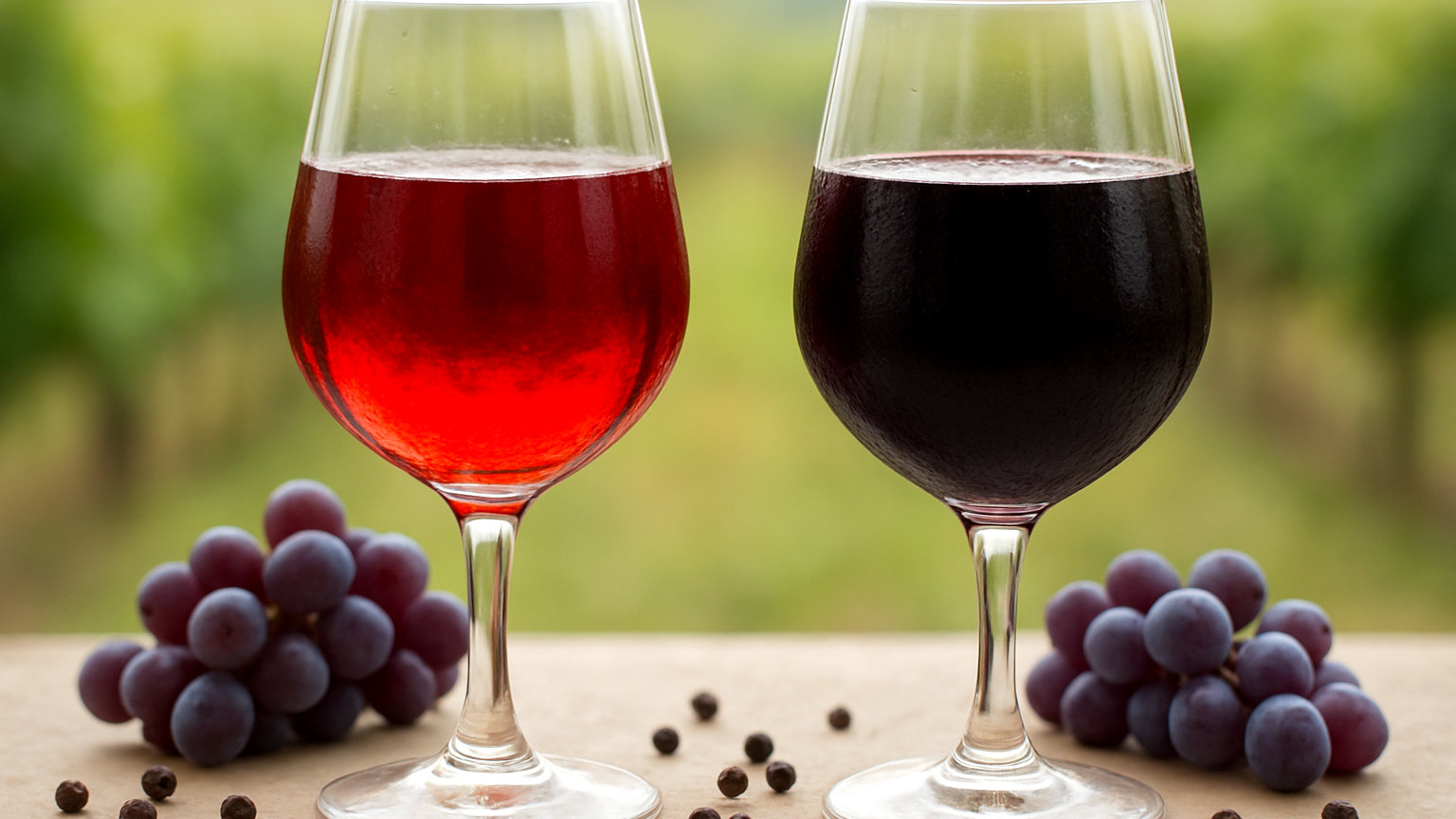
Syrah and shiraz are the same variety. The two names are not a translation quirk: producers choose which to use, and the choice signals what style of wine is in the bottle.
What is the difference in style?
- Syrah. Cooler climate. Peppery, savoury, medium bodied, higher acidity. Northern Rhône, cool-climate Australia, Chile.
- Shiraz. Warmer climate. Ripe blackberry, sweet spice, full bodied, higher alcohol. Barossa, McLaren Vale, South Africa.
Producers in warm regions who want to signal a restrained style will sometimes use syrah on the label deliberately. It is a reliable hint rather than a rule.
What does it taste like?
Blackberry and dark plum at the core, with black pepper, violet, smoked meat and olive. It is deeply coloured, firmly tannic and one of the more powerful red grapes.
The black pepper note is genuinely distinctive and comes from a compound called rotundone, which is more pronounced in cooler conditions. It is one of the few wine descriptors that maps directly to a known molecule.
Why does climate change it so much?
Because rotundone declines with heat while sugar and fruit ripeness increase. A cool-climate syrah at 13 per cent is peppery and savoury; a warm-climate shiraz at 15 per cent is rich and jammy with little pepper.
Alcohol on the label is the quickest guide to which end you are buying.
Where is it grown?
- Northern Rhône. The benchmark for syrah. Savoury, peppery, ageworthy.
- Southern Rhône. Usually blended with grenache and mourvèdre.
- Australia. The spiritual home of shiraz, with a wide range of styles.
- South Africa. Both styles, and frequently excellent value.
- Chile and Argentina. Cool coastal and high altitude sites.
- Languedoc. Blended, and among the best value in France.
What is a GSM blend?
Grenache, syrah and mourvèdre, the classic combination of the southern Rhône and much of Australia. Grenache brings fruit and alcohol, syrah brings structure and pepper, mourvèdre brings savoury depth and tannin.
It is a reliably good-value category, since the blend name carries less premium than a single famous appellation.
What food does it suit?
Anything grilled, roasted or peppered. Lamb, beef, sausages, game and barbecued food all work, and the peppery styles suit black pepper on the plate directly.
Warm-climate shiraz suits barbecue and sticky sauces; cool-climate syrah suits roast lamb and charcuterie.
Where does the value sit?
The Languedoc, South Africa and Chile, all of which produce serious syrah at everyday prices. Australian shiraz from regions other than the most famous names is also good value.
Northern Rhône appellations carry a significant premium and the entry level is often better bought from the Languedoc instead.
How should you serve it?
At 16 to 18 degrees. Full-bodied shiraz at 15 per cent tastes hot and alcoholic when warm, and a short spell in the fridge before opening helps considerably.
A 175ml glass of a 15 per cent shiraz is 2.6 units, against 2.1 for a 12 per cent wine, which is worth noting given how easily the richer styles drink.
Does it age?
Serious northern Rhône syrah ages very well, developing smoked meat and olive character over ten to twenty years. Everyday examples are made to drink now.
Warm-climate shiraz at the premium end also ages, though the fruit tends to dominate for longer.
What should you look for on the label?
The alcohol figure and the name used. Syrah at 13 per cent suggests a peppery, savoury wine; shiraz at 15 suggests a rich, jammy one. Those two details predict the style reliably.
What food does each style suit?
Peppery cool-climate syrah with roast lamb, charcuterie and anything seasoned with black pepper, where the wine and the dish share a compound directly.
Rich warm-climate shiraz with barbecue, sticky sauces and hard cheese, where the ripe fruit stands up to sweetness that would flatten a drier red.
Why does one grape have two identities?
Because Australia adopted the spelling shiraz in the nineteenth century and built an entire national style around it, while France kept syrah and its own tradition. The wines diverged as far as the names did.
Producers now use the split deliberately, which turns a historical accident into genuinely useful shorthand on a label.


