
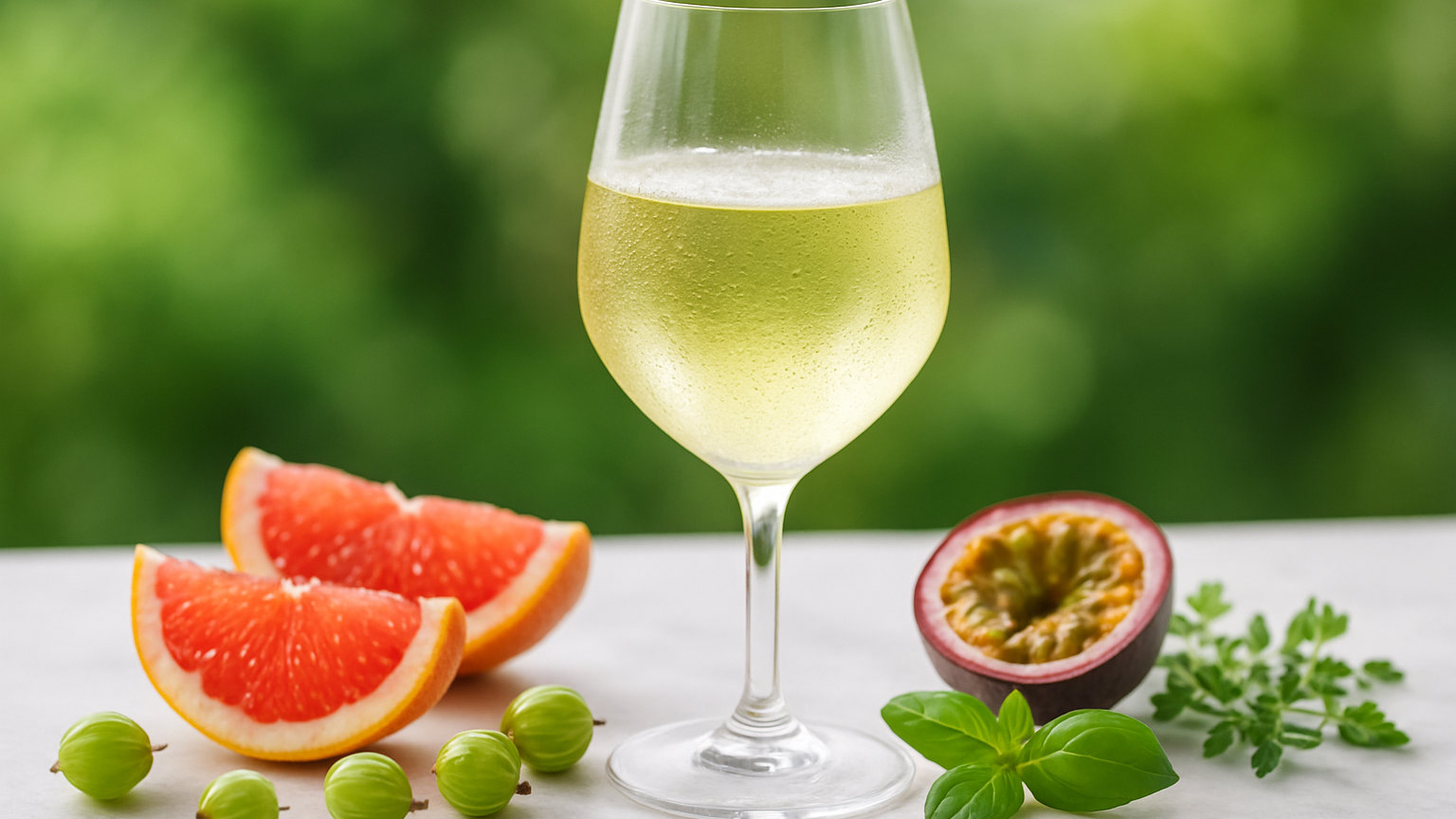
Sauvignon blanc is the most instantly identifiable of the major white grapes. Its aromatic signature is strong enough that most people can pick it blind after a little practice, and the chemistry behind that is unusually well understood.
What does it taste like?
Gooseberry, elderflower, grapefruit and cut grass, with high acidity and a crisp, dry finish. In riper examples, passion fruit and guava.
The green, herbaceous edge is characteristic. Descriptions occasionally reach for less appealing comparisons, and those are recognising the same compounds.
Where do those aromas come from?
Two groups of compounds. Methoxypyrazines give the green pepper and grassy notes and are higher in cooler climates and less ripe fruit. Thiols give the passion fruit and grapefruit notes and increase with ripeness.
That is why cool-climate sauvignon smells grassy and warmer examples smell tropical. It is the same grape at different points on one spectrum.
How do the main styles differ?
- Loire Valley. Sancerre and Pouilly-Fumé. Restrained, mineral, flinty, citrus rather than tropical.
- New Zealand. Marlborough in particular. Intensely aromatic, passion fruit and gooseberry, immediate.
- Bordeaux. Often blended with sémillon and sometimes oaked. Fuller and more textured.
- Chile and South Africa. Between the two, often good value.
The New Zealand style transformed the grape’s global reputation from the 1980s onwards and remains the reference point for most drinkers.
What is fumé blanc?
A name used mainly in California for oaked sauvignon blanc. It is a marketing term rather than a legal one and it generally signals an oaked style.
What food does it suit?
Its high acidity and green character make it a natural with goat’s cheese, asparagus, herbs and anything with lemon.
Goat’s cheese and Sancerre is one of the classic regional pairings, and asparagus is notable because it defeats most wines. Sauvignon blanc handles it where a red would turn metallic.
What does it not suit?
Rich, creamy or heavily spiced food, where its lightness disappears and the acidity clashes. Red meat is a poor match for the same reason.
Where does the value sit?
- Touraine and other Loire appellations. Sancerre character at a much lower price.
- Chile. Coastal regions producing excellent value.
- South Africa. Consistently strong and underpriced.
- New Zealand outside Marlborough. Nelson and Awatere offer different character at similar prices.
- Entry-level white Bordeaux. Frequently overlooked and good.
Sancerre carries a substantial name premium. Touraine sauvignon from the same region delivers much of the same for considerably less.
Should it be aged?
Generally not. Sauvignon blanc is at its best young, when the aromatics are at their most vivid, and most examples are made to be drunk within two years.
Oaked Bordeaux blends are the exception and can develop well over five to ten years.
How should you serve it?
Cold, around 8 to 10 degrees. It is one of the few wines where fridge temperature is genuinely appropriate, since the acidity and aromatics both hold up well when chilled.
Why is it so widely planted?
Because it is recognisable, reliable and sells. Its aromatic signature is strong enough to survive high yields and warm sites, which makes it commercially attractive in a way that pinot noir is not.
What should you look for?
The region, which predicts the style closely. Loire for restrained and mineral, New Zealand for intensely aromatic, Chile and South Africa for something in between at a lower price.
How does it change with ripeness?
Along a clear spectrum. Underripe fruit gives green pepper and grass; fully ripe fruit gives passion fruit and grapefruit; overripe fruit loses the aromatics entirely and turns flat.
That narrow window is why picking date matters so much for this grape, and why cooler regions produce such different wine from warm ones.
Is it worth spending more?
Up to a point. The step from the cheapest tier to a decent Loire or Chilean bottle is substantial; beyond the mid range the improvements are smaller than for chardonnay or riesling.
It is a grape that performs well at everyday prices, which is part of why it sells so widely.


