
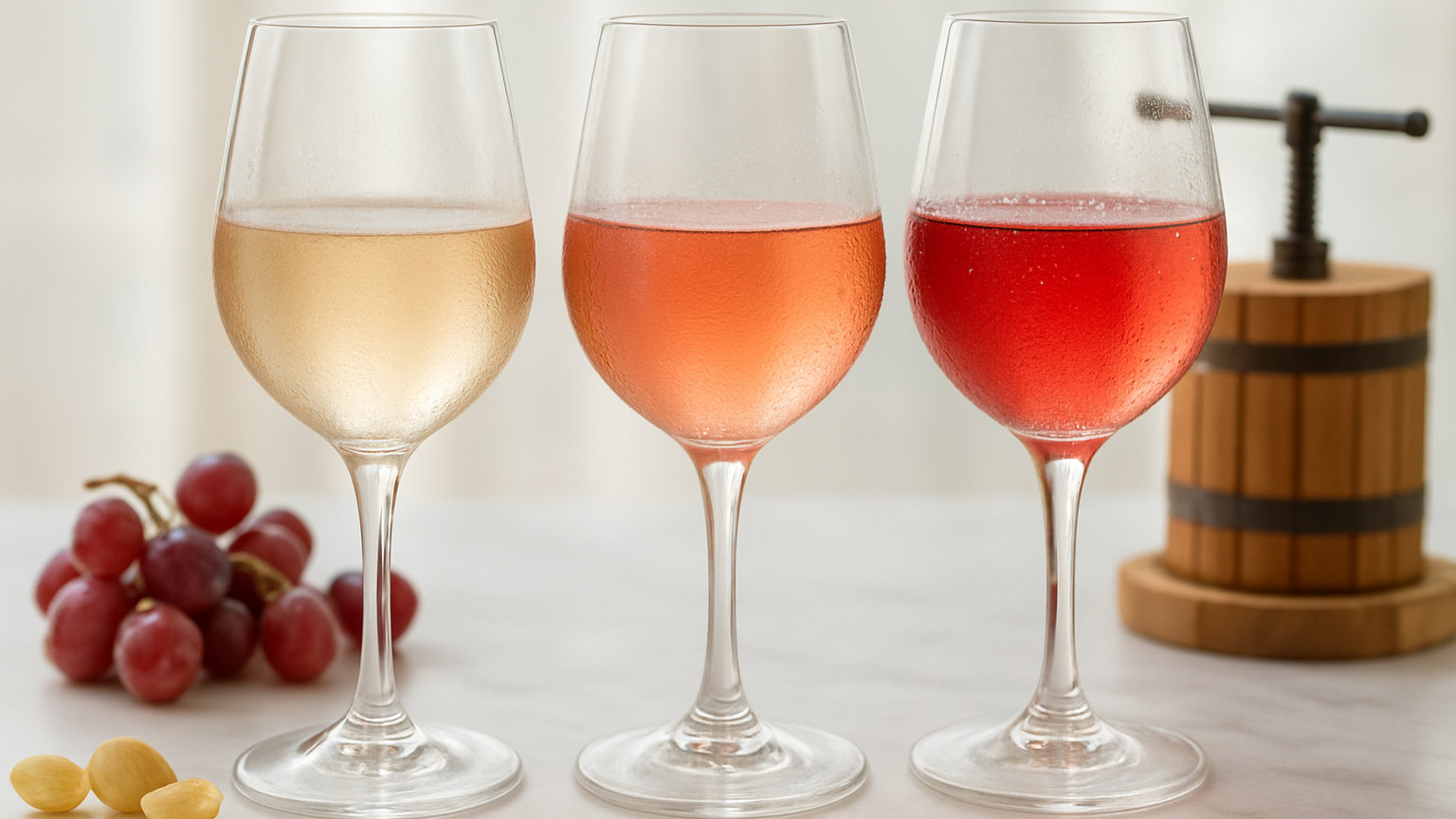
Rosé is the fastest-growing wine category and the least understood. The commonest assumption about how it is made is wrong almost everywhere, and the colour that people buy on is a poor guide to what is in the bottle.
How is it made?
Three methods, all starting with red grapes. Almost all wine juice is clear regardless of grape colour, so the pigment comes from contact with the skins.
- Direct press. Red grapes pressed immediately, giving only brief skin contact. The palest and most delicate style.
- Short maceration. Skins left with the juice for two to twenty hours, then removed. The most common method.
- Saignée. Juice bled off from a red wine fermentation early on. Usually darker and fuller.
What about blending red and white?
It is prohibited for still rosé across most of the European Union. The notable exception is rosé champagne, where blending a little red wine into white is traditional and permitted.
What does the colour tell you?
Less than people think. Colour indicates skin contact time and grape variety, and it does not indicate sweetness.
A very pale Provence-style rosé is usually dry, and so are most darker Spanish rosados. A pale rosé can be sweet and a dark one bone dry. The style association is a convention rather than a rule.
The one reliable indicator is the region and the producer, and the alcohol level as a proxy for ripeness.
What does it taste like?
Depends on the grape and the method:
- Provence style. Pale, dry, strawberry and citrus with a mineral edge. Grenache, cinsault, syrah.
- Spanish rosado. Deeper, fruitier, more structured. Garnacha and tempranillo.
- Italian rosato. Varies widely by region and grape.
- New World. Often riper and fuller, sometimes with residual sugar.
- White zinfandel. Distinctly sweet, a category of its own.
Is it a summer wine?
By convention rather than necessity. A fuller rosado handles autumn food perfectly well, and the seasonal association is largely marketing.
Rosé is also a genuinely useful compromise at a mixed table, sitting between the food ranges of white and red.
What food does it suit?
Grilled fish, charcuterie, salads, tomato dishes, paella and Mediterranean food generally. Fuller rosados handle grilled meat.
It is one of the more forgiving pairings for a table eating several different things.
Should it be aged?
Almost never. Rosé is made to be drunk young, usually within a year, and the freshness that defines it fades quickly.
Buying the most recent vintage available is the single most useful rule in the category.
Where does the value sit?
- Spanish rosado from Navarra and Rioja. Excellent and cheap.
- Languedoc and Rhône rosé. Provence character without the premium.
- Portuguese and Italian rosé. Frequently overlooked.
- Southern French IGP wines. Reliable at the everyday price.
Provence carries a substantial name premium, and much of what it is selling is the colour and the bottle shape. Neighbouring regions make comparable wine for considerably less.
How should you serve it?
Cold, 8 to 10 degrees. Fuller styles benefit from being slightly less cold, at 10 to 12, where more of the fruit comes through.
Why has it grown so fast?
A combination of successful marketing, the appeal of a wine that suits warm weather and mixed tables, and a shift away from heavier reds. The pale Provence style in particular became a recognisable visual brand.
What should you look for?
The most recent vintage, a dry region and a producer rather than a bottle shape. Provence-style bottles from other regions are common and the shape tells you nothing about the wine.
What are the grapes behind it?
Grenache above all, which gives the strawberry character of Provence-style rosé. Cinsault, syrah, mourvèdre, tempranillo and sangiovese all appear, and almost any red grape can be used.
Pinot noir rosé is lighter and more red-fruited; syrah rosé is fuller and more savoury.
Is darker rosé sweeter?
Not reliably, and the assumption causes a lot of poor buying. Colour reflects skin contact and grape variety, not sugar, and plenty of deep-coloured Spanish rosado is bone dry.
The one product where colour genuinely signals sweetness is white zinfandel, which is a distinct commercial category rather than a general rule.


