
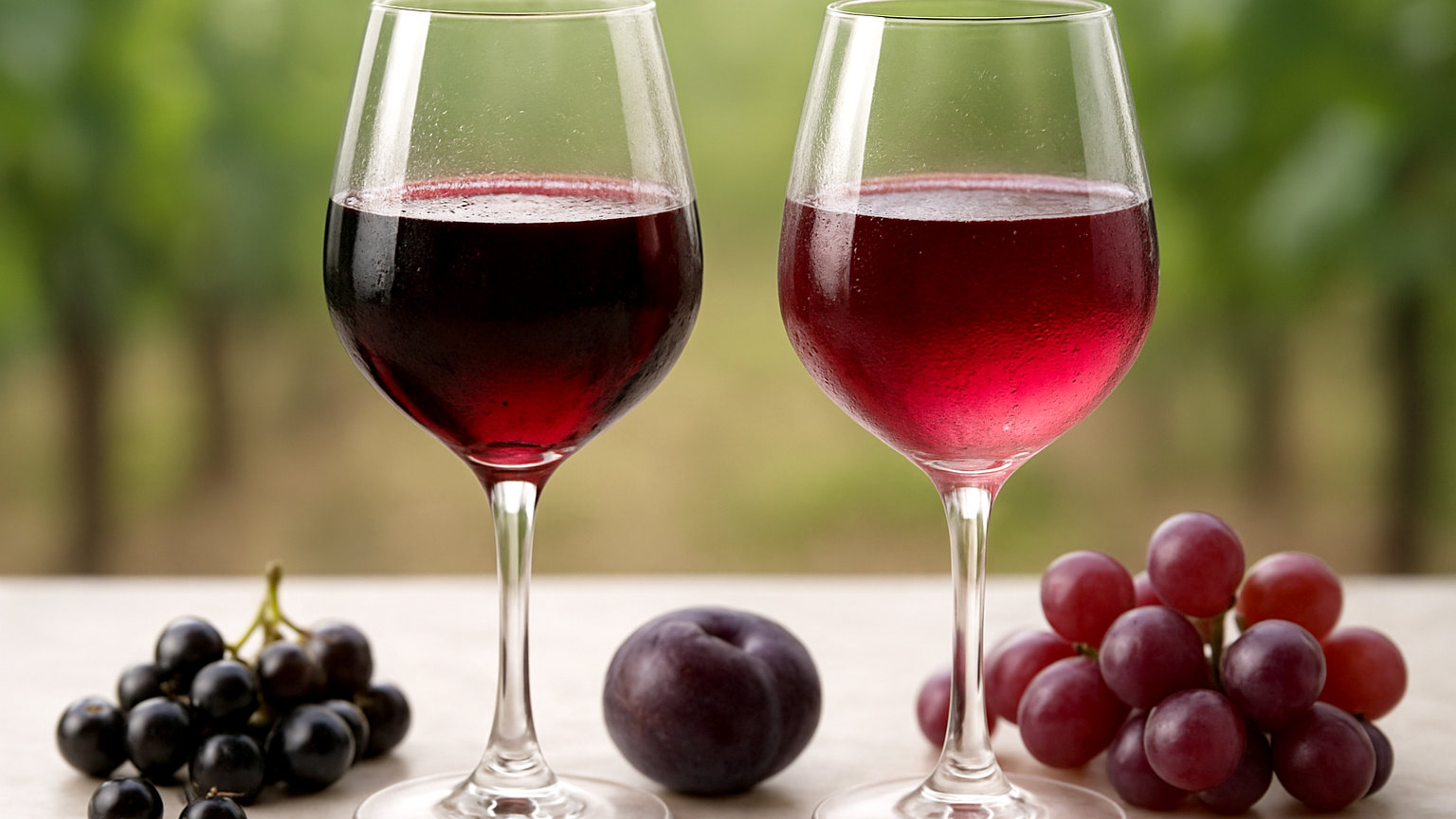
Cabernet sauvignon and merlot are the most widely planted red grapes on earth, and they are traditionally blended rather than bottled separately. Understanding why explains a great deal about both.
What does cabernet sauvignon taste like?
Blackcurrant above all, with cedar, graphite and often a green herbal note. It is firmly tannic, high in acidity and structured rather than generous.
The tannin is the defining feature. It gives the wine grip and the ability to age, and it can be austere when young or when the fruit is not fully ripe.
What does merlot taste like?
Plum, black cherry and chocolate, softer and rounder with lower tannin. It ripens earlier and gives a plusher, more immediately approachable wine.
Merlot has an undeserved reputation for blandness, which comes from a period of overproduction rather than from the grape. Good merlot is excellent and often better value than cabernet.
Why are they blended?
Because each covers what the other lacks. Cabernet brings structure, tannin and ageing potential; merlot brings flesh, softness and mid-palate weight.
Bordeaux is built on this, with the Left Bank favouring cabernet and the Right Bank favouring merlot. Cabernet franc, petit verdot and malbec make up the rest of the classic blend.
How does climate change them?
- Cool climate. Higher acidity, firmer tannin, more herbal and green pepper character. Bordeaux, cooler parts of Chile.
- Warm climate. Riper fruit, softer tannin, higher alcohol, more jammy. Australia, California, Argentina.
The same grape can produce a lean 12.5 per cent wine or a rich 15 per cent one. Checking the alcohol on the label is a reliable shortcut to knowing which you are buying.
What food do they suit?
Red meat, above all. Tannin binds with protein and fat, which softens the wine and cuts the richness, and it is why steak and cabernet is a genuine pairing rather than a cliché.
Merlot is more flexible, suiting roast chicken, pork and mushroom dishes as well as red meat. Neither suits fish or anything delicate.
Where does the value sit?
- Chile. Consistently good cabernet at everyday prices.
- South West France. Bordeaux-style blends without the name premium.
- Bulgaria and Romania. Improving quickly and cheap.
- Washington State. Excellent and less known than California.
- Chilean and French merlot at the everyday level, where the grape is unfashionable and priced accordingly.
Basic Bordeaux is frequently poor value, since the name carries a premium the wine does not always justify. The same money in Chile or South West France buys considerably more.
Do they need age?
Serious cabernet does, since young tannin needs years to soften. Everyday versions are made to drink now and will not improve.
Merlot is generally ready earlier, which is another reason it offers better value at the lower end.
How should you serve them?
At around 16 to 18 degrees, which is cooler than most rooms. A tannic red served at 22 degrees tastes alcoholic and flabby, and twenty minutes in the fridge before opening genuinely improves it.
How long do they keep once opened?
Two to three days with the cork in and the bottle in the fridge, which suits tannic reds better than delicate ones. Tannin acts as an antioxidant and slows the deterioration.
Take it out half an hour before pouring, since a red straight from the fridge is too cold to show anything.
What are the other Bordeaux grapes?
Cabernet franc, which is lighter and more aromatic with a leafy edge. Petit verdot, which adds colour and tannin in small proportions. Malbec, now more associated with Argentina.
Cabernet franc on its own, particularly from the Loire, is worth seeking out and is usually good value.
Which should you buy?
Merlot at the everyday level, since it is unfashionable and priced accordingly. Cabernet once you are spending a little more, where its structure justifies the cost.
Why are they so widely planted?
Because both adapt to a wide range of climates and both are commercially reliable. Cabernet in particular has thick skins and ripens late, which makes it resistant to rot and easy to transport.
That adaptability is why the same two grapes appear on every continent that makes wine, which is unusual even among international varieties.


