
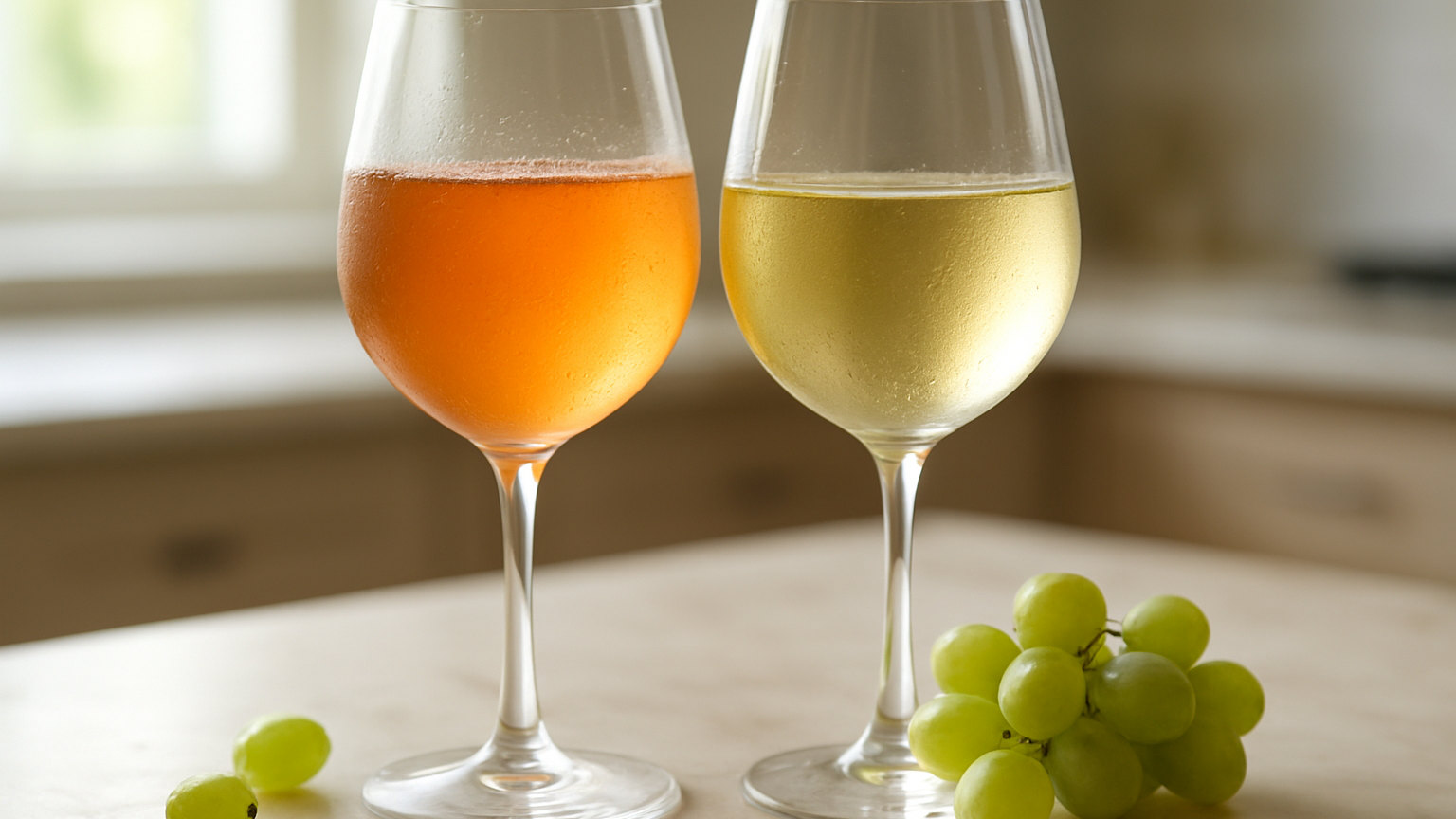
These two terms are frequently used together and describe different things. One is a production method with a clear definition; the other is a movement with no legal standing at all.
What is orange wine?
White wine made like red, with the juice left in contact with the grape skins during fermentation rather than pressed off immediately.
That skin contact extracts colour, tannin and phenolic compounds, giving an amber or orange wine with grip and structure that white wine normally lacks.
The method is ancient rather than new. It has been practised in Georgia for thousands of years, traditionally in buried clay vessels called qvevri.
What does it taste like?
Dried apricot, orange peel, tea, nuts and often a slightly oxidative, savoury character. It has noticeable tannin, which is startling in a white wine.
Styles vary enormously depending on how long the skin contact lasted, from a few days to several months.
What food does it suit?
Its tannin and savoury character make it far more flexible than white wine with strong food. Curry, fermented dishes, hard cheeses, cured meat and mushroom dishes all work.
It handles several things that defeat conventional wine, which is a genuine practical argument for the category rather than a stylistic one.
What is natural wine?
A loose term for wine made with minimal intervention: organic or biodynamic farming, wild yeast fermentation, no additives and little or no added sulphur.
There is no legal definition and no enforced standard, so the term means whatever the producer intends it to mean. Some voluntary certifications exist and none is universal.
What does added sulphur do?
It acts as an antioxidant and antimicrobial, protecting wine from spoilage and oxidation. Almost all wine contains some, since fermentation produces it naturally.
Reducing or omitting it makes the wine more vulnerable, which is why natural wines are more variable between bottles and often need cooler storage.
Is natural wine better?
It is different, and the honest answer is that the category is inconsistent. At its best it produces vivid, distinctive wine with genuine character.
At its worst it produces wines with faults that would be rejected elsewhere: volatile acidity, mousiness or oxidation. Whether those count as faults or as character is precisely what the argument is about.
Supporters argue that intervention flattens distinctiveness. Critics argue that some interventions simply prevent spoilage and that tolerating faults is not the same as authenticity.
What about sulphite sensitivity?
Genuine sulphite allergy is rare and mainly affects some people with asthma. Wine headaches are commonly blamed on sulphites and the evidence for that link is weak, since dried fruit contains considerably more.
Anyone with a diagnosed sensitivity should take medical advice rather than relying on category labels, which are not standardised.
How should you approach the category?
With curiosity and a willingness to find some bottles unusual. Buying from a merchant who tastes what they sell matters more here than in any other part of wine.
How should you serve them?
Orange wine cool rather than cold, 12 to 14 degrees, since chilling accentuates the tannin. Natural wines often benefit from being served cooler and from being kept refrigerated once opened.
Are the two the same thing?
No, and they overlap heavily in practice. Orange wine is a method and can be made conventionally; natural wine is an approach and is often applied to skin-contact whites.
Many bottles are both, which is why the terms get used interchangeably.
Where should you start?
A short-maceration orange wine rather than an extended one, since months of skin contact produces something genuinely challenging. Slovenian, Italian and Georgian examples are the most widely available.
How should you store them?
Cooler than conventional wine and out of light. Wines made with little or no added sulphur are more vulnerable to heat and oxidation, and several merchants keep them refrigerated for that reason.
Once opened they change quickly, so drink within a day or two.


