
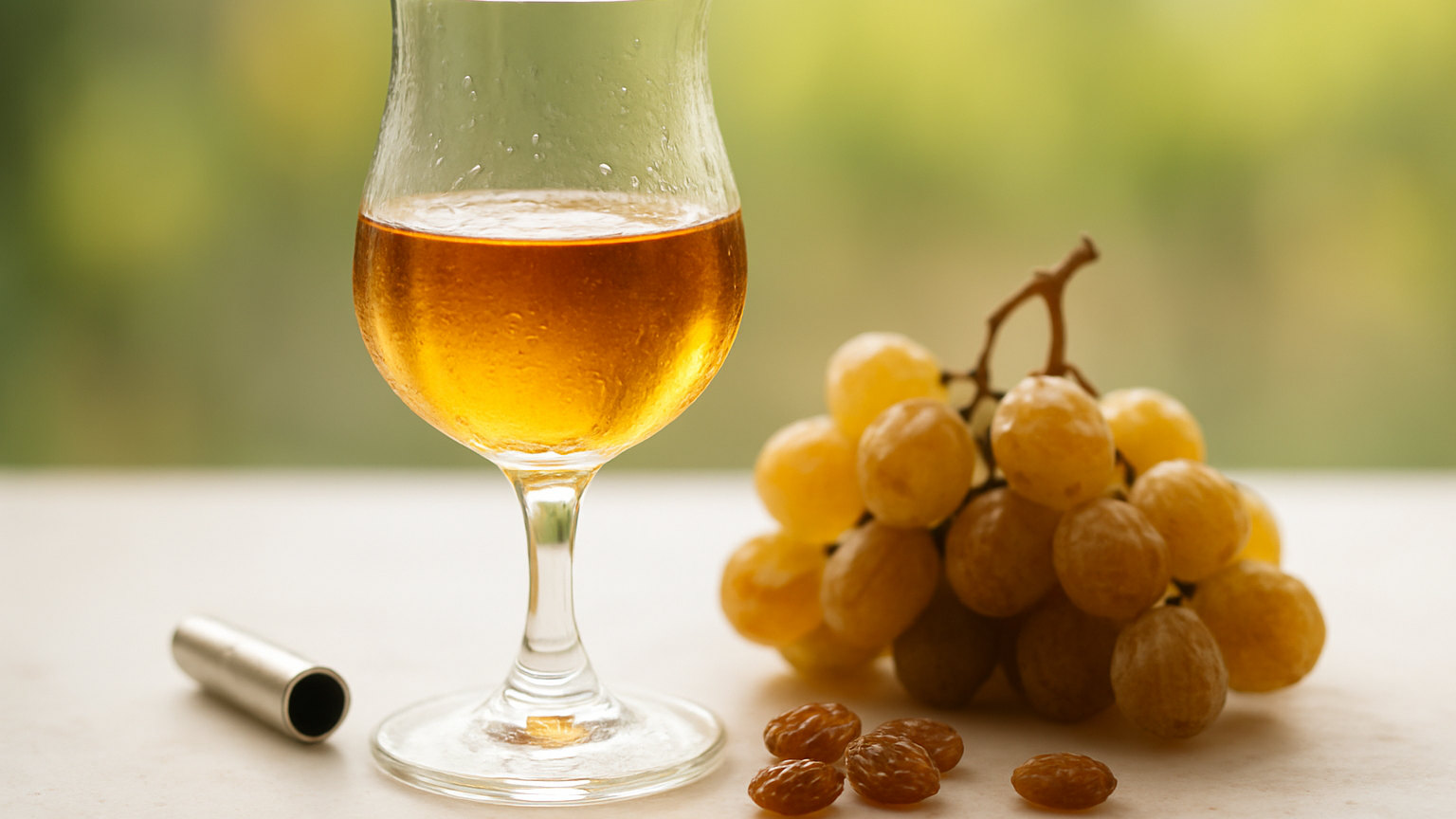
Sweet wine is a small and shrinking category, which is a shame because it contains some of the most remarkable wine made anywhere. The methods used to produce it are also more interesting than most people realise.
How is sweetness achieved?
Almost never by adding sugar. The methods concentrate what is already in the grape, or stop fermentation before the yeast has consumed it all.
- Noble rot. A benign fungus dehydrates the grapes, concentrating sugar and acid.
- Late harvest. Grapes left on the vine to raisin and concentrate.
- Ice wine. Grapes frozen on the vine and pressed while frozen.
- Dried grape. Grapes dried on mats or racks after picking.
- Fortification. Spirit added mid-fermentation, killing the yeast and leaving sugar.
What is noble rot?
Botrytis cinerea, a fungus that in the right conditions punctures grape skins and allows water to evaporate. The remaining juice is intensely concentrated in sugar, acid and flavour.
It also contributes its own character: honey, marmalade, saffron and dried apricot. It is the basis of Sauternes, Tokaji and German beerenauslese.
The same fungus in wet conditions produces grey rot, which ruins the crop. The difference is humid mornings followed by dry afternoons, which is why the regions producing it are geographically specific.
Why is it so expensive?
Because yields collapse. A dehydrated grape yields a fraction of the juice, the rot arrives unevenly so pickers go through the vineyard repeatedly, and some years produce nothing at all.
A vine that would make a bottle of dry wine may make a single glass of Sauternes.
What is ice wine?
Grapes left on the vine until they freeze, then pressed while still frozen so the water stays behind as ice. Made mainly in Germany, Austria and Canada.
It requires a hard frost at the right moment after a long ripening, which is unpredictable. The result is intensely sweet with piercing acidity.
What are the dried grape wines?
Vin santo in Tuscany, recioto in the Veneto, and Pedro ximénez sherry in Spain, all made by drying grapes before pressing. The character is raisined and nutty rather than fresh.
Why does acidity matter so much?
Because without it sweet wine is cloying. The great sweet wines have acidity high enough to balance enormous sugar levels, which is why they taste fresh rather than syrupy.
That balance is the whole difference between a fine dessert wine and a sugary one.
What should you serve them with?
- Sauternes. Blue cheese, foie gras, fruit tarts.
- Tokaji. Cheese, apple desserts, spiced puddings.
- Ice wine. On its own, or with simple fruit.
- Vin santo. Almond biscuits, for dipping.
- Pedro ximénez. Poured over vanilla ice cream.
The rule is that the wine must be at least as sweet as the dish, or it tastes thin and sour by comparison.
How much should you serve?
Small measures, 60 to 75ml. A 75ml pour of a 13 per cent Sauternes is around 1 unit, and the intensity means a little goes a long way.
Half bottles are standard for exactly this reason, and an opened bottle keeps a week or two refrigerated.
Are they worth trying?
Yes, and half bottles make it inexpensive to do so. A half bottle of a good Sauternes or Tokaji costs less than a full bottle of ordinary wine and gives six or eight servings.
How long does an opened bottle last?
Considerably longer than dry wine. High sugar and high acidity both preserve it, so a refrigerated half bottle keeps a week or two and fortified sweet wines keep for months.
Why is the category shrinking?
Changing habits more than quality. Fewer people finish a meal with a sweet course, and a small glass of intensely sweet wine sits awkwardly in modern drinking patterns.
That has kept prices for some outstanding wines lower than they might otherwise be, which is an opportunity if you enjoy them.
Which should you try first?
A half bottle of Sauternes or a Hungarian Tokaji, both of which show noble rot character clearly. Pedro ximénez sherry is the cheapest way in and is remarkable poured over ice cream.
Ice wine is the most expensive of the group and the least essential as a starting point.


