
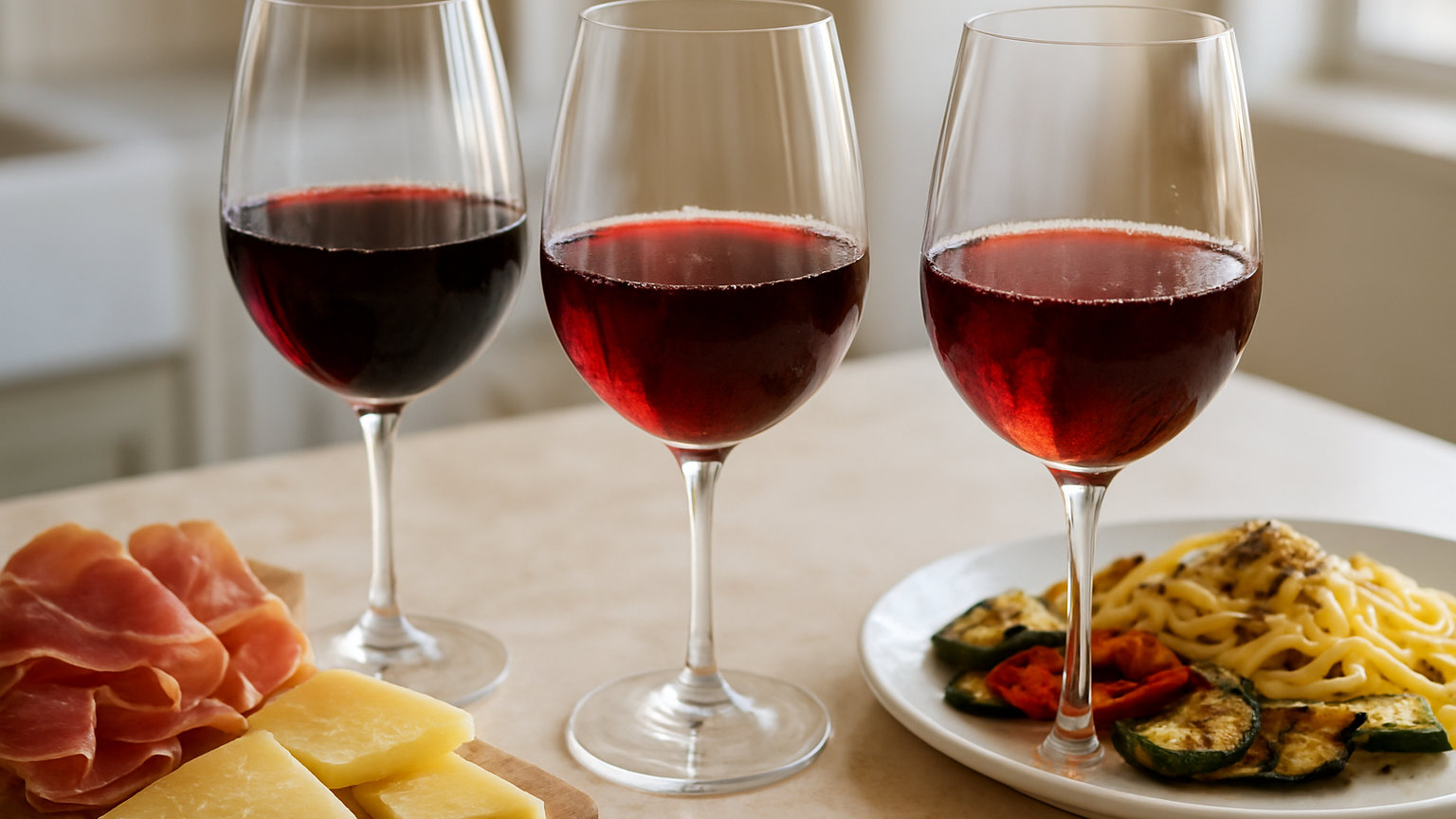
Spain and Italy produce wines that taste noticeably different from the international varieties, and three grapes account for most of what people encounter. All three share a savoury, acidic, food-oriented character.
What is tempranillo like?
Red cherry, dried fig and leather, with moderate tannin and moderate acidity. It is the backbone of Rioja and Ribera del Duero.
Much of its character in Rioja comes from oak rather than the grape. Extended ageing in American oak gives the coconut, vanilla and dill notes that many people identify as Rioja itself.
What do the Rioja terms mean?
- Joven or generic. Little or no oak. Fresh and fruity.
- Crianza. At least two years total, one in oak.
- Reserva. At least three years, one in oak.
- Gran reserva. At least five years, two in oak.
These describe ageing rather than quality, and they are unusually informative for a wine label. A gran reserva is guaranteed to have had time; whether it was good wine to begin with is a separate matter.
What is sangiovese like?
Sour cherry, tomato leaf, dried herbs and a distinctly savoury edge, with high acidity and firm tannin. It is the grape of Chianti, Brunello di Montalcino and Vino Nobile.
The acidity is the defining feature and it is why sangiovese is such a good food wine. On its own it can seem austere; with tomato-based food it makes complete sense.
What is nebbiolo like?
Rose, tar, cherry and dried herbs, with very high tannin and very high acidity in a pale-coloured wine. That combination of light colour and enormous structure surprises people.
It is the grape of Barolo and Barbaresco, and it is among the longest-lived wines in the world. Young Barolo is genuinely difficult, and it needs a decade or more to become approachable.
Why are these food wines?
Because acidity and tannin both work against fat and protein. High-acid wines cut through rich food and are refreshed by it, where the same wine on its own can taste sharp.
That is why Italian reds so often seem austere when tasted alone and excellent at the table. They were made for a culture where wine is drunk with food.
Where does the value sit?
- Rioja crianza. Consistently among the best-value reds anywhere.
- Chianti Classico. Reliable and reasonably priced.
- Langhe nebbiolo. Younger, cheaper nebbiolo from the Barolo region.
- Barbera and dolcetto. The everyday reds of Piedmont, and excellent value.
- Toro and Ribera del Duero at the entry level.
Barolo and Brunello carry large premiums. Langhe nebbiolo and Rosso di Montalcino offer much of the character at a fraction of the price.
What food do they suit?
Tempranillo with lamb, chorizo and roast pork. Sangiovese with tomato-based pasta, pizza and grilled meats. Nebbiolo with truffle, mushroom, game and aged cheese.
How should you serve them?
At 16 to 18 degrees, and nebbiolo benefits from decanting, sometimes by several hours. All three are more enjoyable with food than without.
Do the classification terms guarantee quality?
They guarantee time in oak and in bottle, which is a real piece of information and not the same thing. A gran reserva made from indifferent fruit will simply be old indifferent wine.
They are most useful for knowing what style to expect rather than how good it will be.
Which should you try first?
Rioja crianza, which is widely available, reliably good and inexpensive. Chianti Classico is the natural second, and Langhe nebbiolo the third if you want to understand what Barolo is doing without the price.
Why do they taste better with food?
Because acidity and tannin both find something to work against. Fat and protein soften tannin and are cut by acidity, so the wine tastes rounder and the food tastes cleaner.
A wine that seems severe on its own can be exactly right at the table, which is why these are so often described as food wines rather than sipping wines.
How should you store and serve them?
At 16 to 18 degrees, which is cooler than most heated rooms. Nebbiolo in particular benefits from decanting, sometimes for several hours, since young tannin softens considerably with air.
Opened bottles keep two or three days refrigerated, helped by the tannin and acidity that make them difficult when young.


