
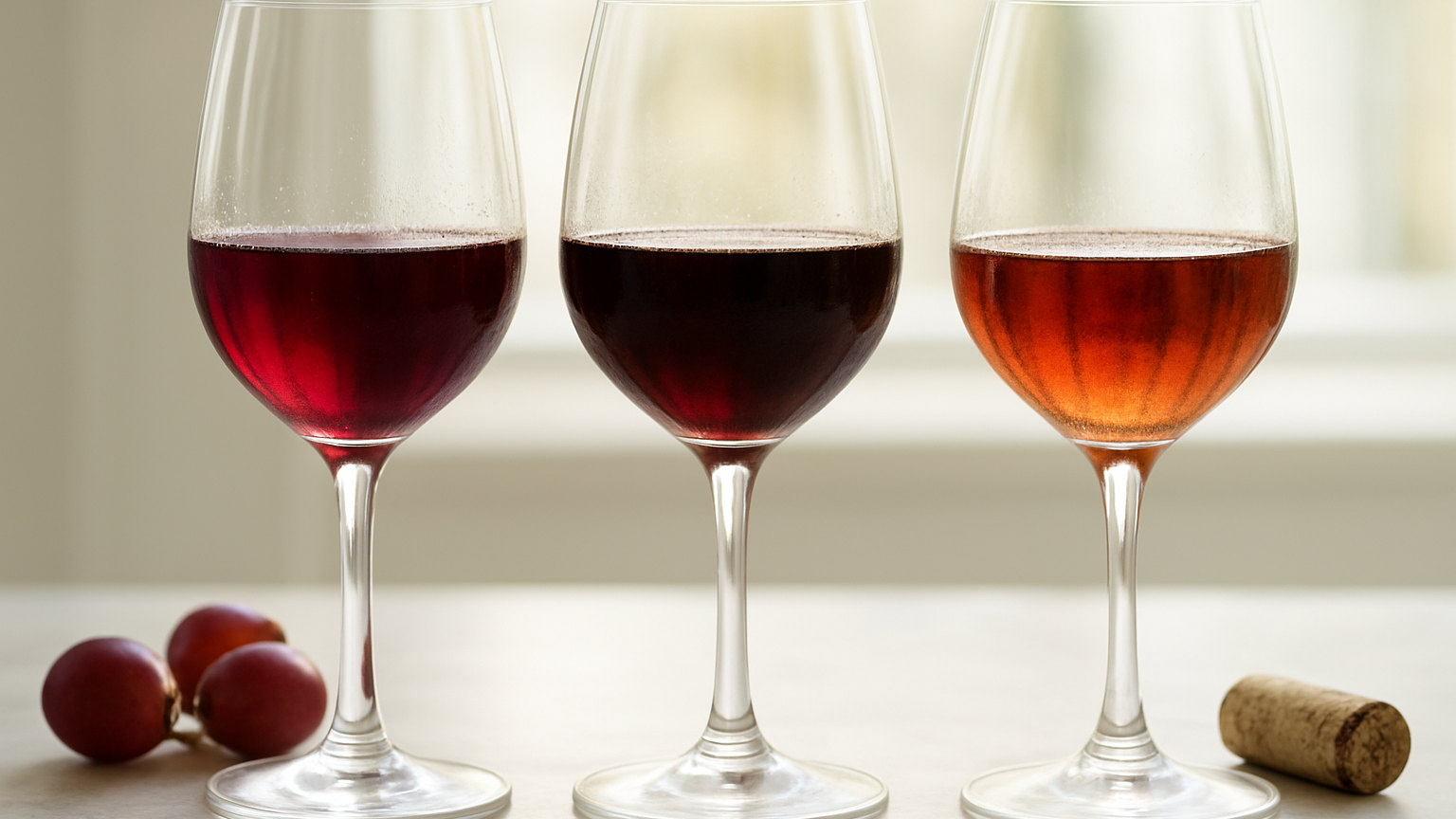
Looking at the wine is the first step in any tasting method and the one people spend the least time on. It genuinely indicates a few things, and it is easily overinterpreted.
How should you look at it?
Tilt the glass away from you against a white background, in natural light if possible. Look at the centre of the wine and at the rim where it thins out.
The rim is more informative than the centre, since colour differences show more clearly where the liquid is shallow.
What does colour indicate in red wine?
Age, most reliably. Red wine loses colour as it ages, moving from purple through ruby to garnet and eventually brick and brown.
- Purple rim. Very young, usually under two years.
- Ruby. Young to middle-aged.
- Garnet with an orange rim. Maturing.
- Brick or tawny. Old.
The rim shows this before the centre does, which is why a wide pale rim on a dark wine suggests some age.
What does it indicate in white wine?
The opposite. White wine gains colour with age, moving from pale straw through gold to amber.
A deep gold young white usually indicates oak ageing or a full-bodied style. A deep gold old white indicates maturity, and an amber one is either very old, deliberately oxidative or faulty.
Can you tell them apart?
Not from colour alone. A browning white might be a mature Burgundy or an oxidised bottle, and only smelling it will tell you which.
What does depth of colour indicate?
Grape variety more than anything. Thick-skinned grapes such as syrah, malbec and cabernet give deeply coloured wine; thin-skinned pinot noir and nebbiolo give pale wine regardless of quality.
A pale nebbiolo can be enormously powerful and a deep malbec can be simple. Colour depth is a poor guide to intensity, which surprises people.
What about clarity?
Most wine is bright and clear. Cloudiness may indicate an unfiltered wine, which is deliberate, or a fault such as bacterial spoilage.
Unfiltered natural wines are frequently hazy by design, so cloudiness alone is not evidence of a problem.
What is sediment?
Precipitated tannin and colouring matter in older reds, entirely normal and harmless. Decant off it rather than shaking the bottle.
Tartrate crystals, which look like small shards of glass, are also harmless. They form when a wine is chilled and are tasteless, though they alarm people who have not seen them.
What can colour not tell you?
- Quality. No relationship.
- Sweetness. Particularly in rosé, where the assumption is common and wrong.
- Body. A pale wine can be full bodied.
- Price. Obviously.
Is it worth doing at all?
Briefly, and as one input among several. It takes two seconds, it gives a reasonable guess at age, and it should not be allowed to shape the assessment before you have smelled anything.
Anyone who claims to identify a wine from colour alone is guessing more than they admit.
Does the light matter?
Yes. Warm artificial light distorts colour considerably, and coloured tablecloths make it worse. Natural light against a white background is the only reliable way to look.
That is why professional tasting rooms are painted white and lit neutrally, which sounds fussy and genuinely affects what you see.
Is a deeper colour more concentrated?
Not reliably. Grape variety governs colour depth far more than concentration does, so a pale pinot noir can be considerably more intense than a deep malbec.
Colour depth also increases with certain winemaking choices, so it is a poor proxy for anything you would actually want to know.
How reliable is age estimation?
Reasonably, within broad bands, and it varies by grape. A pale-rimmed pinot noir might look older than it is, and a deeply coloured syrah younger.
Treat it as a first guess to be confirmed or overturned by everything that follows.
Should you look before smelling?
Conventionally yes, and there is an argument for the reverse. Looking first creates an expectation that can shape what you then smell, particularly if the colour suggests age or weight.
Smelling first and looking afterwards is a reasonable habit for anyone worried about anchoring themselves.


