
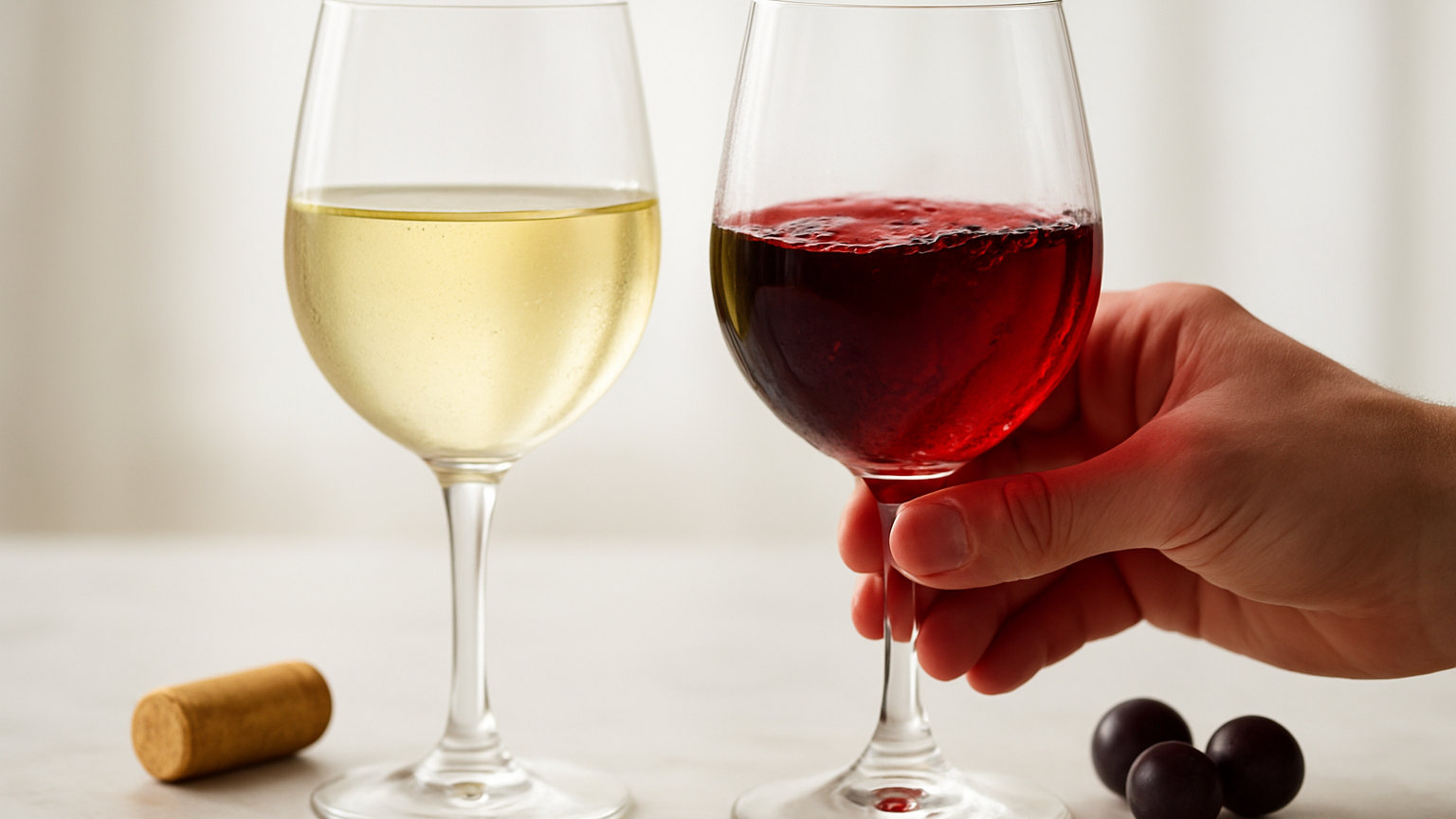
Body is the term people use most confidently and define least clearly. It is a real and useful property, and it is the first thing to establish when pairing wine with food.
What is body?
The impression of weight and viscosity a wine leaves in the mouth. It is a tactile sensation rather than a flavour, in the same way that tannin is.
The standard comparison is milk. Skimmed milk feels light, semi-skimmed medium, full fat heavy. Wine spans a comparable range.
What causes it?
- Alcohol. The largest single contributor. Higher alcohol feels heavier.
- Residual sugar. Adds weight and viscosity.
- Glycerol. A by-product of fermentation contributing texture.
- Dissolved solids. Extract from skins and seeds.
- Oak ageing. Adds texture and weight.
- Lees contact. Adds a creamy fullness.
Alcohol dominates, which is why the figure on the label is a good first guess at body before you have tasted anything.
How does alcohol map to body?
- Under 12 per cent. Usually light bodied.
- 12 to 13.5 per cent. Usually medium.
- Above 13.5 per cent. Usually full.
It is not exact. A high-acid wine at 13.5 can feel lighter than a soft one at 13, since acidity cuts through the impression of weight.
How do you judge it?
Take a sip and notice how the wine coats the mouth. A light wine feels like water with flavour; a full one feels like it has substance and lingers on the palate.
Comparing two wines side by side is far easier than judging one alone, which is true of nearly everything in tasting.
Which wines are light bodied?
Muscadet, pinot grigio, vinho verde, riesling, gamay, pinot noir, barbera. Cool-climate wines generally, since they ripen less and accumulate less sugar to ferment.
Which are full bodied?
Oaked chardonnay, viognier, cabernet sauvignon, syrah, malbec, zinfandel, grenache. Warm-climate wines generally.
Is full bodied better?
No, and it is frequently used as though it were. Body describes style, not quality, and some of the finest wines in the world are light bodied.
The association with quality comes partly from the assumption that more is better and partly from a period when ripe, powerful wines scored well with influential critics.
Why does it matter for food?
Because matching the weight of the wine to the weight of the dish is the single most important pairing decision. A delicate wine disappears under a heavy dish; a full wine erases a delicate one.
Establishing body first and worrying about flavour second handles most pairings correctly.
Does temperature affect it?
Yes. Warmth accentuates alcohol and makes a wine feel heavier and more alcoholic; cold makes it feel lighter and crisper.
A full-bodied red served too warm can taste flabby and hot, which is one reason serving temperature matters more than most people allow.
Is body the same as tannin?
No, though they often occur together. Tannin is a drying grip; body is a sense of weight. A wine can be full bodied with almost no tannin, such as an oaked chardonnay, or light bodied with noticeable tannin, such as young nebbiolo.
Confusing the two is common and it leads people to describe pale, tannic wines as heavy when they are not.
How does it relate to units?
Directly, since alcohol drives both. A full-bodied wine at 14.5 per cent gives 2.5 units per 175ml glass, against 1.9 for a light one at 11.
How does winemaking change it?
Substantially. Lees stirring adds creamy texture, oak ageing adds weight, and malolactic fermentation softens acidity in a way that reads as fuller.
That is why two chardonnays from the same vineyard can occupy quite different points on the scale.
Can you judge it before opening?
Roughly, from the alcohol on the label and the region. A 12 per cent wine from a cool climate will be lighter than a 14.5 per cent one from a warm one, almost without exception.
That makes body the easiest property to predict from a shelf, which is useful when matching a bottle to a meal you have already planned.
Does it change as a bottle ages?
Slightly. Tannin softens and fruit fades, which can make an old wine feel lighter than it did young even though nothing has been removed.


