
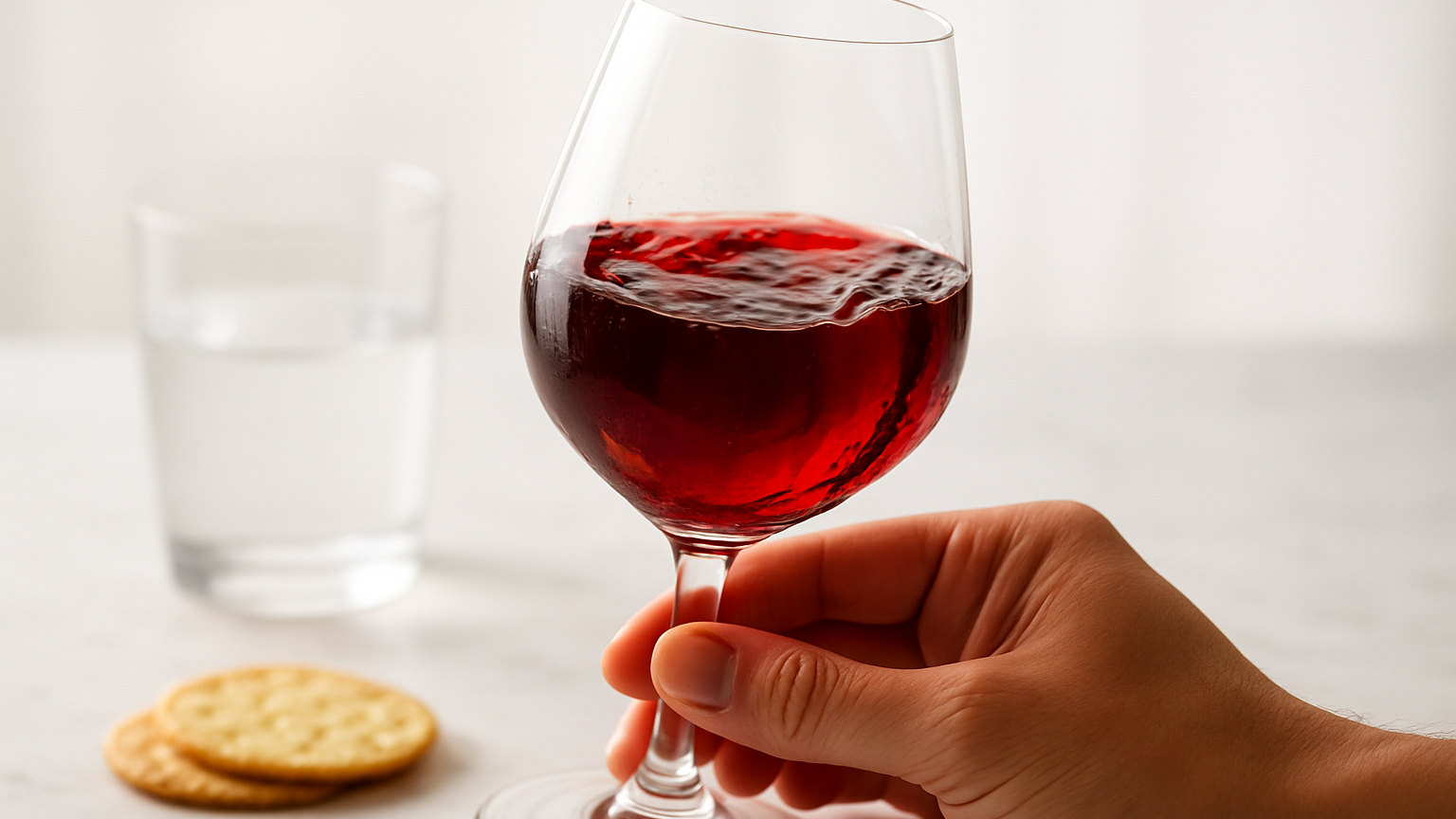
Wine tasting has acquired more ceremony than it needs, which puts people off something genuinely useful. The whole method takes half a minute and every step exists for a reason worth knowing.
What is the method?
- Look. Colour and clarity, tilted against something white.
- Swirl. Releases aroma compounds into the air above the wine.
- Smell. Two or three short sniffs rather than one deep one.
- Taste. A small sip, moved around the mouth.
- Consider the finish. What remains after swallowing.
Why does the first sip tell you so little?
Because your palate has not adjusted to the alcohol or the acidity. The first sip of almost any wine registers mostly as sharpness and warmth.
Take a small preparatory sip and disregard it. The second tells you considerably more, and this is standard practice among professionals rather than an affectation.
What should you smell for?
Two or three short sniffs work better than one long inhalation, since olfactory receptors fatigue quickly. Give it a moment and come back.
Do not try to name things immediately. Notice first whether the aroma is fruity, floral, earthy, spicy or savoury, then narrow down. Naming is the last step, not the first.
Does swirling matter?
Yes, and it is covered in detail separately. Briefly, it increases the surface area and releases volatile compounds into the space above the wine, which is where you smell them.
What should you notice when tasting?
- Sweetness. Detected at the front of the mouth, immediately.
- Acidity. How much you salivate afterwards.
- Tannin. A drying, gripping sensation, not a taste.
- Body. How heavy the wine feels.
- Alcohol. Warmth at the back of the throat.
- Flavour. Which arrives through the nose from inside the mouth.
Five of those six are structural rather than flavour. That is why a useful tasting note says more about how a wine is built than about which fruit it resembles.
Why does flavour come through the nose?
Because the tongue detects only sweet, sour, salt, bitter and savoury. Everything else described as flavour is aroma reaching the olfactory receptors from the back of the mouth.
That is why food tastes of nothing with a blocked nose, and why breathing out gently through the nose after swallowing reveals a great deal more than holding the wine in the mouth.
Should you slurp?
It genuinely helps, and it looks ridiculous. Drawing air through the wine in the mouth volatilises aroma compounds and carries them to the back of the nose.
It is worth doing when tasting seriously and unnecessary when simply drinking. Nobody needs to slurp at dinner.
What is the finish?
What remains after swallowing, and how long it lasts. A long finish is generally a sign of quality; a wine that disappears immediately is usually simple.
Does any of this improve the wine?
It improves what you notice, which amounts to the same thing. Attention is the whole technique, and the steps are simply ways of directing it.
Nobody needs to do this with every glass. Doing it occasionally builds the vocabulary and the memory that make ordinary drinking more interesting.
How much should you pour?
Around 50ml for tasting, which looks meagre and leaves room to swirl. A glass filled beyond a third cannot be swirled and traps no aroma above the wine.
For several wines in a session, small pours are what keep the exercise useful. Five at 50ml is 250ml in total, roughly a third of a bottle.
Does the order matter?
Yes, when tasting more than one. Light to heavy, dry to sweet, low alcohol to high, since a powerful wine flattens whatever comes after it.
Water and a plain cracker between wines resets the palate more effectively than anything else.
What temperature should the wine be?
Cool for whites, around 8 to 10 degrees, and 16 to 18 for reds, which is cooler than most heated rooms. Serving temperature changes what you perceive more than almost anything else you control.
A red served too warm tastes alcoholic and flat; a white served too cold tastes of very little at all.


