
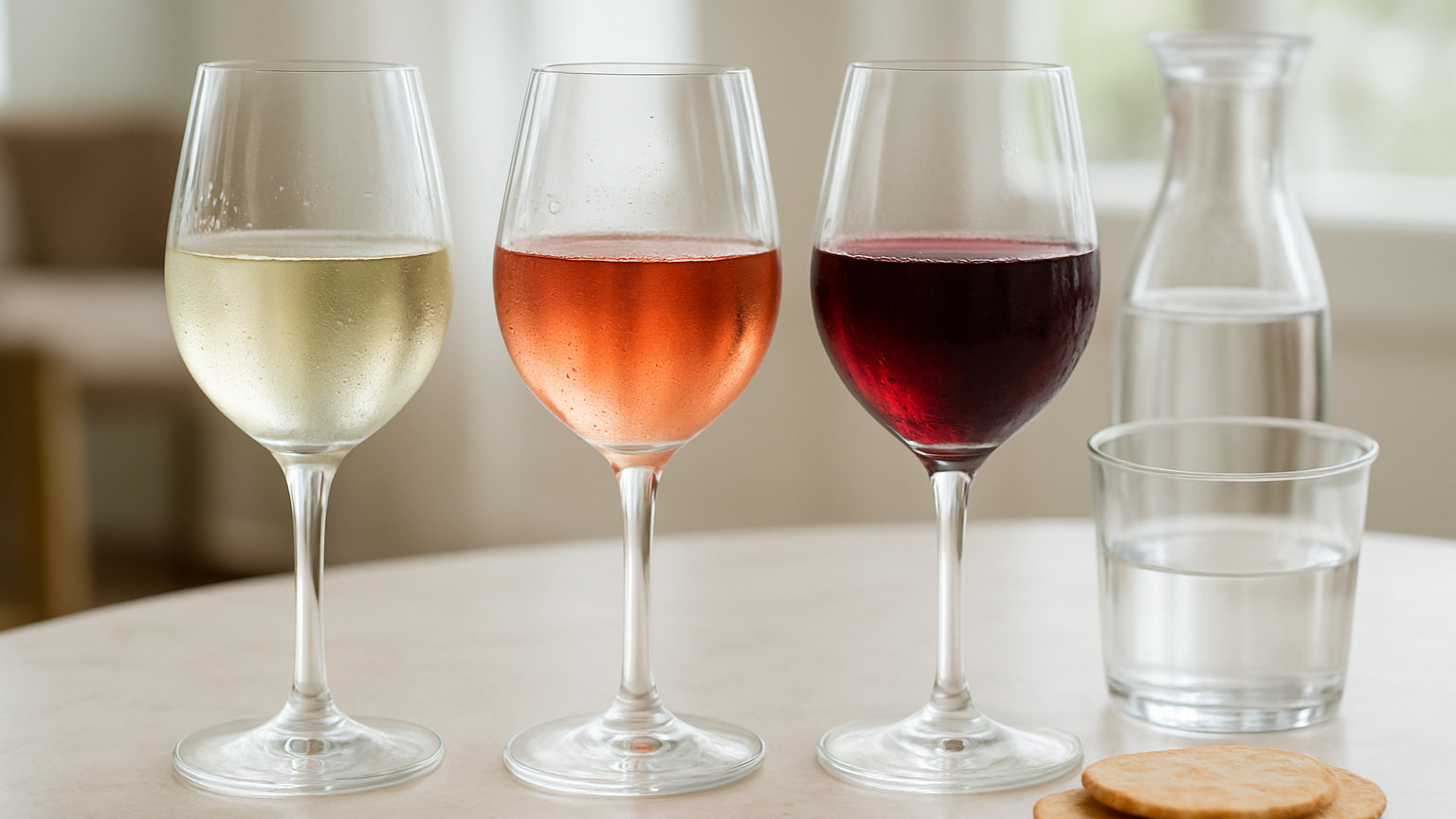
A wine tasting at home is easy to over-plan. The usual mistakes are too many wines, pours that are too generous, and no theme, which leaves everyone comparing things that have nothing in common.
How many wines?
Four to six. Beyond that palate fatigue sets in and the later wines are wasted on people who can no longer distinguish them.
Five is comfortable. Six is the practical maximum for most people without spitting.
How large should the pours be?
Fifty to 75ml, which is roughly a third of a standard glass. Five wines at 60ml comes to 300ml in total, less than half a bottle each.
At an average of 13 per cent, that is around 3.9 units across an evening, which is a reasonable amount. The same five wines at 150ml each would be nearly 10 units and nobody would remember the last two.
Why does a theme matter?
Because comparison teaches and isolated tasting does not. Four unrelated bottles produce four separate opinions; four bottles differing in one variable produce understanding.
- One grape, several countries. Shows what climate does.
- One region, several producers. Shows what winemaking does.
- Price ladder. Shows what money buys.
- Oaked against unoaked. Isolates one decision.
- Vertical, same wine across vintages. Shows what age does.
What order should they go in?
Light to heavy, dry to sweet, young to old, low alcohol to high. A powerful wine flattens whatever follows it.
Whites before reds, unless the theme dictates otherwise. Sweet wines last.
What do you need?
- One glass per person per wine, or one glass rinsed between.
- Water, in quantity, for drinking and rinsing.
- Plain bread or crackers.
- A spittoon, even if nobody uses it.
- Paper and pens.
- Somewhere to note what everyone thought.
What food should you provide?
Very little during the tasting, and something substantial afterwards. Food coats the palate and changes how wine tastes, which is the point of pairing and the enemy of comparison.
Plain bread and water between wines is enough. Cheese and charcuterie afterwards makes an evening of it.
Should it be blind?
It is considerably more informative if it is. Cover the bottles, number them, and reveal only after everyone has ranked them.
Ask people to write notes before speaking, since the first person to describe a wine anchors everyone else.
How long should it take?
An hour to ninety minutes for five wines, then food. Rushing defeats the point and stretching it means everything is warm.
What should you tell people?
What the theme is, roughly what each wine costs, and how strong they are. Also that there is no wrong answer, which matters more than it sounds.
Somebody is usually driving, so make spitting normal and have a decent non-alcoholic option out from the start rather than produced on request.
How much wine do you need?
One bottle per wine covers ten to twelve people at 60ml pours. For six people, five bottles is generous and leaves plenty for afterwards.
Should you rank them?
Yes, and before revealing anything. Ranking forces a decision that discussion tends to blur, and comparing rankings afterwards is where the interesting disagreements emerge.
What if nobody agrees?
That is the normal result and a good one. Sensitivity to specific compounds varies genuinely between people, so disagreement is usually two accurate reports rather than one error.
Should you provide notes sheets?
A simple one helps. Four headings covering sweetness, acidity, body and whether they liked it is enough, and it gives people something to do with their hands.
Elaborate scoring sheets make it feel like an examination and put people off contributing.
What about the reveal?
Do it after everyone has ranked and written. Revealing prices at the same time is the part people find most interesting, and it frequently produces surprise.
What is the simplest version?
Two bottles, four people, small pours, and a single question: which do you prefer and why. That is a genuine tasting and it requires no organisation at all.
Scaling up to five wines adds range and does not add much understanding, so the small version is a perfectly good place to stay.


