
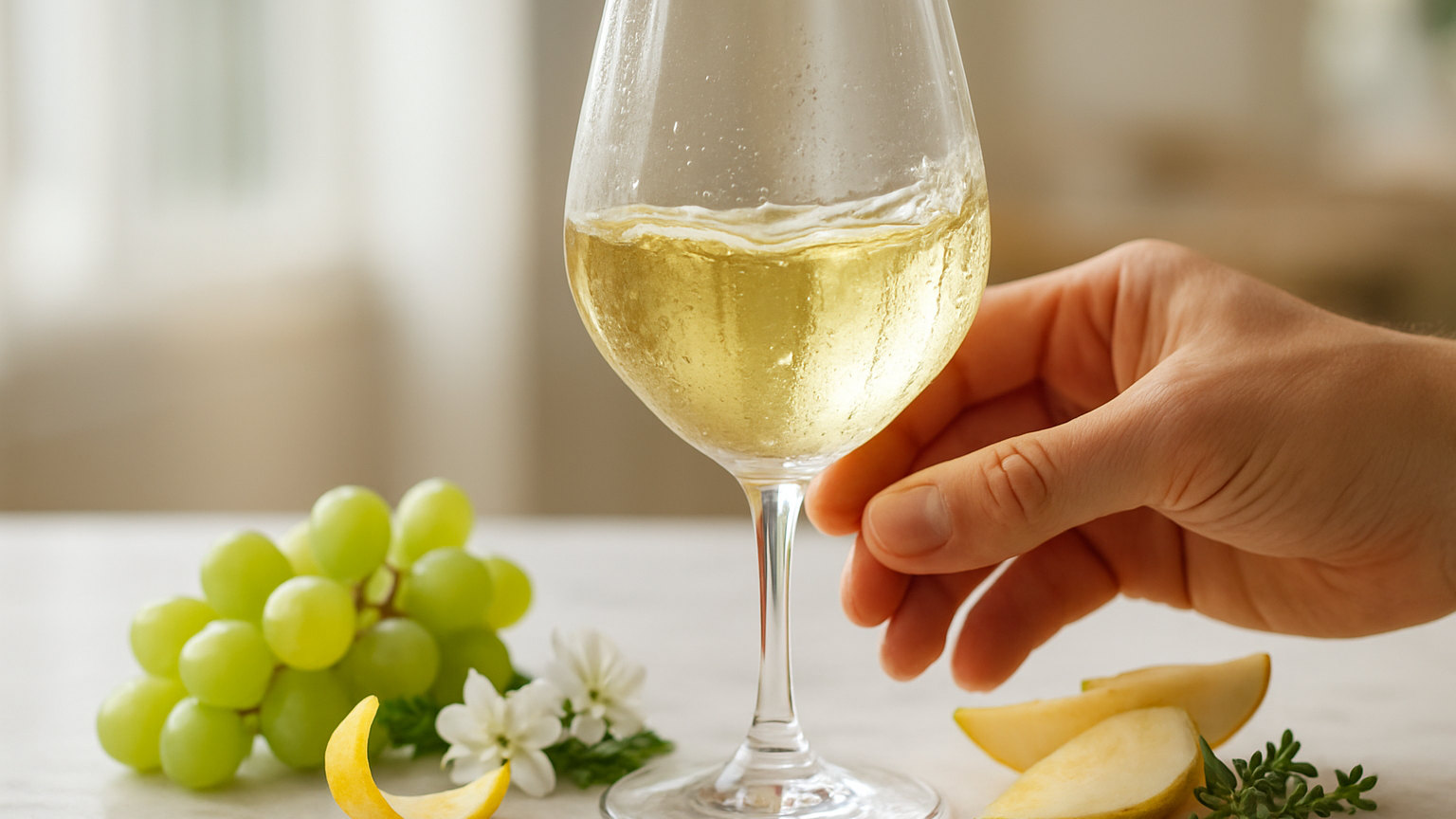
Most people can recognise hundreds of smells and name very few of them. That gap between recognition and naming is why wine aromas feel so difficult to describe, and it is a general feature of human olfaction rather than a wine problem.
Why is naming smells so hard?
Because the olfactory system connects directly to memory and emotion, and only indirectly to language. We recognise a smell instantly and struggle to retrieve the word for it.
Experienced tasters are not smelling more than everyone else. They have practised attaching words to sensations, which makes the words available when needed.
What are the three aroma categories?
- Primary. From the grape itself. Fruit, floral, herbal, mineral.
- Secondary. From winemaking. Oak, vanilla, butter, bread, yeast.
- Tertiary. From ageing. Dried fruit, nuts, leather, mushroom, honey.
Sorting an aroma into one of these three is often easier than naming it precisely, and it tells you more about the wine.
What does each tell you?
Strong primary aromas suggest a young wine. Noticeable secondary aromas suggest oak or lees ageing. Tertiary aromas suggest bottle age, which is why an old wine smells so different from a young one.
How should you approach the glass?
Start broad and narrow down. First decide the family: is it fruity, floral, earthy, spicy, savoury or something else?
Then narrow within that. If fruity, is it citrus, stone fruit, tropical, red berry or black fruit? Then, if you can, name it precisely.
Most people can get to the second level immediately and the third with practice. The second level is already useful.
What are the common families?
- Citrus. Lemon, lime, grapefruit.
- Orchard fruit. Apple, pear, quince.
- Stone fruit. Peach, apricot, nectarine.
- Tropical. Pineapple, mango, passion fruit.
- Red fruit. Cherry, raspberry, strawberry.
- Black fruit. Blackcurrant, blackberry, plum.
- Floral. Rose, violet, elderflower, honeysuckle.
- Herbal. Grass, mint, eucalyptus, bell pepper.
- Spice. Pepper, clove, cinnamon, vanilla.
- Earthy. Mushroom, forest floor, wet stone.
- Savoury. Leather, meat, tobacco, smoke.
How do you build the vocabulary?
By smelling things deliberately outside wine. Smell the herbs before cooking with them, the fruit before eating it, the spice jar before measuring.
That builds the library that tasting draws on. It is far more effective than trying to learn aroma words from a chart.
Are the descriptors real?
Frequently, yes. Many aroma compounds in wine are chemically identical to those in the fruits and spices named. Rotundone gives both syrah and black pepper their character; pyrazines give both sauvignon blanc and green pepper theirs.
Others are looser associations. Both are useful as long as nobody imagines the ingredients were added.
How much detail is worth pursuing?
Enough to remember what you liked. A note saying red fruit, high acid, light body is genuinely useful for buying again. A note listing twelve aromas rarely is.
Does everyone smell the same things?
No, and the variation is genuine. Sensitivity to specific compounds varies between individuals, and some people cannot detect certain aroma molecules at all.
That means disagreement at a tasting is often two people accurately reporting different perceptions rather than one being wrong.
Does the aroma change in the glass?
Considerably over ten or twenty minutes, particularly in young wine. What smells closed at first frequently opens up, which is worth waiting for before forming a view.
What is retronasal smell?
Aroma reaching the olfactory receptors from inside the mouth rather than through the nostrils. It is where most of what people call flavour actually comes from.
Breathing out gently through the nose after swallowing is how you access it deliberately, and it reveals considerably more than holding wine in the mouth.
Why do professional notes list so many aromas?
Partly to demonstrate attention and partly because a longer list gives a reader more chance of recognising something. It is not a claim that all of them are equally present.
Two or three impressions is plenty for a note you will actually use, and it is far easier to remember than twelve.
What if you cannot smell anything?
Check the temperature first, since cold suppresses aroma dramatically. A wine straight from the fridge will smell of very little until it warms in the glass.
Colds, hay fever and some medications also reduce sensitivity temporarily, which is worth ruling out before blaming the bottle.


