
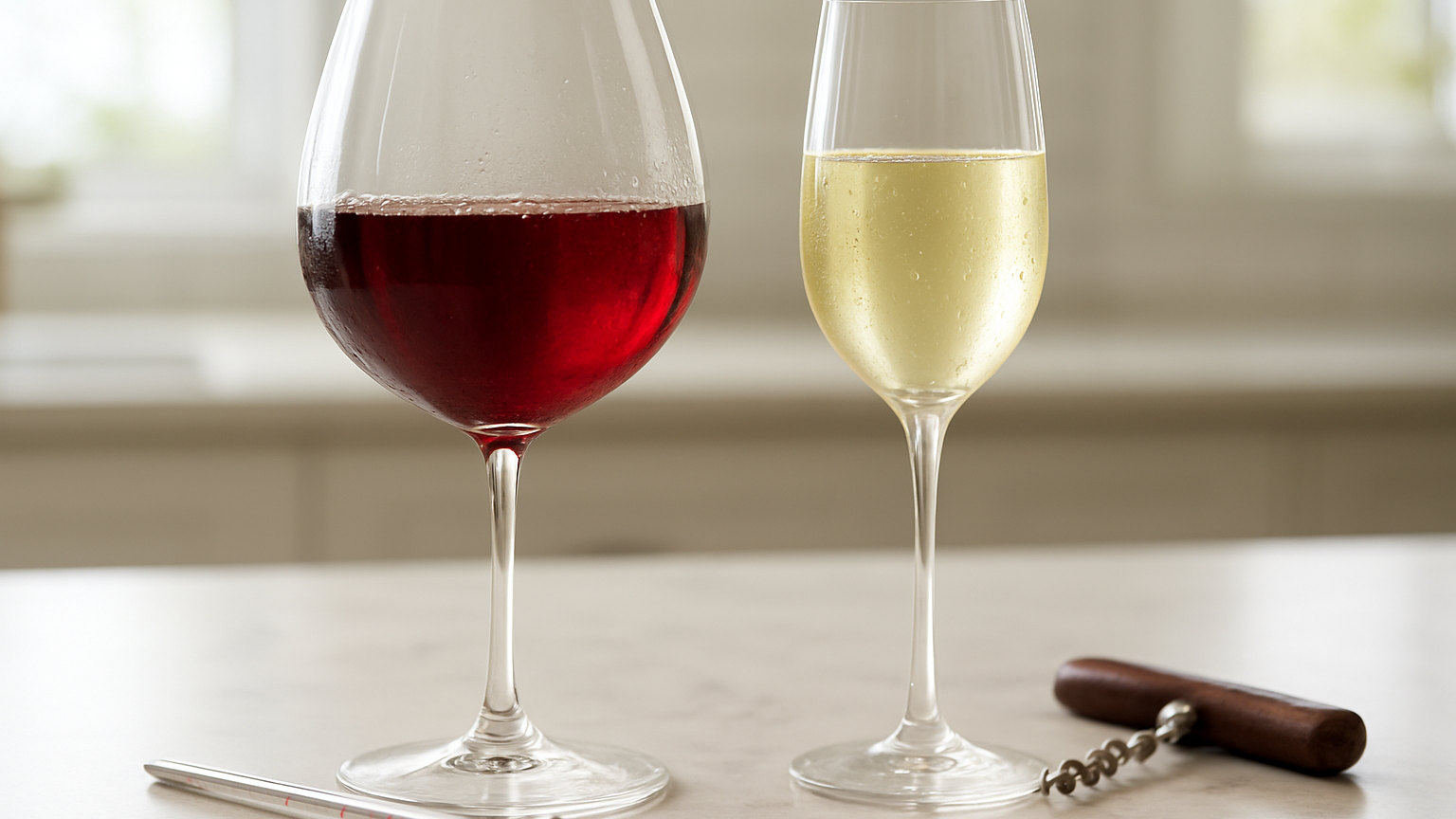
Serving temperature changes what you taste more than almost anything else within your control, and it costs nothing to get right. Two habits account for most of the problem: serving reds at modern room temperature and serving whites straight from a cold fridge.
What are the right temperatures?
- Sparkling wine. 6 to 8 degrees.
- Light crisp whites. 7 to 9 degrees.
- Full or oaked whites. 10 to 12 degrees.
- Rosé. 8 to 10 degrees.
- Light reds. 12 to 14 degrees.
- Medium and full reds. 16 to 18 degrees.
- Dessert wines. 8 to 10 degrees.
- Fortified wines. 12 to 16 degrees, depending on style.
What does room temperature actually mean?
Not what it means now. The phrase dates from an era of unheated houses, where a dining room might sit at 15 to 18 degrees.
A modern centrally heated home runs at 20 to 22, and a red served at that temperature tastes noticeably alcoholic, flabby and coarse. Twenty minutes in the fridge before opening brings most reds to where they should be.
Does chilling a red seem wrong?
It sounds wrong and it is correct. Beaujolais, gamay and other light reds are genuinely better at 12 to 14 degrees, which is cooler than most people would ever consider.
Why is the fridge too cold for whites?
Because a domestic fridge runs at 4 to 5 degrees, which is below the useful range for every wine. At that temperature aromatics are suppressed and the wine tastes of very little.
Take a white out fifteen minutes before pouring, and a full oaked white twenty to thirty. The wine will warm further in the glass as you drink it.
What does temperature actually change?
- Cold. Suppresses aroma, accentuates acidity and tannin, makes wine feel lighter and crisper.
- Warm. Releases aroma, accentuates alcohol and sweetness, makes wine feel heavier and softer.
That is why an over-chilled white tastes sharp and empty, and a warm red tastes hot and blowsy. Neither is a fault in the wine.
Can you use temperature to fix a wine?
Often, yes. A cheap red served slightly cooler tastes fresher and less alcoholic. A thin white served slightly warmer shows more of what little it has.
It is the most useful adjustment available for a bottle that is not quite working.
How do you judge it without a thermometer?
A bottle at 8 degrees feels cold to the hand and forms condensation. At 16 it feels cool but not cold. At 20 it feels neutral, which means it is too warm for red.
A cheap wine thermometer costs very little and removes the guesswork entirely.
What about the glass?
Wine warms in the glass by a degree or two every ten minutes in a warm room, and faster if you hold the bowl. Serve slightly cooler than the target and hold the stem.
That is also an argument for smaller pours refilled more often rather than filling a glass to the top.
Does it matter more for some wines than others?
Yes. Delicate wines suffer most from being too cold, since there is less aroma to begin with and cold suppresses what there is. High-alcohol reds suffer most from being too warm, since warmth accentuates alcohol.
An expensive bottle served at the wrong temperature is worse value than a cheap one served correctly.
What if it warms up in the glass?
That is normal and often useful. A white poured slightly too cold will reach a better temperature within ten minutes, and following it as it changes is one of the easier ways to learn what temperature does.
What about outdoors in summer?
Everything warms faster than you expect. A bottle on a table in the sun can rise ten degrees within half an hour, and a poured glass rises faster still.
Keep bottles in a cool box or an ice bucket rather than on the table, take out one at a time, and pour smaller measures more often so nothing sits warming.
Does a warm room change the whole evening?
Considerably. In a room at 22 degrees a red will drift from correct to too warm within twenty minutes, which is why a bottle that showed well on opening can seem heavy later.
Returning it to the fridge between pours sounds excessive and genuinely works.


