
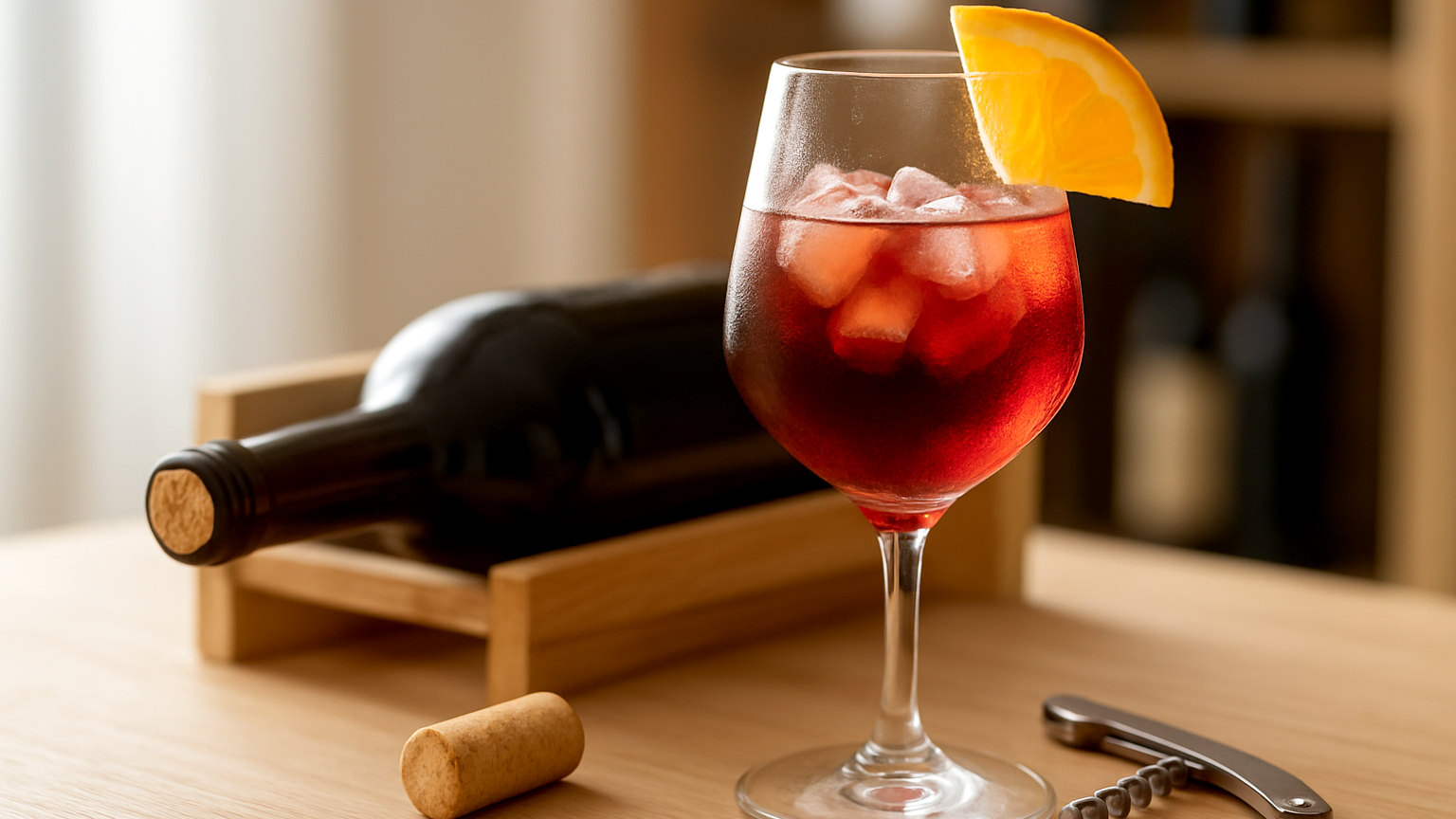
Wine racks hold bottles horizontally and everybody assumes there is a good reason. There is, and it applies to a narrower set of circumstances than the universal practice suggests.
Why store on the side?
To keep the cork in contact with the wine. A cork that dries out shrinks, loses its seal and lets air in, which oxidises the wine.
Natural cork depends on staying slightly swollen to seal properly. Horizontal storage keeps it wet from the inside, which is the whole mechanism.
How long before it matters?
Months rather than weeks. A bottle stored upright for a few weeks is entirely fine, and one stored upright for several years may well have a compromised cork.
The risk rises with dry conditions, since a cork can dry from the outside too. That is why humidity matters for long-term cellars.
Does it apply to screwcaps?
No. A screwcap seals mechanically and has nothing to dry out, so orientation is irrelevant.
Screwcapped wine can be stored upright indefinitely, which is convenient since upright storage takes less space and is easier to label-read.
What about synthetic corks?
They do not dry out either, so side storage is unnecessary. They generally allow more oxygen transfer than natural cork or screwcap, which limits how long the wine keeps regardless of position.
What about sparkling wine?
The pressure inside keeps the cork compressed against the glass, and the humidity in the neck is high, so it does not dry out the way a still wine cork can.
Either position works. Upright is often more practical and avoids the risk of a bottle rolling.
Should spirits be stored on their side?
Never. Spirits at 40 per cent and above degrade cork on contact, which can taint the contents and eventually destroy the closure.
All spirits, fortified wines and liqueurs should be stored upright. That is one of the more important distinctions between a wine rack and a drinks cabinet.
What about fortified wines?
Upright, for the same reason. Port, sherry and madeira all sit between 15 and 20 per cent, which is enough to damage a cork over time.
Vintage port is the exception people cite, and even that is generally stored on its side only because the sediment needs to settle in a predictable place.
Does it matter which way up the label faces?
Practically, yes. Storing bottles label upwards means sediment collects on the opposite side, so you know where it is when decanting.
It also means you can read the labels without pulling bottles out, which is a small convenience that becomes significant with more than a dozen.
What should you do with a handful of bottles?
Whatever fits. For wine drunk within a few months, position is irrelevant and a cupboard shelf is fine.
Keep spirits upright, keep everything out of the light, and only worry about horizontal storage if bottles will sit for a year or more.
What about very short-term storage?
Irrelevant. A bottle standing upright on a shelf for a fortnight is in no danger whatsoever, whatever the closure.
Horizontal storage is a long-term measure, and treating it as a rule for everything creates unnecessary difficulty in kitchens with no rack.
Is there any downside to horizontal storage?
Only practical ones. Sediment settles along the side of the bottle rather than at the base, which means standing an old red upright for a day before opening if you intend to decant.
Labels are also harder to read, which is why storing with the label facing up is worth the small effort.
What is the summary?
Corked wine on its side for anything kept beyond a few months. Screwcapped wine any way you like. Spirits, port, sherry and liqueurs always upright.
Does the rack design matter?
Only in that it should hold bottles securely and not in direct light. Metal, wood and plastic all work equally well, and an ordinary shelf with bottles laid flat does the same job as anything purpose-built.
What matters is where the rack is, not what it is made of, and a beautiful rack in a warm bright kitchen is worse than a cardboard box in a cool cupboard.


