
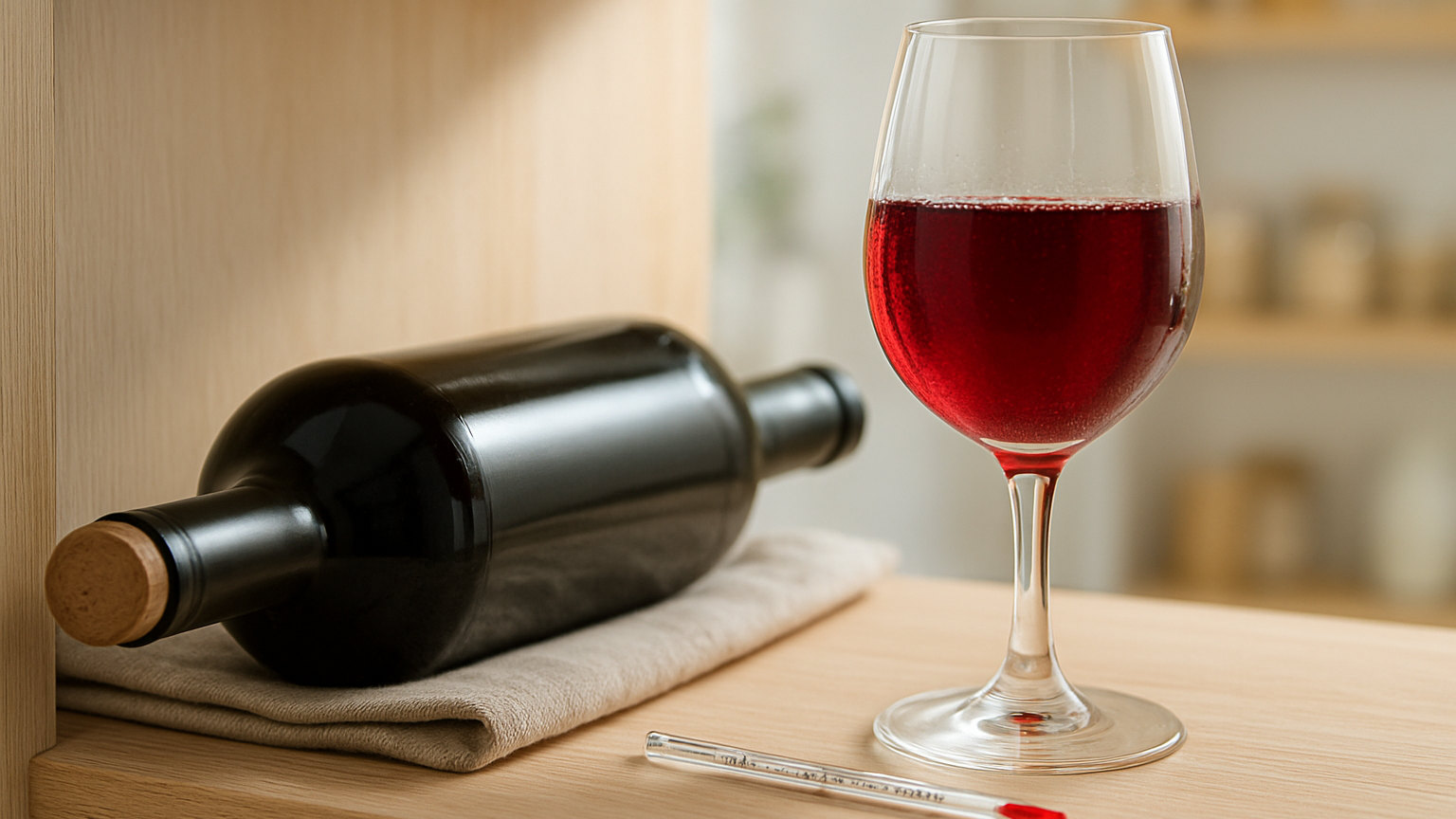
Almost nobody has a cellar, and almost nobody needs one. For wine that will be drunk within a year or two, the requirements are modest, and a few common household spots are genuinely bad.
What conditions matter?
- Stable temperature. More important than the exact figure.
- Cool. Ideally 10 to 15 degrees, and anything under 20 is workable.
- Dark. Light degrades wine, particularly in clear bottles.
- Some humidity. Matters only for long-term cork storage.
- Free of vibration. Matters less than often claimed.
- Free of strong smells. Cork is permeable over years.
Why does stability matter more than temperature?
Because repeated expansion and contraction pushes wine past the cork and draws air in. A bottle held steadily at 18 degrees will keep better than one swinging between 12 and 24.
That is why the kitchen is such a poor choice despite being where most people keep wine.
Which places work?
- Under the stairs. Usually the coolest and most stable spot in a house.
- A north-facing internal cupboard. Away from heating pipes.
- A garage, if it does not freeze or bake.
- The bottom of a wardrobe in an unheated room.
- A spare fridge set to its warmest, for whites drunk within months.
Which places do not?
- Kitchen worktops and racks. Warm, bright and swinging in temperature.
- Above or beside the cooker. The worst option in the house.
- On top of the fridge. Warm from the motor.
- Windowsills and conservatories. Light and heat together.
- Lofts. Extreme swings in both directions.
- Next to radiators or boilers.
The decorative kitchen wine rack is the commonest storage mistake in British homes, and it is fine for a bottle bought that week.
Does light really matter?
Yes, and more than people expect. Ultraviolet light degrades compounds in wine and produces a fault sometimes called lightstrike, giving a cooked cabbage or wet wool smell.
Clear and pale green bottles are most vulnerable, which is why rosé and sparkling wine suffer most. Dark green and brown glass offers considerable protection.
How much humidity is needed?
Around 60 to 70 per cent for long-term storage with corks, to stop them drying out. For wine drunk within a couple of years it barely matters, and screwcapped wine does not care at all.
Very dry conditions over many years can shrink a cork enough to let air in, which is a genuine but slow problem.
What about vibration?
Frequently overstated. Constant heavy vibration is thought to disturb ageing wine, and the effect for domestic storage is small compared with heat and light.
Keeping bottles off a washing machine is sensible; worrying about footsteps is not.
What is the practical minimum?
A dark cupboard away from heat, on a lower shelf since warm air rises. For most people that solves the problem entirely without spending anything.
Does it matter for wine drunk within a month?
Barely. A bottle bought on Saturday and opened the following weekend will be fine almost anywhere that is not in direct sunlight or beside a radiator.
Storage advice matters in proportion to how long the wine will sit, which is why most households need very little of it.
What about a growing collection?
Once you have more than a couple of dozen bottles sitting for a year or more, it becomes worth finding the coolest stable spot in the house and using it deliberately.
What about buying in quantity?
Mixed cases are usually discounted and they only help if you have somewhere sensible to put them. A case stored on a warm kitchen floor for a year is a false economy.
Work out where the wine will live before deciding how much to buy.
Does the box matter?
The original carton is genuinely useful, since it blocks light and adds a little insulation against temperature swings. Leaving wine in its box in a cupboard is better than racking it in the open.
How should you organise it?
By when you intend to drink it rather than by colour or country. Keeping everyday bottles accessible and anything being kept longer at the back stops you opening the wrong one.
A note on the box or a simple list is enough for most collections, and it saves the frustration of finding a bottle years past its best.


