
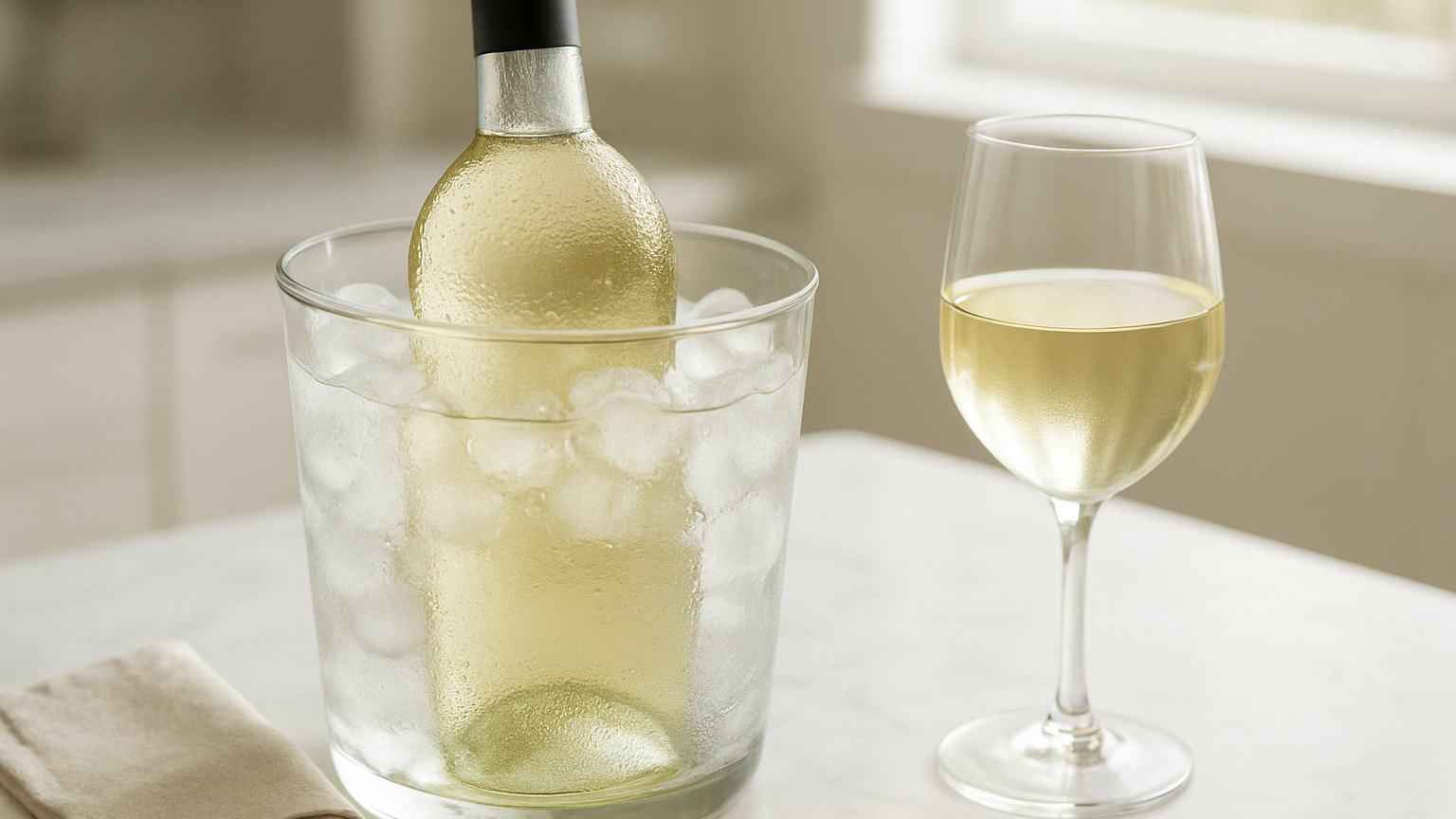
Wanting a cold bottle now is a common situation and the methods vary enormously in speed. The fastest reliable one takes about fifteen minutes and needs nothing you do not already have.
What are the timings?
- Ice and water bath. 15 to 20 minutes to fridge temperature.
- Ice, salt and water. 10 to 15 minutes.
- Freezer. 20 to 30 minutes.
- Fridge. 2 to 3 hours from room temperature.
- Wet towel in the freezer. 15 to 20 minutes.
Why does water beat ice alone?
Because contact area governs heat transfer. Ice cubes touch a bottle at a few points; water touches every part of the surface below the waterline.
A bucket of ice with no water is one of the slowest methods despite looking like the fastest. Adding water roughly halves the time.
Why does salt help?
Salt lowers the freezing point of water, so an ice and water mixture with salt added can sit several degrees below zero rather than at zero.
A generous handful in the bucket is enough. It makes a noticeable difference and costs nothing.
Why is the freezer slower than it seems?
Because air transfers heat poorly compared with water. A freezer is very cold and touches the bottle only through still air.
It also carries a real risk of being forgotten. Wine freezes at around minus 5 degrees, expands, and pushes the cork out or splits the bottle. Set a timer.
What about the wet towel method?
Wrap the bottle in a wet tea towel and put it in the freezer. Evaporation and the improved contact with the cold air speed things up considerably compared with the bare bottle.
It works well and it still needs a timer.
How cold do you actually want it?
Less cold than most people chill to. Light whites want 7 to 9 degrees and sparkling 6 to 8, which is above fridge temperature.
Over-chilling suppresses aroma and leaves the wine tasting sharp and empty, so once it is cold, take it out.
What about chilling red?
Twenty minutes in the fridge brings a red from a warm room to the right serving temperature. Light reds can take thirty.
This is not an emergency measure, it is simply how red should be served in a centrally heated house.
What should you avoid?
- Ice in the glass. Dilutes and waters the wine.
- Leaving it in the freezer. Forgotten bottles split.
- Adding ice to the bottle. Same problem as the glass.
- Hot water shock. Never try to warm a cold bottle quickly.
What about frozen grapes or cooling stones?
They chill without diluting and they hold very little cold relative to a glass of wine, so the effect is small and brief.
A properly chilled bottle and a cool glass work better than anything added to the wine afterwards.
How do you keep it cold once chilled?
An ice bucket with ice and water rather than ice alone, or a sleeve cooler from the freezer. Both hold temperature far better than leaving the bottle on the table.
In a warm room a bottle rises by several degrees within twenty minutes, which is why a wine that was right at first pour tastes flat by the second glass.
Which method should you default to?
Ice, water and a handful of salt. It is the fastest reliable option, it needs nothing unusual, and it carries none of the risk that comes with a forgotten freezer.
Can you over-chill by accident?
Easily, particularly in the freezer. A white left too long comes out at 2 or 3 degrees, at which point it tastes of almost nothing until it warms.
If that happens, cup the glass in your hands for a minute rather than waiting, since a glass warms far faster than a bottle.
How long does it stay cold once poured?
A poured glass warms considerably faster than a bottle, rising several degrees within ten minutes in a warm room. Holding the bowl rather than the stem accelerates that further.
Smaller pours refilled more often keep every glass closer to the right temperature than one large pour that warms as you work through it.


