
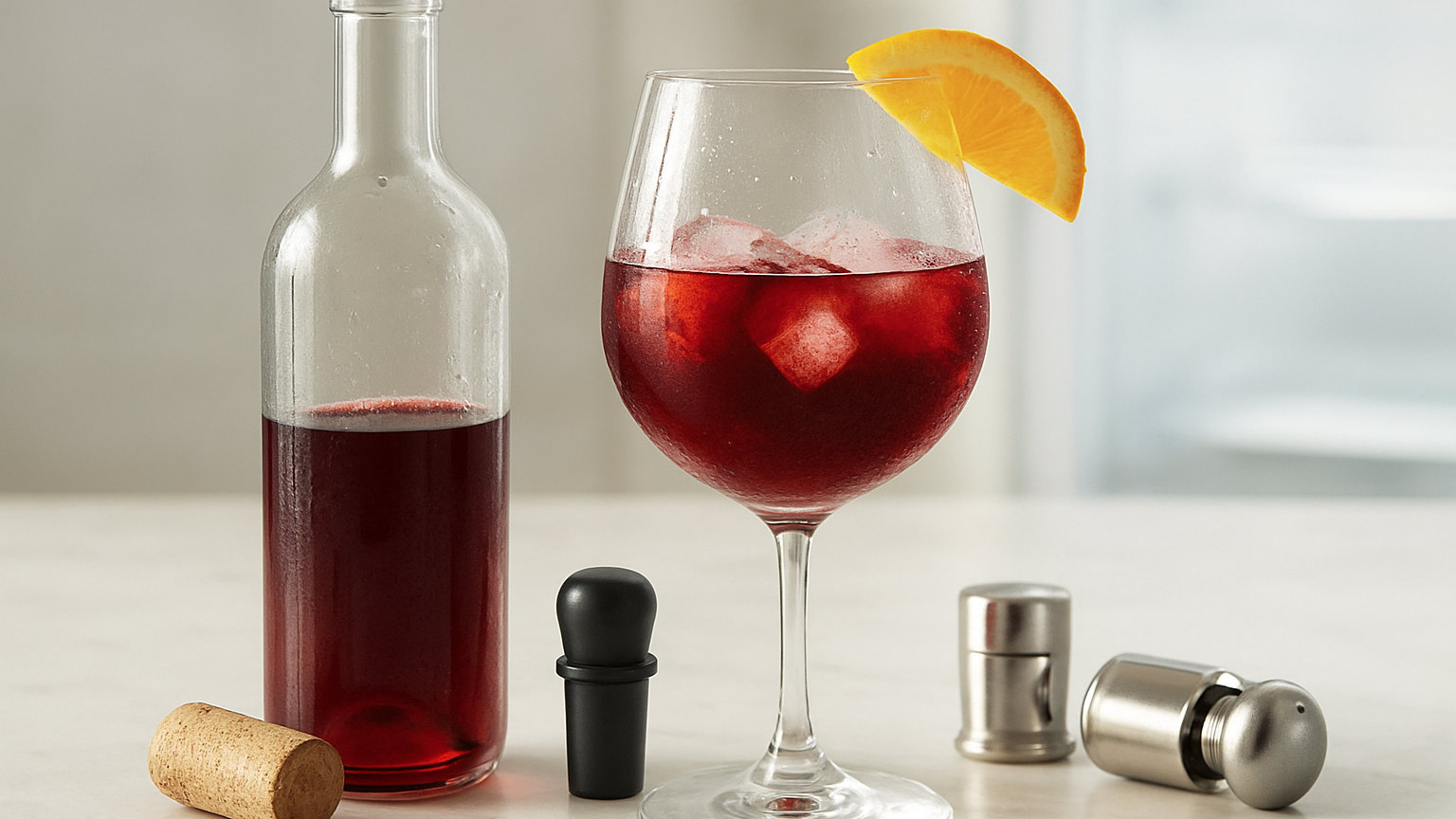
An opened bottle deteriorates because of oxygen, so every preservation device is trying to remove it, displace it or prevent it reaching the wine. They differ enormously in how well they manage it.
What is the free method?
Decanting the remainder into a smaller bottle, filled to the top, and sealing it. A clean half bottle costs nothing and works better than most gadgets.
The reason is straightforward: it removes the air by removing the space. Half a bottle in a half bottle has almost no headspace at all.
Anyone who regularly leaves wine should save a few small bottles for exactly this. It is the single most effective thing available.
Do vacuum pumps work?
Partially. They remove some air, and they cannot create a true vacuum, so a meaningful amount of oxygen remains.
They also pull volatile aroma compounds out of the wine along with the air, which some people find flattens it. Tests generally show a modest benefit over simply recorking, perhaps an extra day.
They are cheap and better than nothing. They are not the transformation the packaging suggests.
Should they be used on sparkling wine?
No. Removing air accelerates the loss of dissolved carbon dioxide, which is the opposite of what you want. Use a clamping stopper instead.
Does inert gas work?
Yes, and it is the most effective consumer option short of a needle system. A spray of argon or a nitrogen blend forms a layer over the wine, physically separating it from the air above.
Argon is denser than air, which is why it sits on the surface rather than mixing. It is tasteless, inert and harmless.
The limitation is technique. Sprayed carelessly it mixes rather than layering, and every time you open the bottle again you need to reapply.
What about needle systems?
These insert a fine needle through the cork, push argon in and let wine out under pressure, leaving the cork to reseal itself.
They work extremely well and can keep a bottle in good condition for months. They are also expensive, both the device and the gas capsules, and they only work with natural cork.
They make sense for anyone who wants one glass from an expensive bottle. For everyday wine the cost per glass is difficult to justify.
What about wine boxes and pouches?
Bag-in-box collapses as wine is drawn out, so no air enters at all. It genuinely keeps for weeks after opening, which is a real advantage over bottles.
The format is limited in what is available at quality level, and it is worth considering for everyday drinking where a bottle would go stale.
What does not work?
- A teaspoon in a sparkling bottle. Tested repeatedly. Does nothing.
- Cling film over the neck. Not airtight.
- Standing it upright with the cork loose. No seal at all.
What matters more than any gadget?
Refrigeration. Cold slows oxidation substantially, and putting an opened red in the fridge does more than any device sold to preserve it.
Cold plus a smaller container covers nearly every situation for free.
How much difference do they actually make?
Between one and three extra days for the cheap options, and months for a needle system. The gap between the two ends of that range is enormous, and so is the price.
For most households the free method plus a fridge is enough, and the money is better spent on the wine.
What is worth buying?
A clamping stopper for sparkling wine, which genuinely works and costs very little. Beyond that, a few clean half bottles and a fridge shelf cover most situations.
Inert gas is a reasonable purchase for anyone who often opens something good and drinks one glass.
Do any of them help sparkling wine?
Only a clamping stopper, which holds the pressure in. Vacuum pumps actively make it worse by drawing dissolved gas out of the wine.
Which situations justify spending on one?
Regularly opening something expensive for a single glass, or wanting to compare several wines over a week. Both are genuine cases where a needle system or inert gas earns its keep.
Opening an everyday bottle on a Tuesday and finishing it on Thursday is not one of them.


