
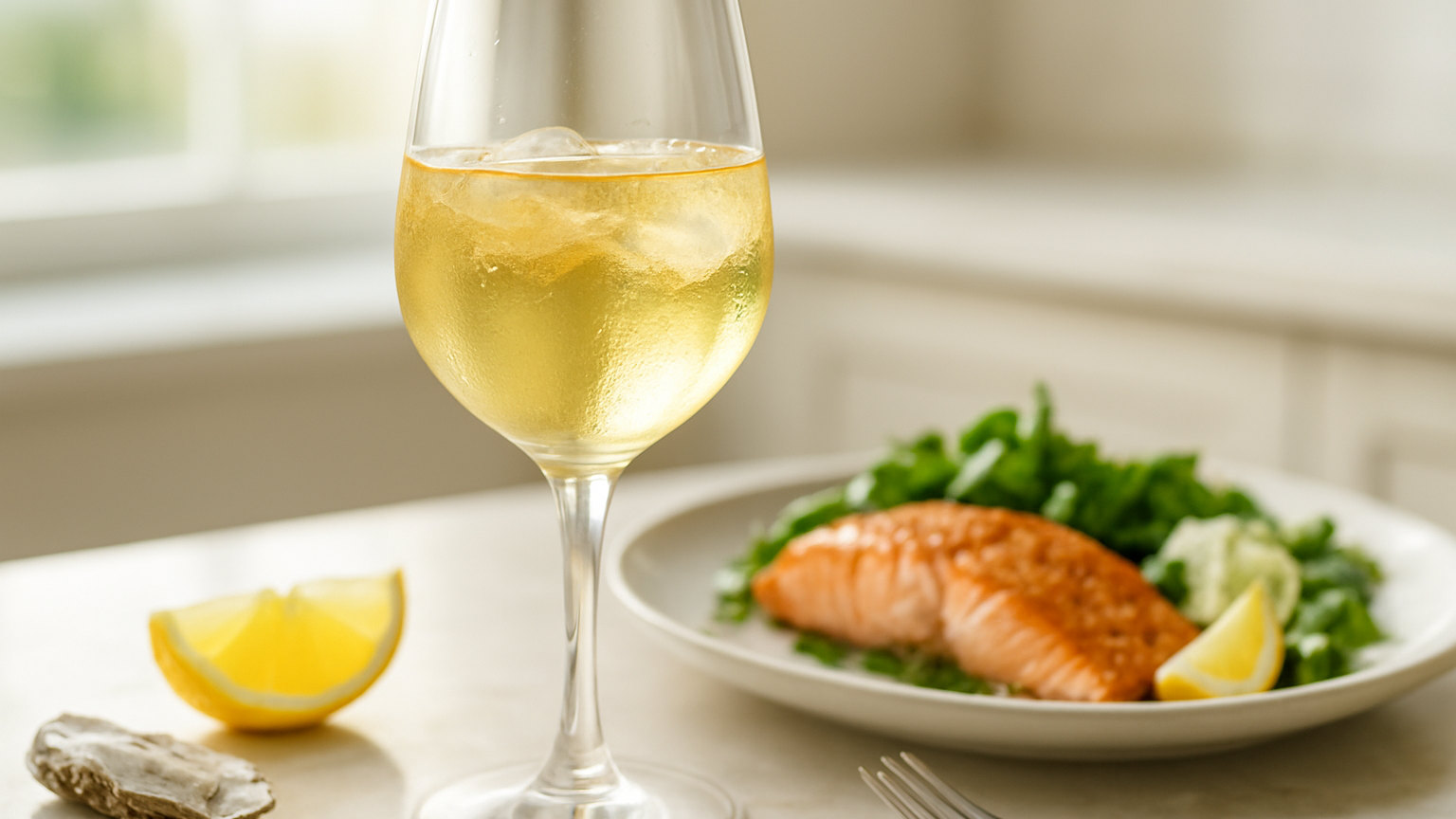
If you could know only one thing about a wine before pairing it, acidity would be the most useful. It governs how the wine behaves against fat, against salt and against acidic food, and it is rarely mentioned on a label.
What does acidity do to fat?
It cuts through it, clearing the coating that rich food leaves on the palate. Each mouthful of wine resets the mouth for the next mouthful of food.
That is why a crisp white works with fried fish, and why a high-acid red works with fatty sausage. Without it, richness accumulates and the meal becomes heavy.
How does this compare to beer?
Beer achieves the same effect with carbonation and hop bitterness, which are more direct tools. Wine has acidity and tannin instead, which are subtler and work well on different foods.
What happens when the food is more acidic?
The wine tastes flat. Acidity in the food raises the threshold, so a low-acid wine that seemed fine alone becomes flabby and dull alongside a vinaigrette or a tomato sauce.
The correction is a higher-acid wine, not a sweeter or fuller one. Matching acidity to acidity is the reliable route.
Which foods demand high acidity?
- Anything with vinegar or lemon. Salads, dressings, pickles, ceviche.
- Tomato-based dishes. Pasta sauces, pizza, stews.
- Fried food. Where fat needs cutting.
- Creamy sauces. Same reason.
- Oily fish. Mackerel, sardines, salmon.
- Goat’s cheese and fresh cheese. Which are themselves acidic.
Which wines are high in acid?
- Whites. Riesling, sauvignon blanc, chablis, muscadet, albariño, assyrtiko, champagne.
- Reds. Sangiovese, nebbiolo, pinot noir, gamay, barbera.
Cool-climate wines are generally higher in acid than warm-climate ones, since acidity falls as grapes ripen. Checking the region tells you more than the grape alone.
Which are low in acid?
Warm-climate reds such as ripe shiraz, zinfandel and grenache, and full oaked whites that have been through malolactic fermentation, which converts sharp acid into softer lactic acid.
Those wines suit food where richness rather than acidity is the challenge: barbecue, hard cheese, roasted meat.
Does salt affect it?
Yes, and helpfully. Salt softens the perception of acidity, so a wine that tastes sharp on its own can taste balanced with salty food.
That is part of why champagne works with crisps and salted almonds, a pairing that sounds frivolous and is genuinely good.
How can you judge acidity in a glass?
By how much you salivate. High-acid wine makes the mouth water noticeably after swallowing, and that watering sensation is the same mechanism that refreshes the palate against fat.
A wine that leaves the mouth feeling dry and soft rather than watering is low in acid.
What is the practical rule?
When food is rich, acidic or fried, reach for a high-acid wine. It is the single most reliable adjustment available, and it works across colours rather than within one.
Does acidity change with age?
Barely in absolute terms, though it becomes more prominent as fruit fades. That is why an old wine can taste sharper than it did young, despite containing the same acid.
It is also why high-acid wines age well: the acidity holds the structure together while everything else softens.
Does serving temperature affect it?
Yes. Cold accentuates acidity and warmth softens it, which is why an over-chilled white can taste sharp and a warm one flabby.
If a wine tastes too acidic with food, letting it warm slightly in the glass usually helps.
Which regions give high acidity?
Cool ones, since acidity falls as grapes ripen and warm sites ripen further. Northern France, Germany, Austria, northern Italy, New Zealand and coastal Chile all produce high-acid wine.
Warm regions such as southern Spain, southern Italy, much of Australia and inland California give lower acidity and fuller fruit.
Can acidity be adjusted?
Yes, and it is routine in warm climates. Producers may add tartaric acid to compensate for low natural acidity, which is legal in most regions and rarely mentioned.
Malolactic fermentation works the other way, converting sharp malic acid into softer lactic acid to reduce it.


