
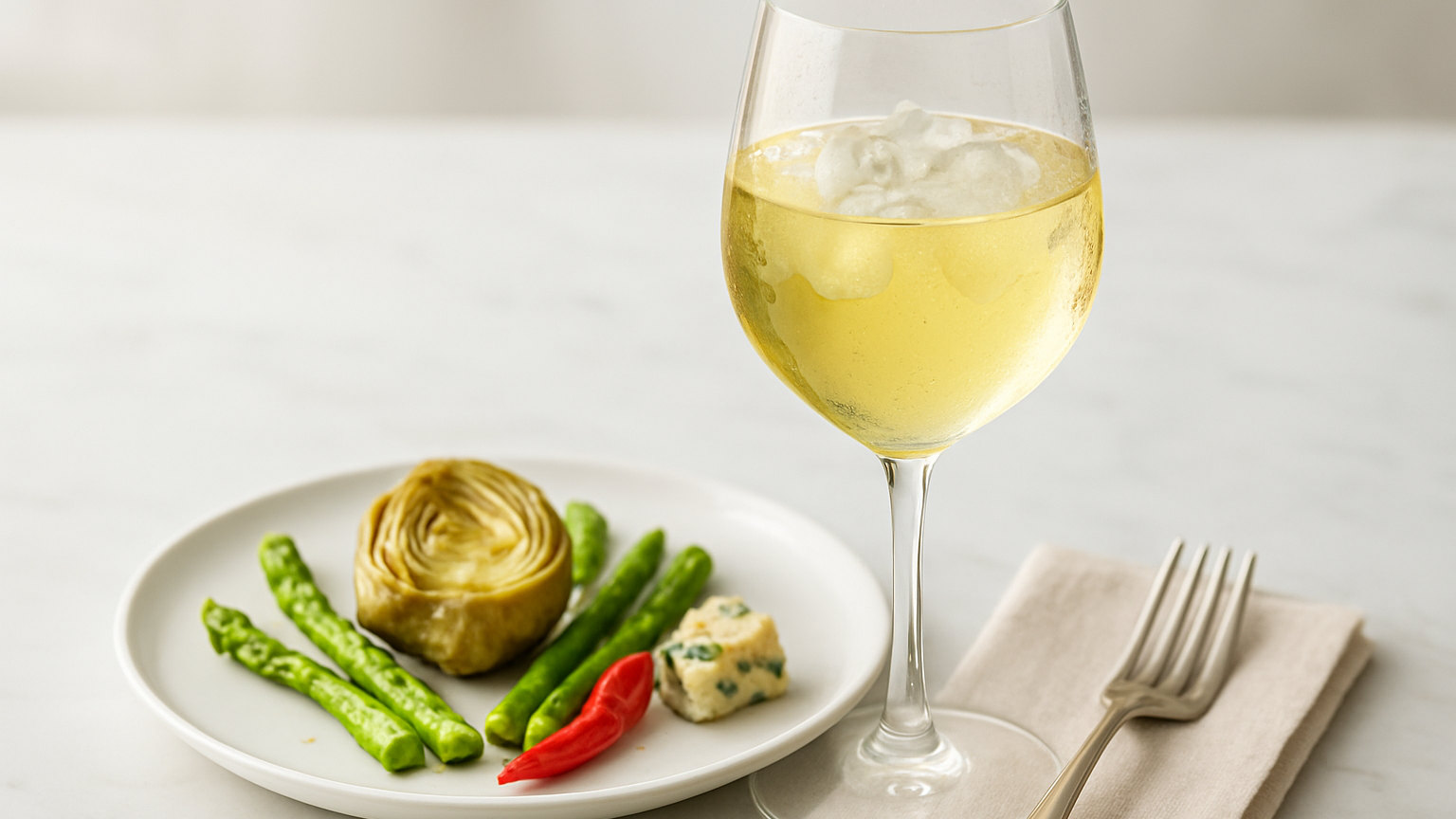
Most pairings that do not work are simply unremarkable. A smaller group fails actively, and several of those involve specific compounds that interfere with how wine tastes. Those are worth knowing because they come up regularly.
Which foods are genuinely difficult?
- Artichoke. Contains cynarin, which makes anything tasted afterwards seem sweeter and often metallic.
- Asparagus. Sulphur compounds and a green character that clashes with most wine.
- Eggs. Coat the palate and flatten wine.
- Vinegar and heavily dressed salad. Acidity in the food beats the wine.
- Chilli heat. Amplified by alcohol and tannin.
- Very salty food. Makes tannin taste harsh.
- Oily fish with tannic red. Produces a metallic clash.
- Very sweet dessert with dry wine. Makes the wine taste sour.
What is the artichoke effect?
Cynarin appears to temporarily block sweetness receptors, so whatever is tasted next seems sweeter than it is. Wine drunk after artichoke can taste oddly sweet, flat or metallic.
It is a genuine and well-documented effect rather than folklore. Not everyone experiences it equally, which is why some people dismiss it.
What can you do about it?
Serve artichoke with plenty of fat, such as butter, olive oil or aioli, which coats the palate and reduces the effect. Choose a high-acid, unoaked white and accept that it is a compromise.
Why is asparagus difficult?
Sulphur compounds and methoxypyrazines give it a green, vegetal character that turns many wines metallic or accentuates their own green notes unpleasantly.
Sauvignon blanc is the standard answer and works because it shares those green pyrazine compounds. Matching the problem rather than fighting it is the trick.
Why do eggs cause trouble?
The fat and protein coat the palate, which flattens wine and blunts acidity. A soft-boiled egg or a rich hollandaise will make most wine taste dull.
Sparkling wine is the best answer, since carbonation cuts through the coating in a way that acidity alone cannot. It is one of the clearest cases where beer or champagne outperforms still wine.
Why does vinegar beat wine?
Because acetic acid in a dressing is sharper than the tartaric acid in wine, so the wine tastes flat and sweet by comparison.
Reducing the vinegar, using lemon instead, or choosing a very high-acid wine all help. A heavily dressed salad is simply a poor moment for a good bottle.
Which of these does beer handle better?
Most of them. Carbonation and hop bitterness deal with eggs, salt and fried food more directly than acidity does, and lower alcohol handles chilli heat far better.
Being honest about that is more useful than pretending wine works everywhere. Wine still wins on delicate fish, classic sauce cookery and anything where aromatic subtlety matters.
Are these rules absolute?
No, and taste is genuinely personal. Someone who enjoys a big red with a salad is experiencing a real interaction and choosing to like it.
The value in knowing these is predicting what will happen. If a pairing has failed and you could not say why, it is usually one of the list above.
What should you do when nothing works?
Serve water with the course and open the wine afterwards, or reach for beer, cider or sherry. Insisting on wine with a dish that defeats it wastes both.
Does cooking change any of them?
Some. Cooked asparagus is easier than raw, and artichoke served with plenty of butter or oil is less disruptive than artichoke served plain.
Chilli heat and vinegar are unaffected by cooking, since the compounds responsible survive it.
Which is the most common in practice?
Vinegar in salad dressing, by a distance. It appears at more meals than artichoke and asparagus combined, and it quietly flattens whatever is in the glass.
Using lemon instead, or dressing more lightly, solves it without anyone noticing a compromise.
Is it worth testing deliberately?
Once, and cheaply. Tasting a wine before and after a mouthful of artichoke or asparagus demonstrates the effect immediately and makes the point better than any description.
People vary in how strongly they perceive these clashes, which is worth knowing about your own palate.


