
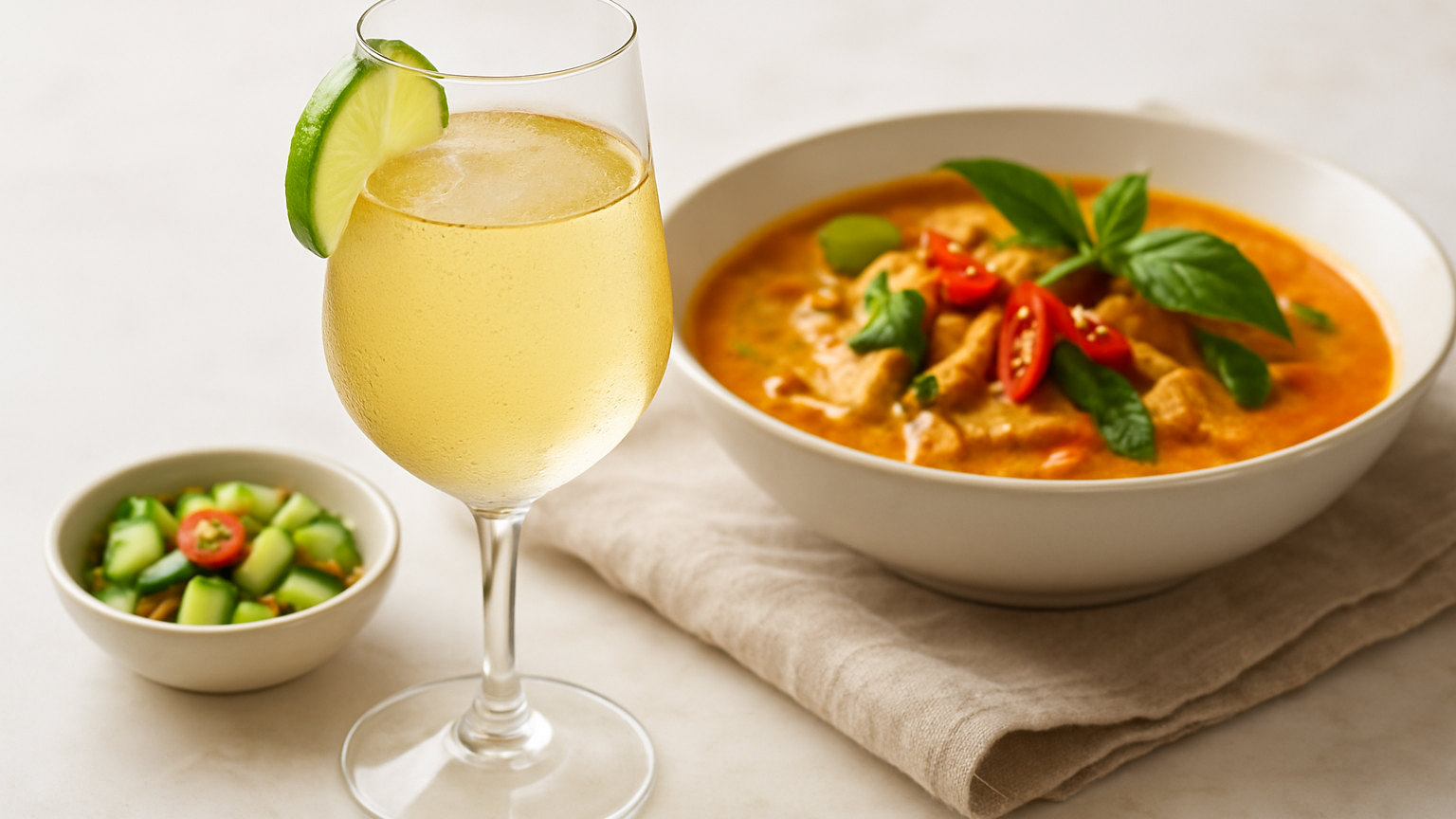
Spicy food is where wine is at its weakest and where the wrong choice is actively unpleasant. Two properties that most wine has make chilli heat worse, and understanding them narrows the field considerably.
Why does alcohol make it worse?
Because capsaicin, the compound responsible for chilli heat, binds to heat receptors in the mouth, and alcohol stimulates the same pathways. The two amplify each other.
A 14.5 per cent red with a hot curry intensifies the burn noticeably. That is a real interaction rather than imagination, and it is why beer generally handles spicy food better than wine.
What about tannin?
It compounds the problem. Bitterness and astringency both increase the perceived heat, so a tannic red is the worst possible choice.
Wine also has no fat to dissolve capsaicin, which is what dairy provides and why yoghurt works so well.
What actually helps?
- Residual sweetness. Dampens the perception of heat.
- Low alcohol. Less amplification.
- Low tannin. No astringency to add to the burn.
- Good acidity. Cuts through richness in the dish.
- Cold serving. Temporary relief.
That combination describes an off-dry white at 9 to 11 per cent, which is why riesling keeps appearing in this context.
Which wines work?
- Off-dry riesling. The best answer available. Sweetness, acidity, low alcohol.
- Gewürztraminer. Aromatic and slightly sweet. Good with aromatic spice.
- Off-dry chenin blanc. Similar logic.
- Moscato and light sweet whites. Very low alcohol.
- Rosé with some sweetness. Works with milder dishes.
- Light fruity reds served cool. Beaujolais, if red is essential.
Which fail?
High-alcohol reds, tannic reds and oaked whites. A 15 per cent shiraz with a vindaloo is genuinely unpleasant, and an oaked chardonnay tastes cloying and heavy.
Very dry high-acid whites also struggle, since without sweetness the heat has nothing to work against.
How should you pair by heat level?
- Very hot. Off-dry or sweet, under 11 per cent. Or reach for beer.
- Medium. Off-dry riesling, gewürztraminer, rosé.
- Mild but aromatic. Dry aromatic whites become viable.
- Spiced but not hot. Almost anything, since the constraint disappears.
Heat and spice are not the same thing, and the words are used interchangeably in a way that confuses the question. It is capsaicin that causes the problem, not cumin or cardamom.
Is wine simply the wrong choice?
Frequently, and it is worth saying plainly. Beer, particularly a low-bitterness lager, handles chilli heat better than almost any wine, and a salted yoghurt drink beats both.
Where wine is wanted, an off-dry riesling is a genuinely good pairing rather than a compromise.
What about the rest of the meal?
Rice, bread and yoghurt all absorb capsaicin and reduce the effective heat, which widens what will work. A hot dish eaten with plenty of rice is a milder pairing problem than the same dish alone.
Does sparkling wine help?
A little, since carbonation clears the palate. Dry sparkling wine still has the alcohol problem, so an off-dry sparkling or a low-alcohol moscato works better than a brut champagne.
What about aromatic rather than hot dishes?
Entirely different, and much easier. A dish built on cumin, coriander, cardamom and ginger with little chilli pairs well with dry aromatic whites, and gewürztraminer in particular echoes the spice.
It is capsaicin that causes the problem, not spice in general, and separating the two opens up far more options.
What about the rest of the table?
Tolerance for chilli varies enormously between people, so the same dish is a different problem for different guests. An off-dry white alongside whatever else is being served covers whoever finds it hottest.
Putting water and something dairy-based on the table matters more than the wine choice.
What is the safest single bottle?
An off-dry German riesling at around 9 to 10 per cent. It has residual sweetness to dampen heat, acidity to cut richness, low alcohol to avoid amplifying the burn, and no tannin at all.
No other wine ticks all four boxes as reliably, which is why it appears in every serious discussion of this pairing.


