
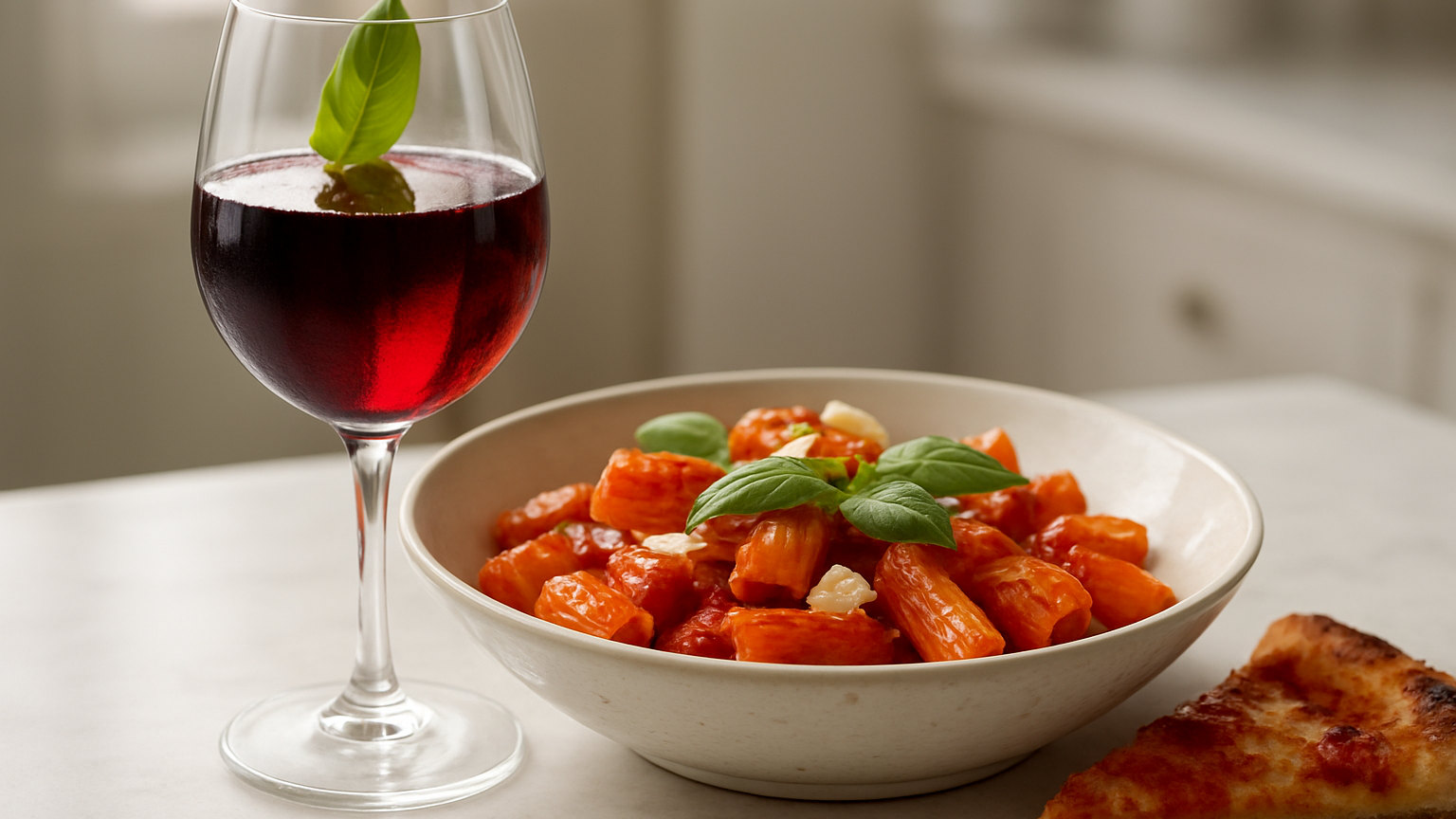
Nobody pairs wine with pasta. They pair it with what is on the pasta, and the same applies to pizza. Once you organise the question that way, it becomes straightforward.
Why does tomato cause a problem?
Because it is highly acidic, and acidity in food flattens a wine with lower acidity. A soft, ripe, low-acid red will taste dull and flabby against a tomato sauce.
The correction is a wine with acidity to match, which is exactly what Italian reds have. Sangiovese, barbera and montepulciano all evolved alongside tomato-based cooking.
What suits tomato-based pasta?
- Chianti Classico. The obvious answer, and correct.
- Barbera. High acid, low tannin, excellent value.
- Montepulciano d’Abruzzo. Soft and cheap.
- Valpolicella. Light and fresh.
Avoid heavily oaked or very tannic wines, since tannin and tomato acidity together turn harsh.
What suits cream and cheese sauces?
Richness needs acidity to cut it, and dairy clashes with tannin.
- Unoaked or lightly oaked chardonnay. Weight to match.
- Soave or a fuller Italian white.
- Dry sparkling wine. Carbonation and acidity together.
Carbonara sits between the two, being rich with egg and cured pork. A crisp white or a light Italian red both work.
What suits pesto?
Basil, garlic, pine nuts and cheese, which is herbal and rich together. A high-acid white with some texture handles it: vermentino, soave or a Ligurian white if you can find one.
Sauvignon blanc works and can be a little green against the basil. Pine nuts mean pesto is an allergen consideration when serving to others.
What suits meat ragù?
Weight and acidity together. Chianti Classico, sangiovese from Montalcino, or a southern Italian red such as aglianico all work.
A long-cooked ragù carries more sweetness and depth than a simple tomato sauce, so it takes a fuller wine.
What suits seafood pasta?
White, and low in tannin. Vermentino, albariño, picpoul or a dry Italian white.
If the sauce is tomato-based as well, acidity matters more than usual, so choose something sharp rather than soft.
What suits pizza?
The same logic. Tomato and cheese together mean acidity plus enough body to handle the fat.
- Margherita. Barbera, Chianti, or a dry Italian white.
- Pepperoni and spicy toppings. Something fruity with low tannin. Primitivo or a soft Rhône blend.
- White pizza. A fuller white or a light red.
- Vegetable toppings. Rosé or a light red served cool.
Does beer beat wine here?
With pizza, often. Carbonation cuts the cheese fat more directly than acidity does, and a lager or pale ale is a genuinely good match.
With pasta, wine generally wins, particularly anything tomato-based where the acidity match is the whole point.
What is the single safest choice?
Barbera. High acidity, low tannin, medium weight and inexpensive, which covers almost every pasta and pizza dish without fuss.
Does the pasta shape matter?
Not directly, and it correlates with the sauce. Long thin pasta usually carries lighter oil or tomato sauces; short ridged shapes usually carry heavier ragù and baked dishes.
Pairing to the sauce covers it either way.
What about baked pasta dishes?
Lasagne and baked pasta carry more fat, cheese and long-cooked depth than a simple sauce, so they take a fuller wine. Chianti Classico, aglianico or a southern Rhône blend all work.
The cheese on top means acidity still matters more than tannin.
How much should you spend?
Very little. These are everyday dishes and the wines that suit them best, barbera, montepulciano and Italian whites, are among the cheapest good wines available.
An expensive bottle is largely wasted under tomato and cheese.
Does sparkling wine work?
Very well with pizza and fried dishes, where carbonation cuts the cheese fat directly. A dry prosecco or cava with a margherita is a genuinely good match and an unexpected one.
What is the practical summary?
Match the acidity of the wine to the acidity of the sauce, keep the tannin low, and spend the money on the food instead.


