
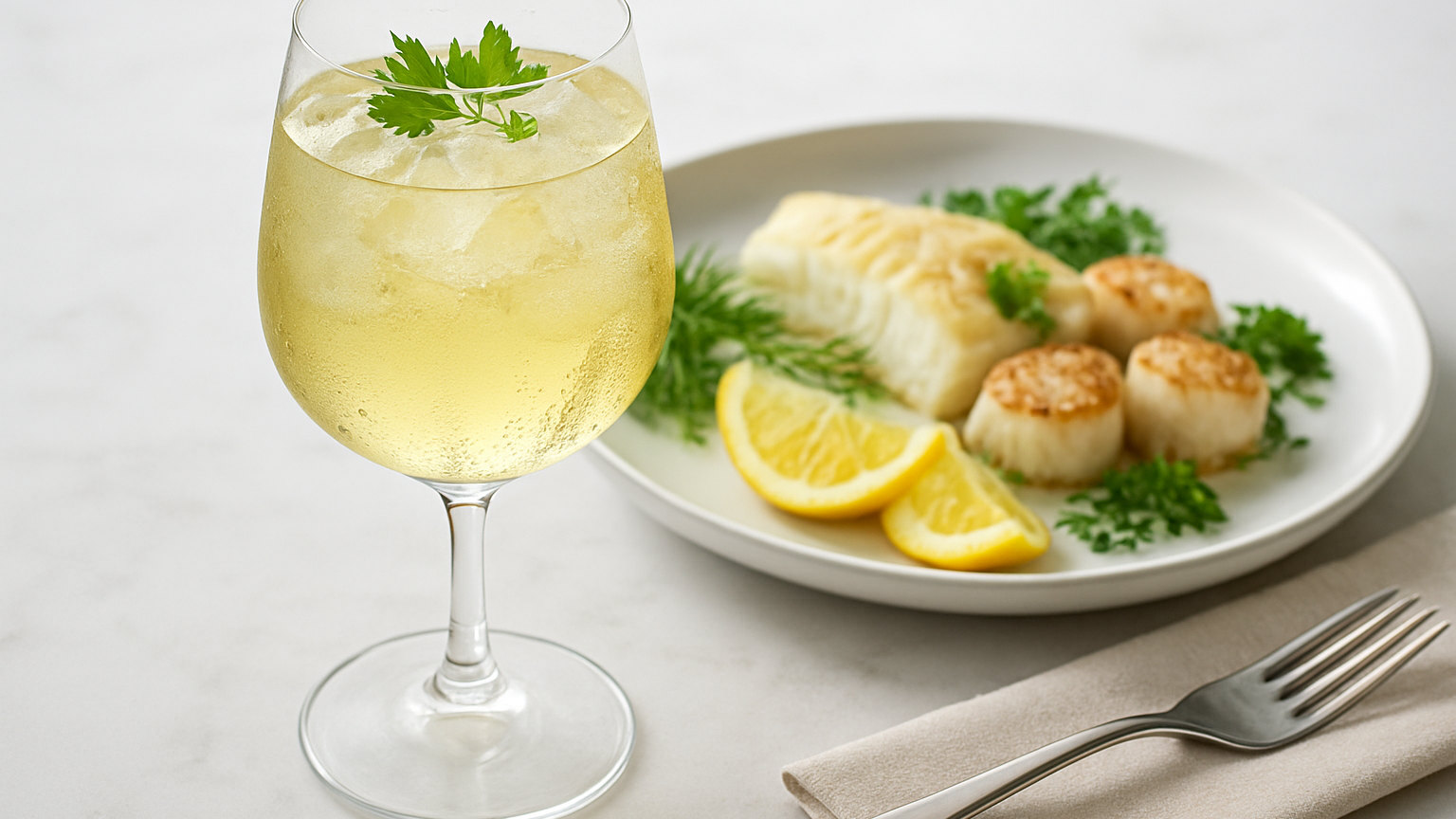
Fish is the category where the conventional advice is most nearly correct, and it is correct for a specific reason. Tannin and fish oils produce a distinctly metallic taste, which is why red wine so often fails here.
What is the metallic clash?
An unpleasant, persistent taste that arises when tannic red wine meets oily fish. Iron content in the wine appears to be involved, reacting with compounds in the fish.
It is unmistakable once encountered and it is not a matter of taste. A beautifully cooked mackerel and a good cabernet can make each other genuinely unpleasant.
What suits delicate white fish?
Cod, sole, plaice and haddock are subtle and easily overwhelmed.
- Muscadet. Bone dry and mineral. Almost designed for this.
- Picpoul de Pinet. Lemony and saline.
- Chablis. Lean and precise.
- Albariño. With slightly more texture.
- Pinot grigio. Provided it has some character.
What suits oily fish?
Salmon, mackerel, sardines and tuna have more fat and stronger flavour, so they need something with more presence and enough acidity to cut through.
- Sauvignon blanc. High acid, handles the oil.
- Dry riesling. Excellent with mackerel.
- Assyrtiko. Saline and high in acid.
- Pinot noir. The genuine red exception, particularly with salmon and tuna.
Why does pinot noir work with salmon?
Because it has very low tannin, which is what causes the clash. Its acidity and red fruit sit well against the richness of the fish without anything to react with the oils.
Served slightly cool, it is one of the best pairings for salmon there is.
What suits shellfish?
- Oysters. Muscadet, Chablis, champagne. All bone dry and mineral.
- Prawns and crab. Albariño, dry riesling, sauvignon blanc.
- Mussels. Muscadet or a dry white, often the same wine used in the pot.
- Scallops. Lightly oaked chardonnay or a fuller white.
- Lobster with butter. Oaked chardonnay. The richness needs weight.
Does the cooking method matter?
Considerably. Poached cod and battered cod are the same fish and different problems, since batter brings fat, salt and crunch.
Fried fish wants high acidity above all, so champagne, Chablis or a sharp sauvignon blanc. Grilled and smoked fish move towards fuller wines.
What about smoked fish?
Smoked salmon and kippers are intense and salty. Dry riesling, champagne and manzanilla sherry all work, and sherry in particular is an outstanding and underused match.
What about sushi and raw fish?
The most delicate case. Dry sparkling wine, muscadet or a very light white. Anything with weight or oak overwhelms it, and anything with tannin is out entirely.
Wasabi and soy add heat and salt, which pushes towards something with a touch of residual sweetness.
What is the general rule?
Avoid tannin, match the weight, and favour acidity. That covers nearly every fish pairing without needing to memorise a list.
Does sherry work with fish?
Extremely well and almost nobody tries it. Fino and manzanilla are bone dry, saline and high in acid, which suits shellfish, fried fish and smoked fish.
Manzanilla with prawns or anchovies is a regional pairing in Andalusia and it holds up anywhere.
What about fish pie and creamy dishes?
Richness needs acidity to cut it and enough weight to stand up. A lightly oaked chardonnay, a fuller chenin or a dry sparkling wine all work.
Very light whites disappear under a cream sauce, which is a case where the fish itself is the least relevant part of the dish.
Does the sauce override the fish?
Frequently. A butter sauce pushes towards a fuller white with acidity; a tomato sauce towards something sharper; a cream sauce towards weight and carbonation.
Pair the sauce and the fish together, since the sauce usually carries more flavour than the fillet underneath it.
What is the safest single bottle?
A good albariño or a Chablis. Both are dry, high in acid and completely without tannin, which covers delicate white fish, shellfish and most fried and grilled preparations.
For a table eating both fish and meat, a pinot noir is the compromise that works in both directions.


