
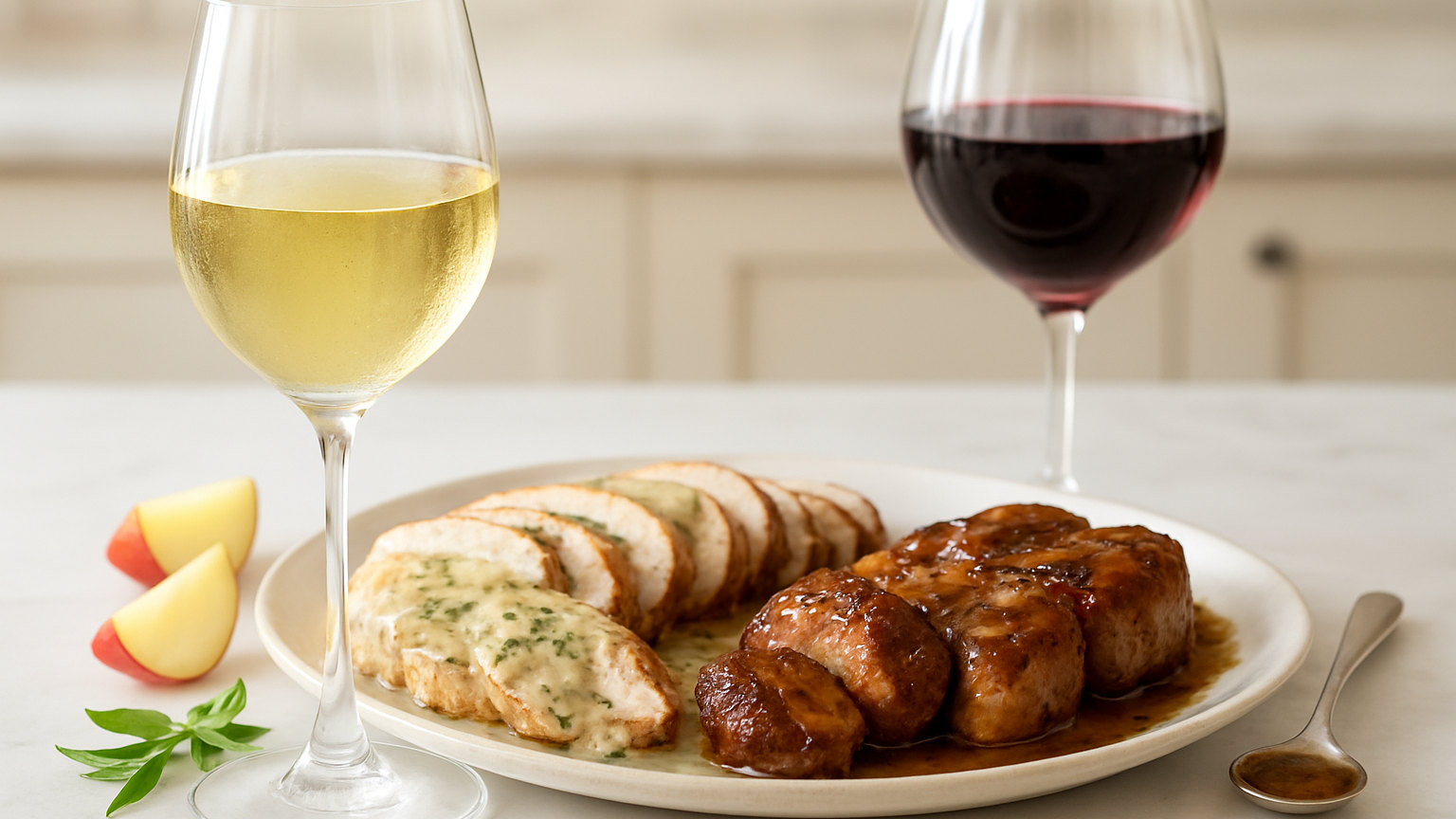
Chicken and pork sit in the middle of the weight range, which makes them the most accommodating meats on the table. That flexibility means the meat itself rarely determines the pairing. What is done to it does.
Why does the method matter more than the meat?
Because poached chicken and barbecued chicken are the same protein and completely different dishes. One is delicate and needs a light wine; the other is charred, smoky and takes a substantial red.
Pair to the plate rather than the shopping list. That single habit fixes most chicken and pork pairings.
What suits roast chicken?
- Chardonnay. Lightly oaked. The classic and reliable answer.
- Pinot noir. Excellent, and one of the clearest exceptions to the colour rule.
- Beaujolais or gamay. Light, fruity, cuts through the fat.
- Dry riesling. Works well, particularly with herbs.
Roast chicken with gravy shifts towards red. Roast chicken with lemon and herbs shifts towards white.
What suits grilled or barbecued chicken?
Char and smoke need more weight. A fruity red such as garnacha, a rosé with some substance, or a fuller white such as viognier all work.
If there is a sweet barbecue sauce, a ripe zinfandel or shiraz handles the sugar where a drier wine would clash.
What suits roast pork?
Pork has natural sweetness and a fair amount of fat, and it suits fruit, which is why apple sauce exists.
- Off-dry riesling. The sweetness meets the pork and the acidity cuts the fat.
- Pinot noir. Reliable.
- Beaujolais. Light and refreshing.
- Chenin blanc. Particularly with apple or mustard.
What about pork belly and crackling?
Fat and salt, so acidity is essential. A high-acid white, a dry sparkling wine or a light high-acid red all cut through where a soft, low-acid wine would be flattened.
What suits sausages and charcuterie?
Salt and fat together, which accentuates tannin, so choose a red with softer tannin and good acidity. Barbera, dolcetto, gamay or a lighter tempranillo all work.
A heavily tannic cabernet with salami turns harsh and metallic, which is a common and avoidable mistake.
What suits chicken in a cream sauce?
Richness needs acidity to cut it. An unoaked or lightly oaked chardonnay, a dry chenin or a good white burgundy all work well.
Avoid anything very light, which disappears under the sauce, and avoid tannic reds, which clash with dairy.
What suits chicken curry or spiced chicken?
Off-dry riesling or gewürztraminer, where a little residual sugar dampens chilli heat and the acidity handles the richness.
Tannic red is the worst choice, since alcohol and tannin both amplify the burn. That is covered properly in the spicy food article.
What is the safest single choice?
An unoaked or lightly oaked chardonnay, or a pinot noir. Between them they handle most chicken and pork dishes, and both sit at the medium weight these meats occupy.
If the table is eating several different things, one of those two will rarely be wrong.
Does the skin change anything?
Crisp roast skin brings fat and salt, which asks for acidity. That is one reason a high-acid white or a light red with good acidity works better than a soft ripe one.
Skinless poached or steamed chicken is far more delicate and needs a lighter wine.
What about cold chicken and picnic food?
Cold food is less aromatic and needs lighter, fresher wine. A dry rosé, a light unoaked white or a chilled Beaujolais all suit cold chicken, pork pie and similar better than anything heavy.
What about pork with fruit?
Apple sauce, prunes or apricots all push the pairing towards a wine with fruit sweetness. Off-dry riesling and Belgian-style fruit character both work, and a dry austere wine will taste sharp beside them.
What is the practical summary?
Pair to the sauce and the method rather than the meat. Chicken and pork are light enough to take almost anything and neutral enough to be led entirely by what is around them.
A lightly oaked chardonnay or a pinot noir covers most of the range without needing a decision.


