
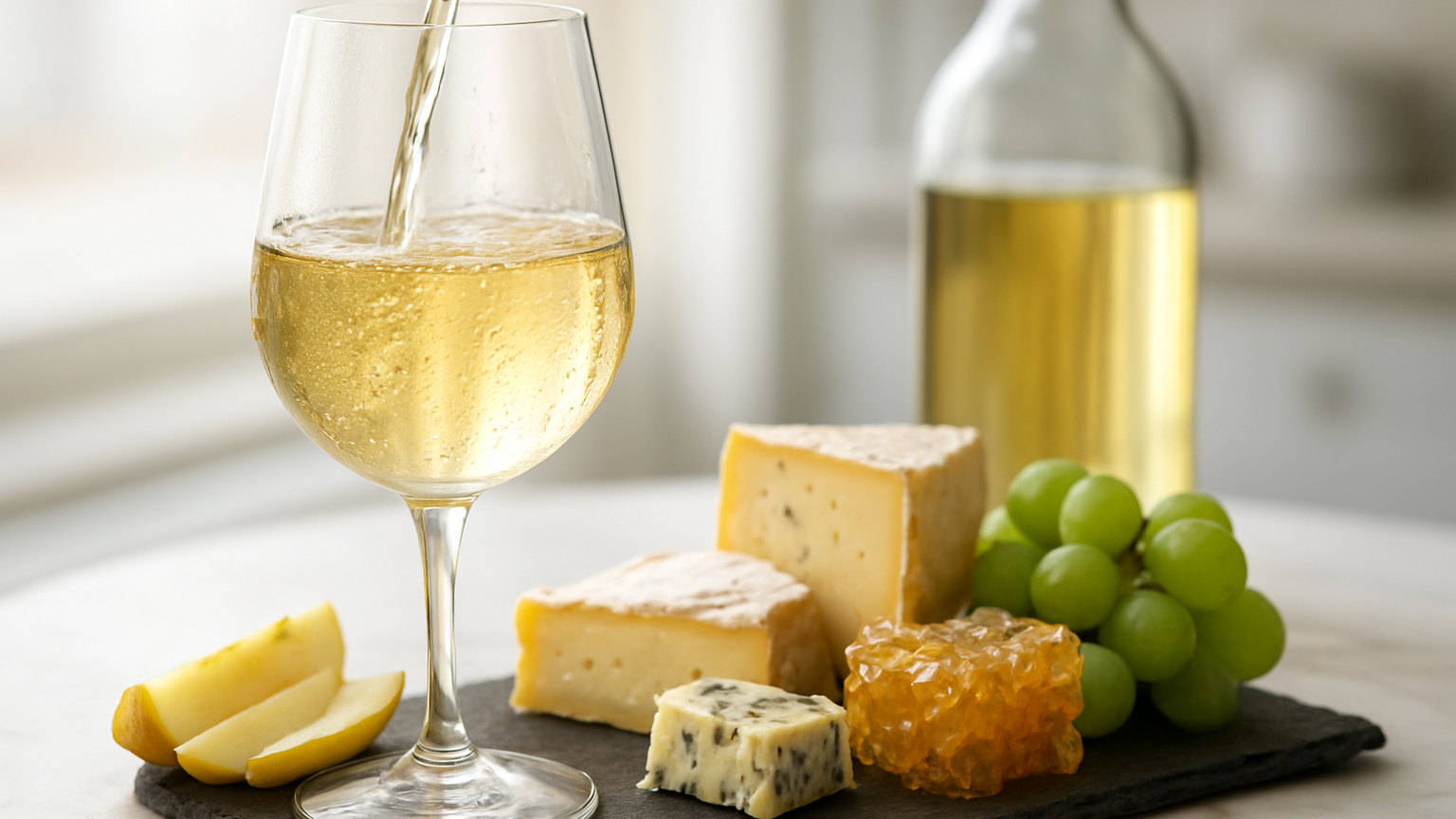
The cheeseboard with a big red is one of the most established rituals in wine, and it is one of the least defensible pairings. Once you know why, the alternatives are considerably better.
Why does red wine struggle?
Two reasons. Tannin clashes with several cheeses, producing a metallic taste. And cheese is salty, which accentuates tannin and makes it taste harsher.
The combination of fat, salt and tannin is exactly what causes the problem, and the more tannic the wine the worse it gets.
So why is the tradition so strong?
Because cheese follows the main course in classical service, and the red wine from the main course is still on the table. It is a matter of sequence rather than matching.
What works better?
White wine, generally, and sweet wine for the strongest cheeses. High acidity cuts the fat, and the absence of tannin removes the clash entirely.
What goes with hard cheese?
Mature cheddar, comté and gruyère are nutty, salty and fatty.
- Oaked chardonnay. Weight and richness to match.
- Dry riesling. Acidity cuts through cleanly.
- Sherry, particularly amontillado. Nutty against nutty. Excellent.
- A softer red such as merlot, if red is wanted.
What goes with blue cheese?
Sweet wine, and this is one of the great pairings in either direction. Salt and sugar contrast, and the intensity of each matches the other.
- Sauternes with roquefort. The classic combination.
- Port with stilton. The British equivalent, and equally good.
- Tokaji or a late-harvest riesling. Both work well.
Dry red with blue cheese produces a metallic finish and is worth avoiding despite how often it is served.
What goes with soft and fresh cheese?
Goat’s cheese, mozzarella and young soft cheeses are delicate and acidic.
Sauvignon blanc is the classic, and Sancerre with goat’s cheese is a genuine regional pairing developed where both are made. Dry sparkling wine and light unoaked whites also work.
What goes with washed rind cheese?
Epoisses, taleggio and similar are pungent and sticky. They need something with real presence.
Gewürztraminer, a rich chenin blanc, or a Belgian-style beer all handle them. Most reds are overwhelmed.
What about brie and camembert?
Fatty and mild when young, pungent when ripe. Dry sparkling wine is the safest choice, since the acidity and carbonation cut the fat cleanly.
A light unoaked white works, and a young ripe camembert defeats most reds.
How should you build a board?
Three or four cheeses spanning the range, with two wines rather than one:
- A dry white or sparkling for the fresh and soft cheeses.
- A sweet wine for the blue.
If red is wanted, choose something low in tannin such as pinot noir or gamay rather than a big cabernet.
What is the single best pairing?
Sweet wine with blue cheese, comfortably. It is worth trying deliberately rather than accepting the standard board and red bottle.
What about sparkling wine?
One of the most flexible options across a whole board. Acidity and carbonation together cut the fat in almost any cheese, and there is no tannin to clash.
A dry sparkling wine is arguably the single safest bottle to open with a mixed cheeseboard.
Should the wine or the cheese lead?
Whichever you care more about. If there is a bottle you want to show off, choose cheese that supports it. If the board is the point, choose wines that flatter it.
Trying to give both equal billing usually produces a compromise, which is worth deciding before shopping rather than at the table.
How much should you serve?
Around 30 to 50g of each cheese per person and small pours of two wines rather than large pours of one. Three or four cheeses is plenty for a board.
Bread or plain crackers and water between cheeses reset the palate more effectively than anything else.
What is the safest single bottle?
A dry sparkling wine, for the reasons above. If a still wine is wanted, a dry riesling handles a mixed board better than any red will.
Keeping a small bottle of something sweet back for the blue cheese costs little and improves the board more than a better red would.


