
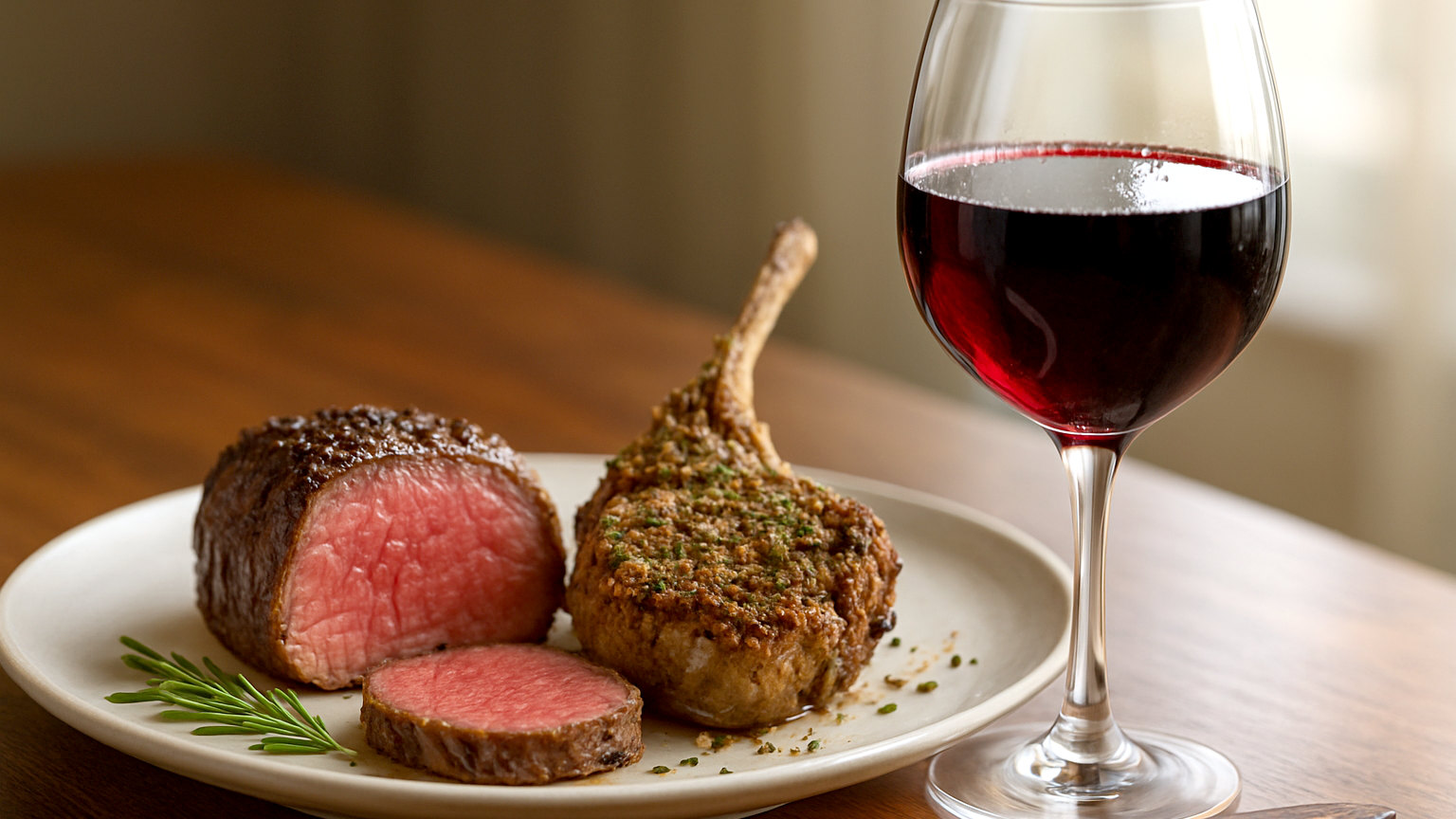
Red meat is the one category where the traditional advice holds up under examination. Tannin binds with protein and fat, both sides improve, and the mechanism is well understood.
What suits steak?
- Cabernet sauvignon. The classic. Firm tannin against protein and fat.
- Malbec. Softer tannin, ripe fruit. Excellent with grilled steak.
- Syrah. Peppery, and suits a peppered steak directly.
- Tempranillo. Particularly a Rioja reserva.
- Nebbiolo. For a well-marbled cut, where the fat handles the tannin.
The fattier the cut, the more tannin it will take. A lean fillet suits a softer wine than a ribeye does.
What suits lamb?
Lamb is fatty and distinctly flavoured, often with rosemary, mint or garlic.
- Bordeaux blends. The traditional match and a very good one.
- Rioja. Tempranillo with lamb is a regional classic.
- Syrah. Especially northern Rhône, with its savoury edge.
- Grenache blends. Softer, and good with slow-cooked lamb.
Does mint sauce cause a problem?
It can. Mint sauce is sharp with vinegar and sugar, which flattens a low-acid wine. A wine with decent acidity handles it; a soft ripe red does not.
How does cooking method change things?
- Grilled or seared. Char suits syrah and cabernet. Full tannin welcome.
- Roasted. Slightly softer. Bordeaux blends, Rioja, merlot.
- Slow-cooked or braised. The meat is softer and the sauce dominates. Grenache blends, southern Rhône, Chianti.
- Rare. More blood and protein, which handles more tannin.
- Well done. Drier, so a softer wine with more fruit works better.
What suits a beef stew?
Something with acidity to match the tomato or stock base, and enough body to stand up to long-cooked flavours. Southern Rhône blends, Chianti Classico and Portuguese reds all work well.
Very tannic wines are less useful here, since the meat has already softened and there is less fat and protein to bind with.
What suits game?
Venison, pheasant and hare are leaner and more strongly flavoured than farmed meat.
- Venison. Syrah, nebbiolo, mature Bordeaux.
- Pheasant and partridge. Lighter. Pinot noir or a mature red.
- Duck. Pinot noir, or an off-dry red with the fat.
- Hare and rich game stews. Full southern Rhône or Barolo.
Does the sauce override the meat?
Frequently. Beef in a peppercorn sauce, a red wine reduction or a blue cheese sauce are three quite different pairing problems, and the sauce carries more flavour than the meat.
Blue cheese sauce in particular pushes towards a softer, fruitier red, since blue cheese and heavy tannin clash.
What about serving temperature?
Sixteen to eighteen degrees, cooler than most heated rooms. A tannic red at 22 degrees tastes alcoholic and the tannin turns coarse.
Twenty minutes in the fridge before opening genuinely improves most reds in a modern centrally heated house.
What is the safest choice?
A Bordeaux-style blend or a Rioja reserva. Both suit beef and lamb across most cooking methods, and neither is so tannic that it needs a perfect match to work.
What about burgers?
Beef, char, fat and usually a sweet or tangy sauce, so a fruity red with moderate tannin works best. Malbec, primitivo or a southern Rhône blend all suit them.
Very tannic wines fight the sauce, and this is a case where a good beer is arguably the better answer.
Does age matter here?
For the best pairings, yes. Mature Bordeaux with lamb is a classic partly because the tannin has softened and the savoury development matches the meat.
Young tannic wine works too, and it needs more fat on the plate to soften it.
How much tannin is too much?
Whatever the plate cannot soften. A lean fillet with a light jus will be overwhelmed by a young nebbiolo, where a fatty ribeye handles it comfortably.
Match the tannin to the fat rather than to the meat in the abstract, and the pairing will rarely go wrong.
What is the safest single bottle?
A Rioja reserva or a Bordeaux-style blend from South West France or Chile. Both have enough structure for red meat without the extreme tannin that demands a perfect match, and both handle beef and lamb across grilling, roasting and braising.


