
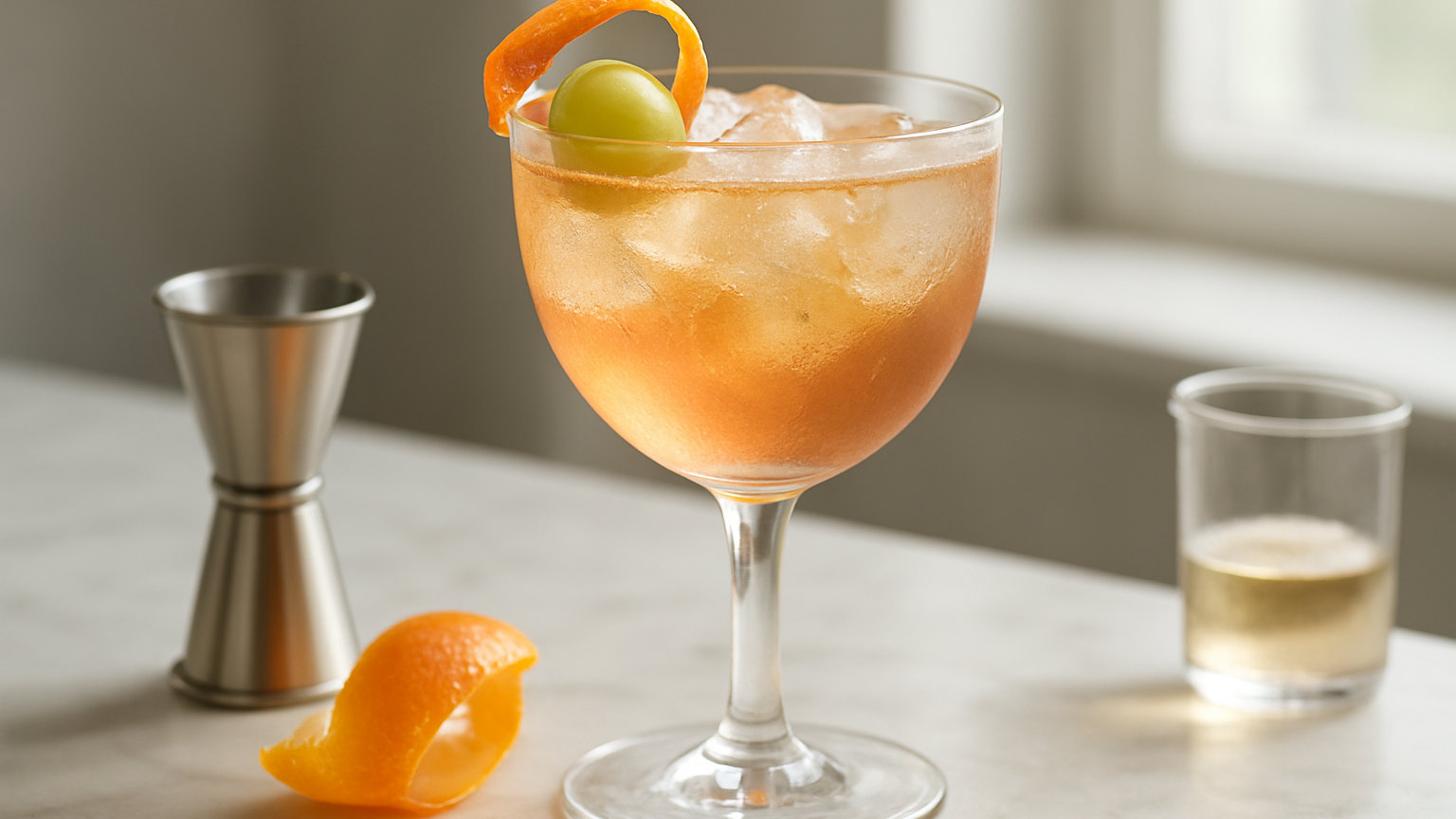
A spirit is a blank component that a cocktail assembles into a drink. Wine is already a complete drink, with acidity, tannin, sweetness and aroma in balance, and building on top of it means working with those rather than around them.
What is different about wine as a base?
- Much lower strength. Around 12 per cent against 40, so drinks are longer and gentler.
- Acidity is already present. Adding citrus can easily tip a drink sharp.
- Tannin in reds. Which clashes with some ingredients and turns harsh over ice.
- It oxidises. A wine cocktail does not keep the way a spirit one does.
- Aroma is delicate. Heavy modifiers bury it entirely.
Why does the lower strength matter?
Because dilution that would improve a spirit drink ruins a wine one. A shaken cocktail picks up 25 to 30 per cent water from the ice, which takes a 12 per cent wine down to around 9.
That is why most wine cocktails are built in the glass or in a jug rather than shaken, and why they use ice for chilling rather than as an ingredient.
What does that mean for units?
A 175ml glass of 12 per cent wine is 2.1 units. A spritz made with 100ml of wine is closer to 1.2, which is genuinely lower than most spirit cocktails and part of the appeal.
Sangria and punch are the exception, since spirits are frequently added and the strength climbs well above what the wine alone suggests.
What ingredients work with wine?
- Soda and sparkling water. Lengthen without adding flavour.
- Fruit and fruit juice. Echo what is already in the wine.
- Bitter aperitivo liqueurs. Structure against wine acidity.
- Cassis and fruit liqueurs. Small quantities, adding sweetness and depth.
- Warm spice. Particularly with red, and particularly warmed.
What fights wine?
Cream and dairy, which curdle against wine acidity. Heavy oak-aged spirits, which overwhelm the aroma. Large quantities of citrus, which duplicate acidity already present.
Red wine with strong tannin also turns metallic and drying when heavily chilled or mixed with anything salty, which is worth knowing before building a drink around a big structured red.
Should you use good wine?
Decent and inexpensive. A wine with obvious faults will show through, and an expensive one is wasted under fruit, sugar and soda.
The useful rule is that it should be a wine you would happily drink on its own, and not one you would be sorry to see mixed.
Why do wine cocktails have a poor reputation?
Because the versions most people meet are made with cheap wine, tinned juice and a great deal of sugar, and left standing until the fruit has gone soft.
Made with fresh fruit, measured properly and assembled shortly before serving, they are among the better drinks for a long afternoon precisely because the strength is low.
How far ahead can you make them?
An hour or two for most, and a few hours for sangria where a short maceration genuinely helps. Beyond that the wine oxidises and the fruit breaks down.
Anything sparkling goes in at the last moment, since carbonation is lost within minutes of pouring.
Should wine cocktails be shaken?
Rarely. Shaking is for drinks needing aeration and hard chilling, and it costs dilution that a 12 per cent base cannot afford.
Build in the glass over ice, or combine in a jug and chill in the fridge. The only shaken component in most wine cocktails is a spirit and citrus base that gets topped with wine afterwards.
What glassware suits them?
Large wine glasses for most, since they hold plenty of ice and concentrate aroma. Highballs work for anything long, and flutes for anything sparkling where preserving carbonation matters more than aroma.
Fill the glass with ice rather than adding a few cubes. More ice reaches equilibrium faster and then melts more slowly.
Do these count as proper cocktails?
The distinction is not worth defending. A drink built on a wine base with modifiers, sweetener and dilution is doing everything a cocktail does, at a lower strength.
The low strength is the point rather than a limitation. Most spirit cocktails sit at 2 to 3 units and cannot be drunk across a long afternoon; most wine cocktails sit near 1.5 and can.


