
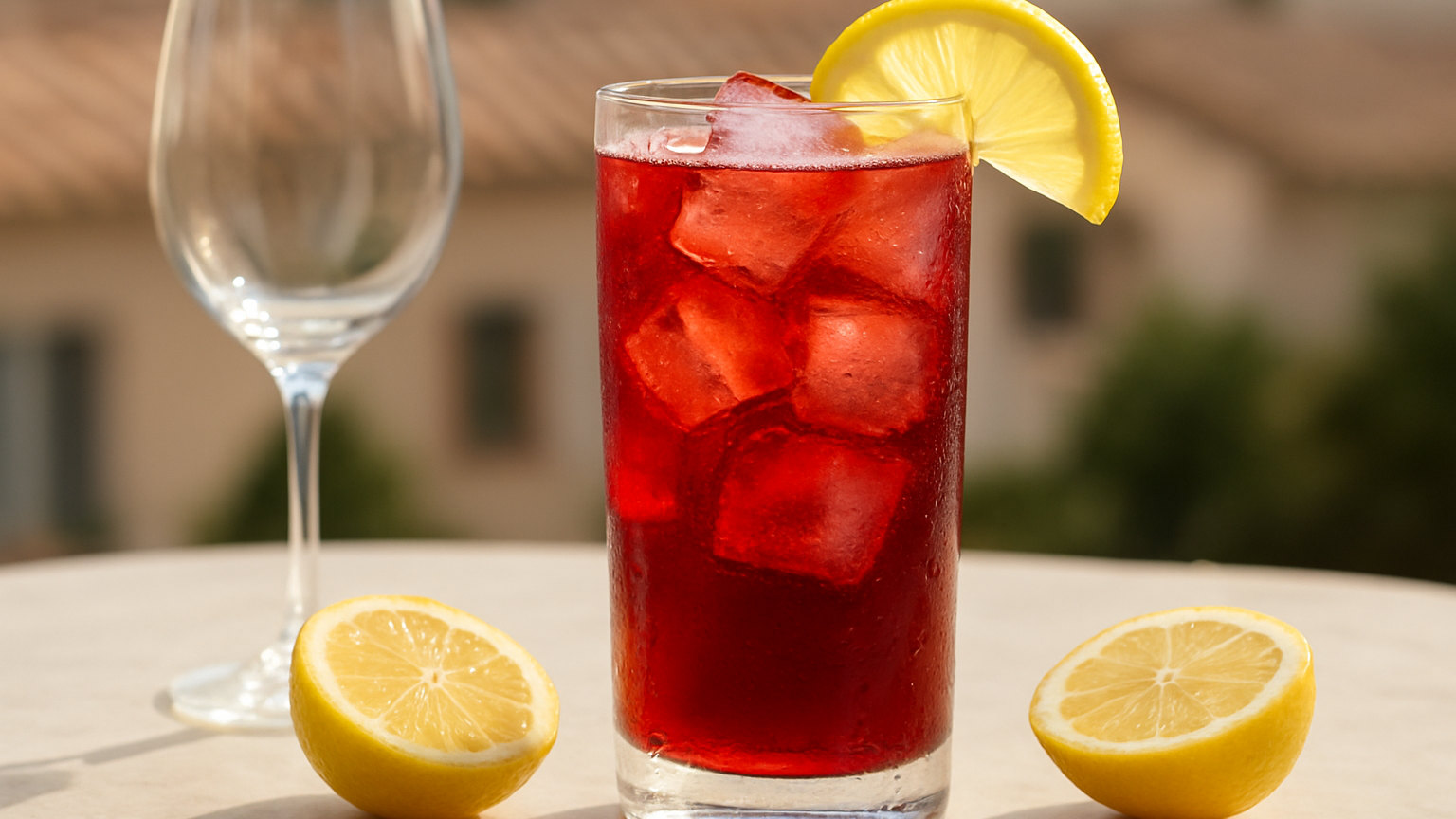
Sangria is what tourists order in Spain. Tinto de verano is what Spaniards actually drink, and it is simpler, cheaper and arguably better on a hot afternoon.
What is it?
Red wine and lemon soda, in roughly equal parts, over ice with a slice of lemon. The name means red wine of summer.
There is no fruit to macerate, no spirit to add and no preparation time. It is a two-ingredient drink built in the glass.
What is the ratio?
Half and half is standard. Some prefer two parts wine to one of soda for a stronger drink, and others go lighter in hot weather.
Fill a large glass with ice, pour equal parts, add a slice of lemon, and stir once. That is the entire method.
What soda should you use?
A lemon soda such as gaseosa in Spain, which is lightly sweetened and lightly carbonated. Lemonade of the clear sweet type is the closest UK equivalent.
Sparkling water works and gives a drier drink, at which point it is closer to a wine spritzer. Bitter lemon adds quinine bitterness, which some prefer.
How sweet should it be?
Less than most people expect. A heavily sweetened lemonade turns it into a soft drink with wine in it, which is precisely the criticism levelled at bad sangria.
Cutting sweet lemonade with soda water is a reasonable compromise if that is what you have.
Which wine?
A simple dry red, young and unoaked, inexpensive. This is a drink designed around ordinary wine and there is no argument for spending more.
Avoid tannic or oaked wines, since tannin turns harsh when chilled and mixed with a sweet mixer.
How strong is it?
Around 1.2 units for a 200ml serving at half and half, which is roughly half a glass of wine. That is a large part of the appeal in hot weather.
It drinks easily and it is easy to have several, so the total across an afternoon is worth counting even at that strength.
What are the related drinks?
- Wine spritzer. White wine and sparkling water, usually two to one.
- Kalimotxo. Basque. Red wine and cola, equal parts. Better than it sounds.
- Sangria blanca. The white version of sangria, with maceration.
- Zurra. Similar to tinto de verano with peach added.
Why is the spritzer worth reconsidering?
Because it has an unfairly dated reputation. White wine and soda over plenty of ice with a strip of lemon peel is a clean, refreshing drink at around 1 unit per glass.
It also solves the problem of a bottle that is slightly too warm or slightly past its best.
What about kalimotxo?
Equal parts cheap red wine and cola over ice. It is genuinely popular in the Basque Country and it works, since cola brings sweetness, acidity and spice that suit young red wine.
It is worth trying once before dismissing it, and it is best made with the least expensive wine available rather than anything you care about.
When should you serve these?
Any warm afternoon where a full glass of wine feels heavy. The low strength and the length are the whole point, and they are among the better long drinks for a hot day.
Should there be fruit in it?
A slice of lemon and nothing more. The point of the drink is that it takes no preparation, and adding chopped fruit turns it into a slower, sweeter drink closer to sangria.
Why is it better known in Spain than abroad?
Because it is a domestic everyday drink rather than a restaurant one, made at home and ordered casually in bars. Sangria travelled as a tourist drink and this did not.
What should you serve it in?
A large glass filled with ice, since the drink is meant to be long and cold rather than concentrated. A wine glass or a highball both work.
Does it work with any red?
Almost any young dry red, and the lighter the better. Heavy, oaked or strongly tannic wines turn harsh once chilled and mixed with a sweet mixer, which is the one thing to avoid.


