
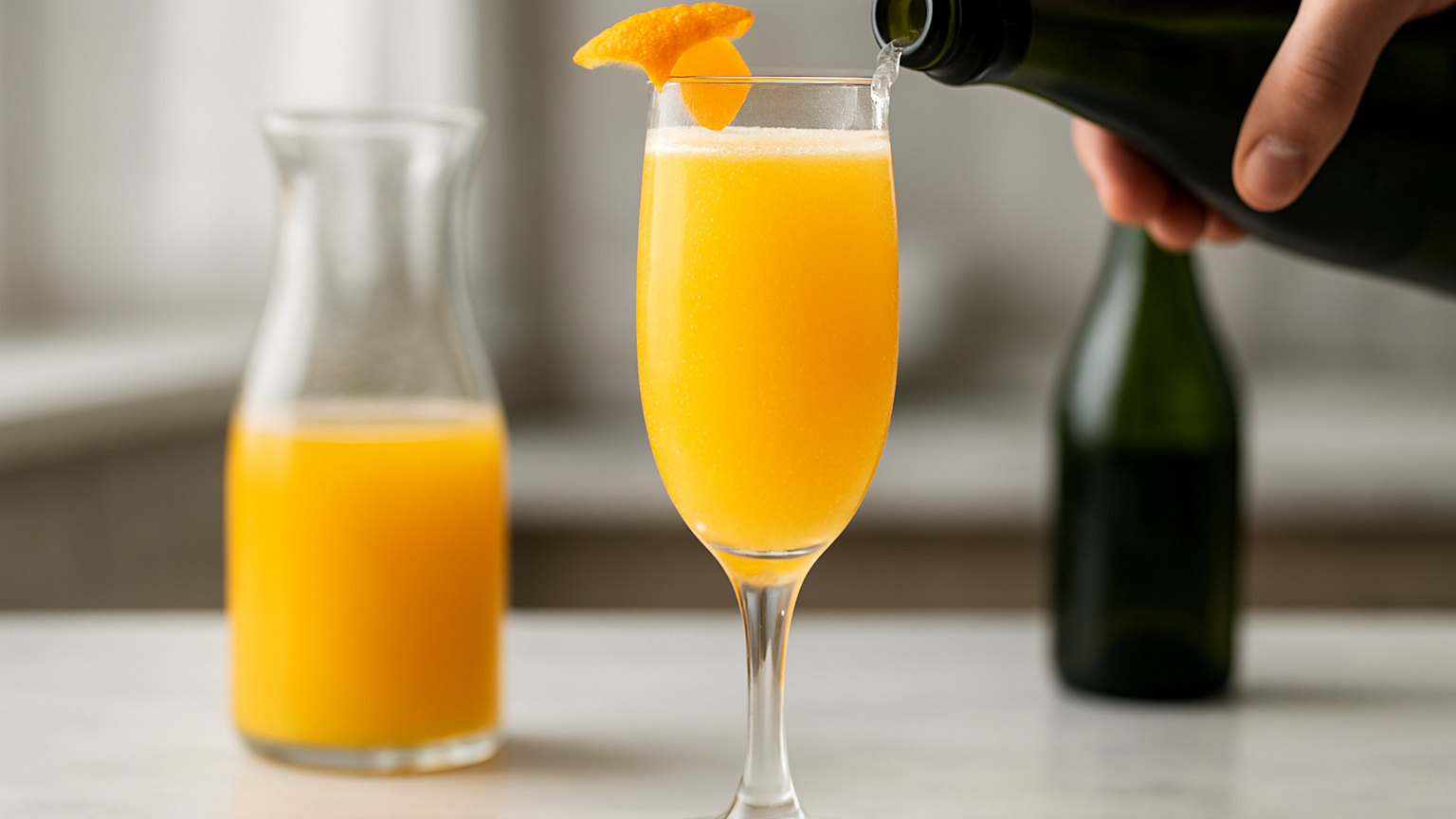
A mimosa is orange juice and sparkling wine. Two ingredients, both of which are usually compromised: warm wine and juice from a carton.
What is the recipe?
- 75ml fresh orange juice
- 75ml dry sparkling wine
Chill both components and the glass. Pour the juice into a chilled flute or wine glass first, then add the sparkling wine slowly down the side of a tilted glass. Do not stir.
Why does the juice go in first?
Because wine poured first foams up violently as the juice hits it, which is why so many mimosas arrive half full with a puddle on the tray.
Juice first, wine slowly on top, and it combines on its own without stirring.
Why does fresh juice matter?
Because cartoned orange juice is pasteurised and often from concentrate, which flattens the aroma and leaves a cooked, one-dimensional sweetness.
Fresh juice is brighter, more acidic and more aromatic. In a two-ingredient drink there is nowhere for that difference to hide.
Should the juice be strained?
Lightly, to remove the larger pulp. Some pulp is fine and a great deal makes the drink cloudy and causes it to foam over as the wine goes in.
How does it differ from a bucks fizz?
Proportion. A mimosa is equal parts; a bucks fizz is roughly two parts wine to one juice, which is drier and stronger.
The names are used loosely and the difference is real: around 0.9 units for a mimosa against 1.3 for a bucks fizz. The bucks fizz is the better choice if the drink is standing in for a glass of wine.
Which sparkling wine should you use?
Dry prosecco or cava. Both are inexpensive and both suit orange juice well.
Champagne is wasted here, since the juice covers most of its character. Check for brut rather than extra dry, since prosecco labelling runs the opposite way to intuition.
Why does the glass need to be cold?
Because a warm glass drives carbonation out immediately. A flute or wine glass from the fridge keeps the drink lively for considerably longer.
Everything cold, including the juice, is the single biggest improvement available.
What other juices work?
- Grapefruit. Sharper and drier. Arguably better than orange.
- Blood orange. Excellent in season.
- Peach purée. Which makes a bellini.
- Cranberry with orange liqueur. Which makes a poinsettia.
Avoid anything thick or pulpy, which foams heavily and turns the drink cloudy.
How strong is it?
Around 0.9 units at equal parts. That is low, which is why the drink belongs at brunch, and three of them before midday is still comparable to a large glass of wine.
Can you batch it?
Squeeze the juice ahead and chill it. The wine goes in per glass, since a jug of mimosa is flat within twenty minutes.
For a group, put a jug of cold juice and a bottle in an ice bucket on the table and let people pour their own.
What ruins it?
Wine poured first, a warm glass and cartoned juice. The first makes it foam over, the second kills the bubbles and the third flattens the flavour.
How much juice do you need?
Around 400ml per bottle of sparkling wine at equal parts, which is roughly four to six oranges depending on size. Squeeze it on the day.
What glass should you use?
A chilled flute or wine glass. The flute preserves carbonation slightly longer; the wine glass gives more aroma from the juice.
Temperature matters considerably more than shape.
Can you make it alcohol free?
Yes, using a non-alcoholic sparkling wine with the same fresh juice. It is one of the easier cocktails to make convincingly without alcohol, since the juice carries most of the flavour.
Put it out alongside rather than producing it on request.
How many should you allow per person?
Two for a brunch, which comes to roughly one bottle of sparkling wine between three or four people. Squeeze around 400ml of juice per bottle.


