
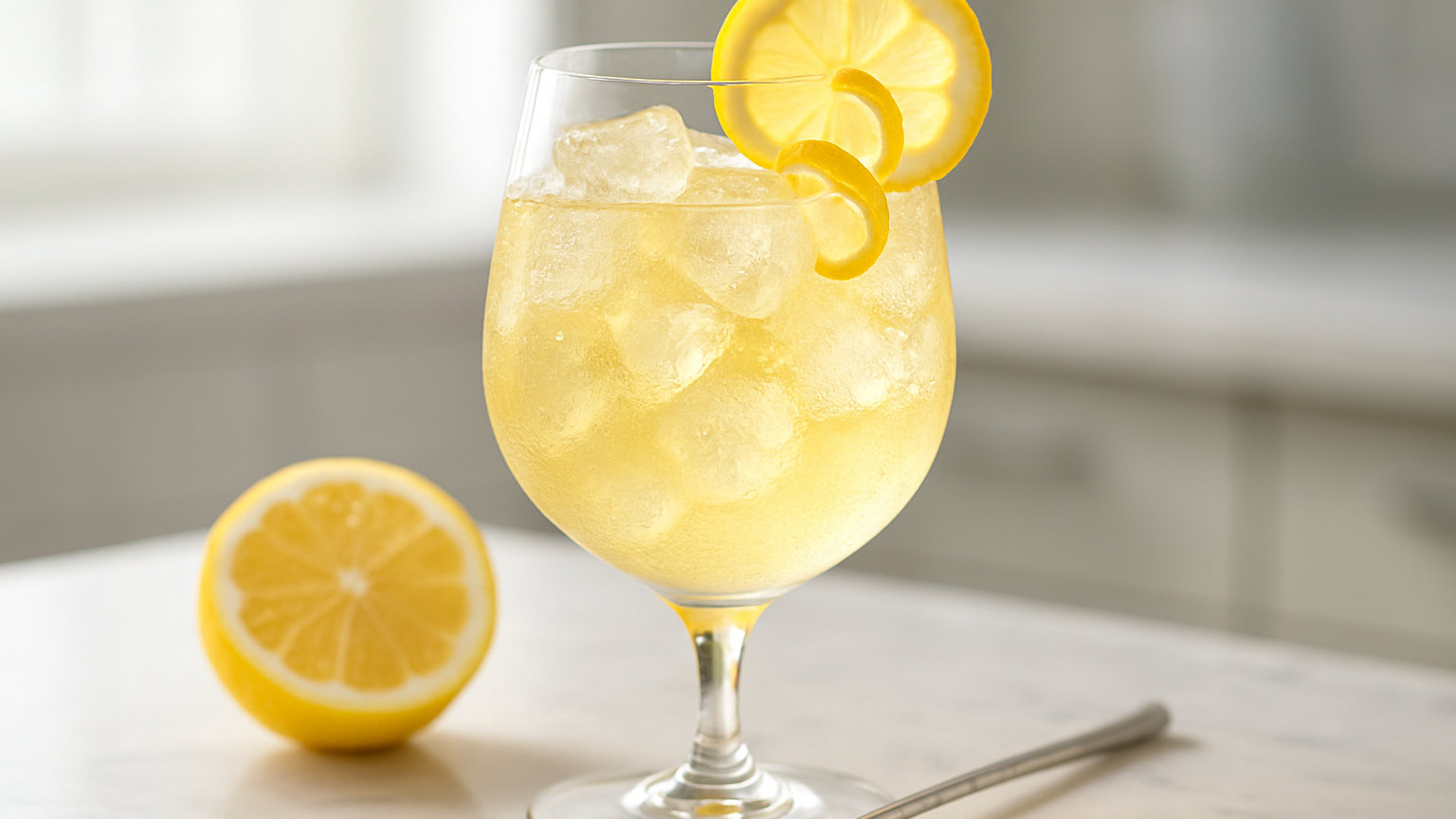
A limoncello spritz is lemon liqueur, prosecco and soda over ice. It is the sweetest member of the spritz family, which means it needs more care with proportion than the bitter versions do.
What is the recipe?
- 50ml limoncello
- 100ml dry prosecco
- 40ml soda water
- A squeeze of fresh lemon
- A lemon slice and a mint sprig
Fill a large wine glass with ice. Add the limoncello and the lemon juice, then the prosecco poured down the side, then the soda. Lift once gently and garnish.
Why less liqueur than an aperol spritz?
Because limoncello is considerably sweeter and has no bitterness to balance it. At a 3:2 ratio it becomes cloying, so the liqueur measure comes down and the soda goes up.
Fifty millilitres against 100 of prosecco is a reasonable starting point. Reduce it further if your limoncello is particularly sweet.
Why add fresh lemon?
Because limoncello is made from peel rather than juice, so it carries lemon aroma without much acidity. A squeeze of fresh juice gives the drink the sharpness it otherwise lacks.
Ten millilitres is enough. It is the single most effective correction if a version tastes flat and sugary.
Does it work without soda?
It becomes richer and sweeter. Soda is doing real work here, lengthening the drink and diluting the sugar, so leaving it out generally makes the balance harder.
Which limoncello should you use?
Anything decent, and a homemade one gives the most control. Commercial versions vary enormously in sweetness, which is why the ratio is worth adjusting rather than following exactly.
A limoncello made at home from unwaxed lemon peel steeped in vodka is straightforward and considerably fresher.
How cold should it be?
Everything from the fridge, and the limoncello from the freezer if you keep it there. It will not freeze solid at around 25 per cent and it makes the drink noticeably better.
Fill the glass with ice rather than adding a few cubes, since a full glass dilutes more slowly.
How strong is it?
Around 2 units, which is higher than most spritzes because limoncello is stronger than a bitter aperitivo. It is worth knowing, since it tastes lighter than it is.
What variations work?
- With basil. A slapped basil leaf instead of mint.
- With grapefruit. A splash of juice for bitterness.
- Sicilian style. A pinch of salt, which suppresses the sweetness.
- Alcohol-free. Lemon cordial with sparkling water and a non-alcoholic sparkling wine.
Can you batch it?
Mix the limoncello and lemon juice ahead and keep it cold. Add prosecco and soda per glass, since carbonation goes within twenty minutes.
What ruins it?
Too much limoncello and no fresh lemon. Together they produce something closer to a sweet fizzy lemon drink than a cocktail.
When should you serve it?
After food rather than before, since it is sweet rather than appetising. It works well as a lighter alternative to a dessert wine.
What glass should you use?
A large wine glass filled to the top with ice. Plenty of ice matters here more than in most spritzes, since the drink is sweet and benefits from the dilution.
Can you make the limoncello?
Easily, and it gives the most control over sweetness. Unwaxed lemon peel steeped in vodka for two to four weeks, then combined with cooled sugar syrup.
Use only the coloured zest and no white pith, since pith extracts bitterness that no amount of sugar corrects.
How does it compare to the other spritzes?
Sweeter and stronger. The orange bitter version is around 1.3 units and balanced by bitterness; this is around 2 units and balanced only by whatever lemon and soda you add.
That makes proportion matter more here than in any other member of the family.
What glass should you use?
A large wine glass filled with ice, as with any spritz.
What ratio should you settle on?
Roughly 10:5:4 of prosecco, limoncello and soda, with a squeeze of lemon. Reduce the limoncello to 40ml if yours is particularly sweet.


