
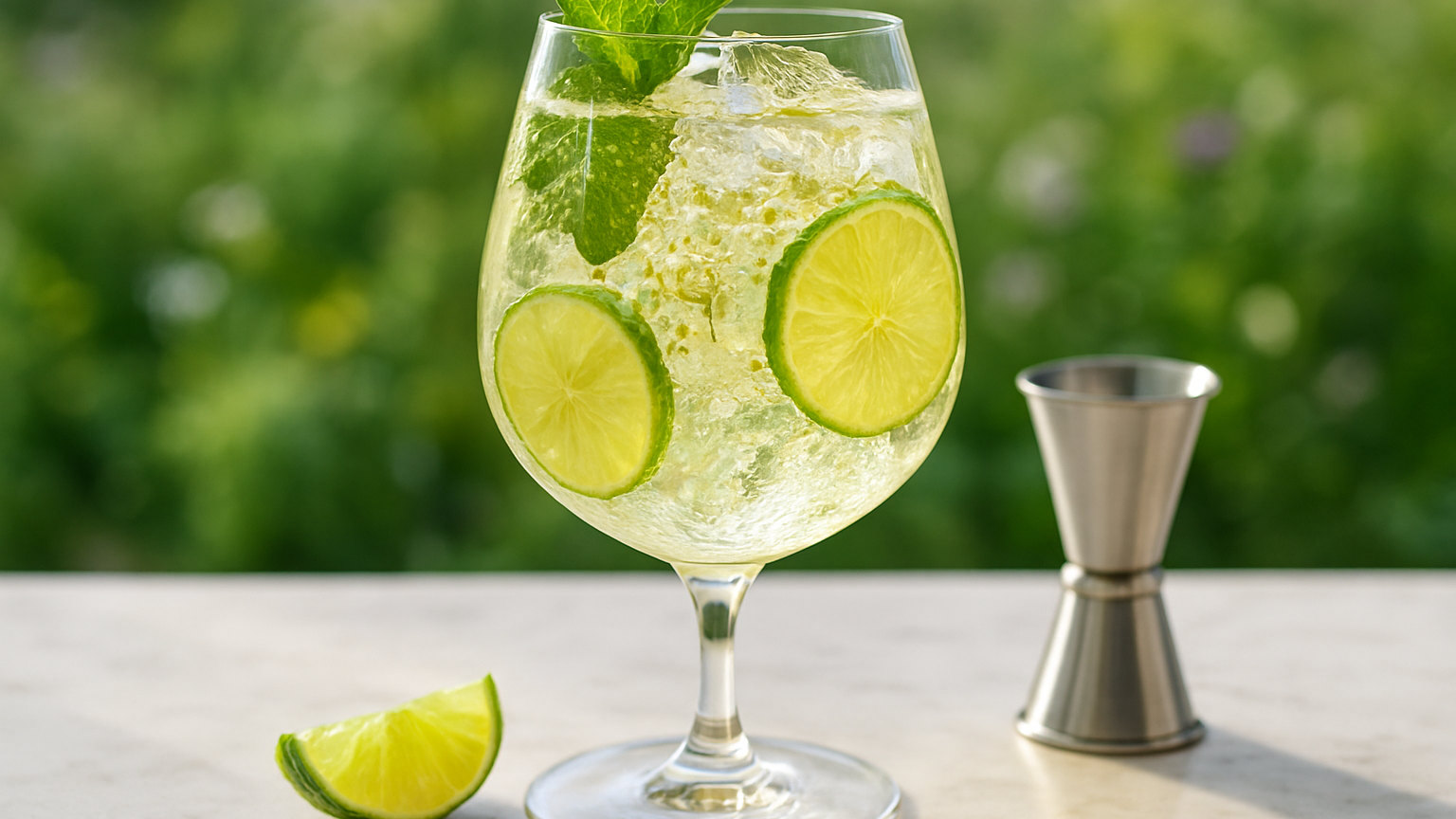
The hugo is a spritz built on elderflower rather than bitter aperitivo. It was created in northern Italy in the mid 2000s and has spread widely since, largely because it is gentler than the bitter versions.
What is the recipe?
- 100ml dry prosecco
- 30ml elderflower liqueur or cordial
- 40ml soda water
- 6 to 8 fresh mint leaves
- A lime wedge
Fill a large wine glass with ice. Add the elderflower and a squeeze of lime, then the prosecco poured down the side, then the soda. Lift gently and add the mint sprig and lime wedge.
How do you handle the mint?
Slap a sprig once between your palms and add it whole rather than muddling. Elderflower is delicate and crushed mint releases chlorophyll that turns the drink grassy and bitter.
The aroma reaches you from the sprig above the surface, which is where most mint character in any drink actually comes from.
Should mint go in the drink at all?
A few whole leaves among the ice is fine and they contribute more visually than aromatically. The sprig at the top does the work.
Liqueur or cordial?
Either. Elderflower liqueur at around 20 per cent adds a little strength and a rounder flavour. Elderflower cordial is sweeter, non-alcoholic and considerably cheaper.
With cordial, use around 20ml rather than 30, since it is more concentrated in sugar.
How does it differ from an aperol spritz?
No bitterness at all. The orange spritz is built on a bitter aperitivo that gives it structure; the hugo is floral and sweet with lime providing the only sharpness.
That makes it more approachable for anyone who dislikes bitter drinks, and less interesting for anyone who likes them.
Why does the lime matter?
Because elderflower is sweet and prosecco is only mildly acidic, so without lime the drink is flat and sugary. A squeeze plus a wedge in the glass is enough.
How strong is it?
Around 1.4 units with liqueur, or 1.1 with cordial. Both are low, which suits a drink built for warm afternoons.
Where does it come from?
South Tyrol, in the Italian Alps, created around 2005 with lemon balm rather than mint in the original. Mint became standard as it spread.
Can you batch it?
Mix the elderflower and lime ahead. Add prosecco, soda and mint per glass, since carbonation and mint both fade quickly.
What glass should you use?
A large wine glass filled with ice, like any spritz. The wide bowl carries the elderflower and mint aroma, which a flute would waste entirely.
What ruins it?
Muddled mint and no lime. The first turns it grassy and bitter, the second leaves it tasting like sweetened fizzy water.
Is there an alcohol-free version?
A good one. Elderflower cordial, sparkling water, lime and mint over ice is genuinely refreshing, and adding a non-alcoholic sparkling wine gets it closer to the original.
How much elderflower should you use?
Thirty millilitres of liqueur or twenty of cordial. Beyond that the drink tips into sweetness and the lime cannot balance it.
What glass should you use?
A large wine glass filled with ice, like any spritz. The wide bowl carries the elderflower and mint aroma, which is most of what the drink offers.
Can you use lemon instead of lime?
Yes, and it gives a slightly softer drink. Lime is sharper and cuts the elderflower more cleanly, which is why it is the usual choice.
Either works, and what matters is that some acidity is present.
Is it a summer drink only?
By convention rather than necessity. It is light and floral, which suits warm weather, and there is nothing about it that stops working in October.
How much ice should the glass have?
Fill it. A packed glass reaches equilibrium quickly and then melts slowly, where a few cubes dilute the drink heavily as they melt to chill it.
What ratio should you settle on?
Roughly 10:3:4 of prosecco, elderflower and soda. Adjust the elderflower down if it tastes sweet, since that is where all the sugar arrives.


