
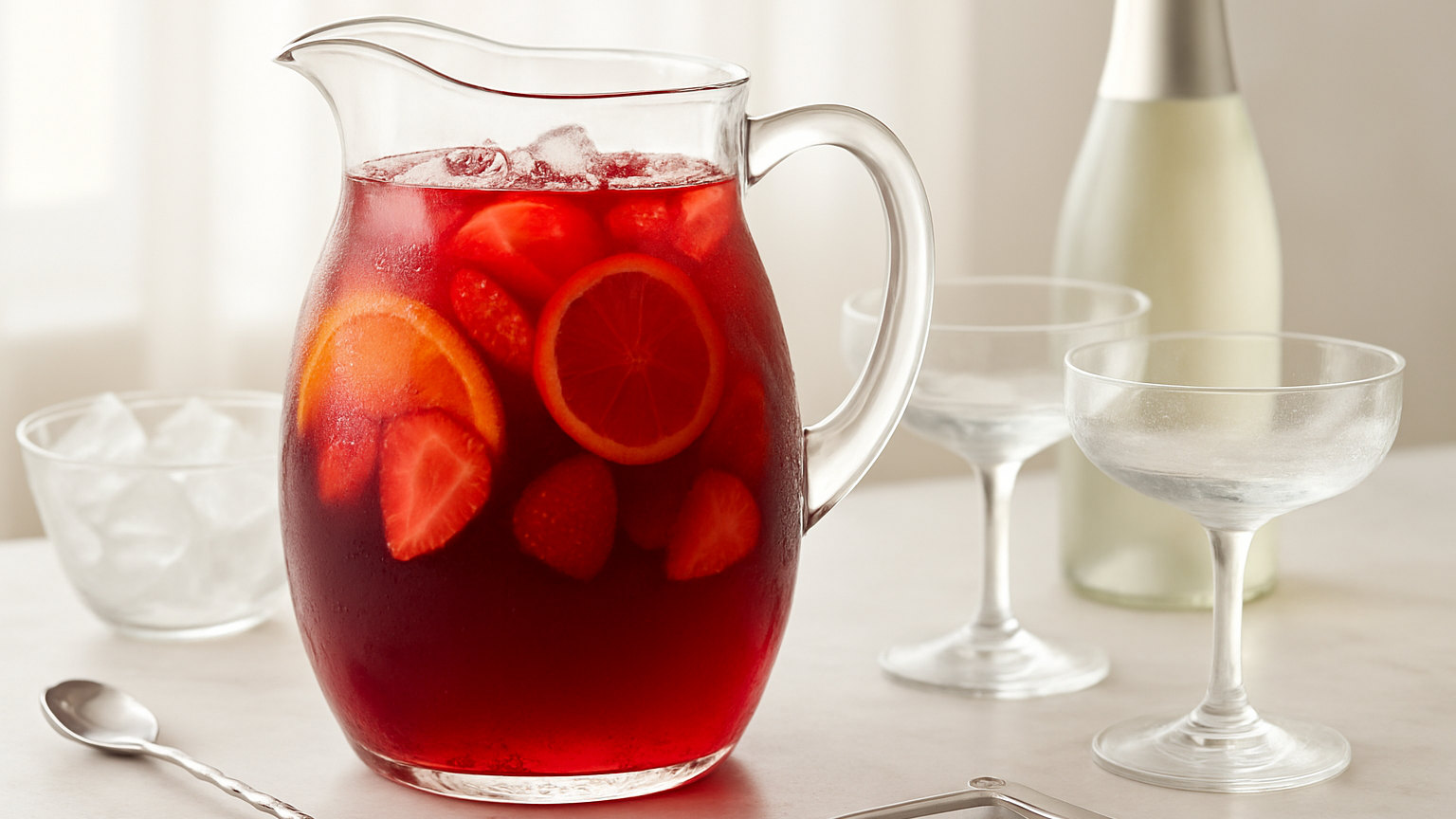
Batching is what makes a party workable, and wine cocktails suit it well because most are built rather than shaken. Two components cannot be batched, and everything else can.
What cannot be prepared ahead?
- Anything sparkling. Flat within twenty minutes of pouring.
- Fresh citrus juice. Dulls noticeably within a few hours.
Everything else, including wine, spirits, syrups, purées and fruit, can be prepared in advance and combined at the last moment.
What is the general approach?
- Day before. Make syrups. Freeze ice blocks. Chill wine.
- Morning. Squeeze citrus. Make purées. Slice fruit.
- Two hours before. Combine still components. Refrigerate.
- At serving. Add ice, sparkling wine and soda.
How much should you make?
Around two to three drinks per person for the first two hours, then one per person per hour after that. Making a second batch mid-event is better than one large batch standing warm.
For a jug drink, allow six 200ml servings per bottle of wine once mixers are included.
How do you keep it cold without diluting it?
A large ice block rather than cubes, since surface area governs melting. Freeze water in a plastic container the day before.
Better still, keep the batch itself in the fridge and put ice only in the glasses. That gives no dilution in the container at all and lets people control their own.
What about an ice bath?
A jug sitting in a bowl of iced water stays cold without any dilution whatsoever. It is the neatest solution for anything that will sit out for an hour or two.
Should you dilute a batch?
For spirit cocktails, yes, since the shake or stir would have added water. For wine cocktails, generally not, since the wine is already low in strength and the mixers do the lengthening.
If a batched drink tastes heavy, add soda at serving rather than water in advance.
How do you handle sparkling wine at a party?
Keep bottles in an ice bucket and open them as needed. One bottle gives roughly six generous pours or eight flutes.
Opening several in advance to save time guarantees flat drinks. It is faster to open one properly than to serve twenty flat glasses.
What should you tell people?
Roughly what is in it and roughly how strong. A punch or sangria hides its strength completely, and anyone driving or pacing themselves has no way to judge otherwise.
A small card by the bowl listing the ingredients also covers allergens, which matters if anything contains nuts, dairy or egg.
What should be available alongside?
Water, prominently and in quantity, and a proper non-alcoholic option made with the same care rather than a bottle of squash.
Both should be out with everything else rather than produced on request, which makes taking them the normal choice rather than a declaration.
What containers work?
Large glass jugs, demijohns or clean plastic bottles, all of which fit in a fridge. Bottling a batch into empty wine bottles is the neatest method for anything still.
Label them if there is more than one, particularly if one is the alcohol-free version.
How far ahead is too far?
A day for anything containing wine, since it oxidises. Syrups and purées can be made two or three days ahead, and citrus should be squeezed on the day.
What is the simplest party plan?
One batched still drink in the fridge, one bottle of sparkling wine per six guests for topping, ice in a cool box, and a jug of a proper alcohol-free option alongside.
That covers most gatherings without anyone spending the evening mixing.
How do you scale a recipe accurately?
Convert everything to millilitres and multiply, rather than scaling by bottles and handfuls. A recipe that works for one jug will work for five if the proportions hold.
Write the scaled quantities down before starting, since mental arithmetic while pouring is how batches end up stronger than intended.


