
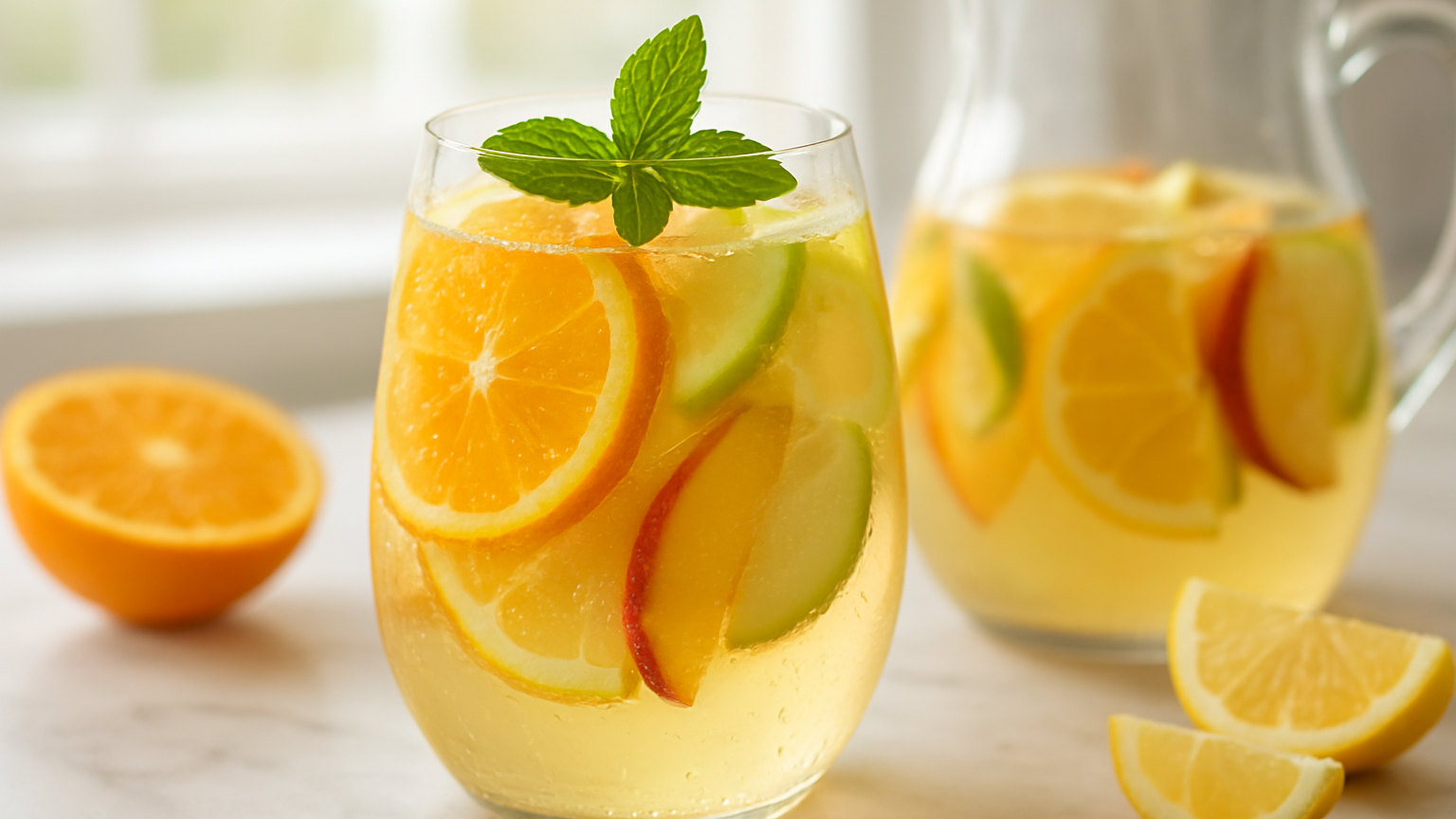
White sangria is the more forgiving of the two. Without tannin there is nothing to turn harsh when chilled, and the shorter maceration means it can be made much closer to serving.
What is the recipe?
For a jug serving six:
- 1 bottle (750ml) dry white wine.
- 60ml white rum, vodka or elderflower liqueur.
- 30ml fresh lemon juice.
- 150ml apple or white grape juice.
- 30 to 50ml sugar syrup, to taste.
- 1 peach or nectarine, sliced.
- Half a lemon and half a lime, sliced.
- A handful of green grapes, halved.
- 200ml soda or sparkling water, at serving.
Which wine works?
Something dry, crisp and unoaked. Spanish albariño or verdejo, Italian pinot grigio, or a dry sauvignon blanc all work well.
Avoid heavily oaked chardonnay, since the vanilla and butter character fights fresh fruit. Avoid anything off-dry, since the sweetness is being added separately.
What about rosé?
Excellent, and increasingly the more popular version. Use a dry pale rosé and treat it exactly as white, leaning towards red fruit in the garnish.
Strawberry, raspberry and watermelon all suit a rosé sangria in a way they do not quite suit a white one.
Which fruit suits it?
- Stone fruit. Peach, nectarine and apricot. The natural match.
- Green apple and pear. Crisp and clean.
- Grapes. Halved, and they take on the wine well.
- Melon. Better here than in most drinks.
- Citrus. Lemon and lime rather than orange.
Berries work and can turn the whole jug pink, which is fine if you intended it.
How long should it macerate?
One to two hours in the fridge, less than the red version. White wine is more delicate and oxidises faster, and the fruit used here gives up its flavour quickly.
It can be made and served within the hour if needed, which is one of its practical advantages.
What can you add instead of spirit?
Elderflower liqueur is the most useful, since it works with almost every fruit in the list. Peach liqueur, limoncello and a light white rum all suit it too.
Leaving the spirit out entirely gives a lighter drink at around 1.1 units per serving rather than 1.5, and it is still a proper drink rather than a compromise.
Should it sparkle?
Soda at the end is standard. Replacing some of the still wine with a dry sparkling wine gives a lighter, more festive version, added just before serving.
Never macerate fruit in sparkling wine, since it goes flat long before the fruit has done anything useful.
How does it compare to red?
Lighter, fresher and quicker. Red sangria has more depth and suits cooler weather and heavier food; white and rosé suit a warm afternoon and lighter eating.
White is also the easier one to get right first time, which makes it the better place to start.
How do you keep the fruit looking fresh?
Add apple and pear last, and toss cut fruit in a little lemon juice before it goes in. Both brown quickly on exposure to air, and citrus slows it considerably.
How much should you make?
One bottle serves roughly six 200ml glasses once the juice and soda are included. For a party, allow two to three servings per person over the first couple of hours.
Can you make it sparkling throughout?
Not for the maceration. Macerate in still wine and add sparkling at serving, since anything carbonated goes flat long before the fruit has done anything useful.
Which is better, white or rosé?
Rosé is the more forgiving and the more popular now, since it carries a little red fruit character of its own that supports the added fruit. White is cleaner and drier.
What should you avoid?
Oaked chardonnay, bottled citrus juice and overnight maceration. All three appear in disappointing versions and none of them is necessary.
How strong is it?
Around 1.5 units per 200ml serving with the spirit included, or 1.1 without. That is roughly half a standard glass of wine, which is much of why it suits a warm afternoon.


