
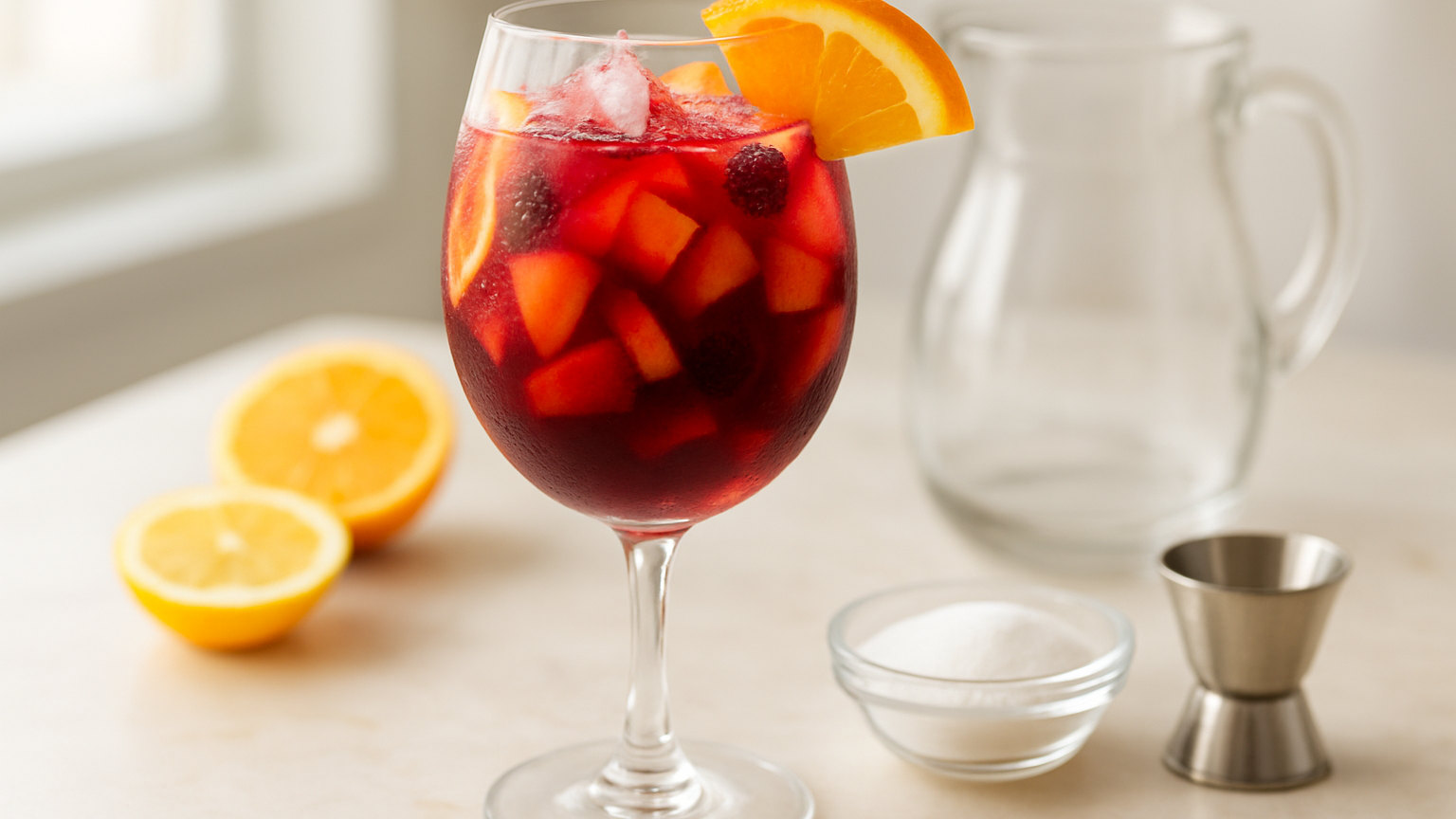
Sangria is usually made by instinct, with a bottle of whatever red is going, a handful of fruit and however much brandy seems right. Measured properly it is considerably better, and the measures are not complicated.
What is the recipe?
For a jug serving six:
- 1 bottle (750ml) dry red wine.
- 60ml brandy.
- 60ml orange liqueur.
- 30ml fresh lemon juice.
- 200ml fresh orange juice.
- 40 to 60ml sugar syrup, to taste.
- 1 orange and 1 lemon, sliced.
- 1 apple, diced.
- 200ml soda water, added at serving.
Which wine should you use?
A dry, fruity red with moderate tannin. Spanish garnacha or tempranillo is traditional and suits it well, as does anything similar in style.
Avoid heavily oaked or strongly tannic wines, since tannin turns harsh and drying when chilled and mixed with citrus. Avoid anything sweet, since sugar is being added separately and you want control of it.
Does the wine need to be good?
Sound rather than expensive. A faulty or thin wine shows through, and a good one is largely wasted. Mid-range everyday wine is exactly right.
How long should it macerate?
Two to four hours in the fridge. That is long enough for the fruit to give up flavour and take on some of the wine, and short enough that nothing has gone soft.
Overnight is too long. The fruit turns mushy, the citrus pith starts contributing bitterness, and the wine oxidises. If you must make it the night before, add the citrus in the morning.
Why add soda at the end?
Because carbonation is lost within minutes, so adding it during maceration achieves nothing. It goes in as you serve, and it lengthens the drink and lifts it.
Leaving it out entirely gives a richer, stronger sangria, which is a legitimate choice.
How strong is it?
Around 1.7 units per 200ml serving with these proportions, which is comparable to a small glass of wine. The spirits raise it above what the wine alone would give.
Sangria drinks easily on a warm afternoon and the fruit disguises the strength, which is worth keeping in mind across a jug or two.
How do you scale it?
Multiply everything, and keep the ratios. For twenty people, five bottles of wine with 300ml each of brandy and orange liqueur, a litre of orange juice and the fruit scaled up.
Make it in a large container in the fridge and decant into jugs, rather than mixing in a bowl on the table where it warms.
How should you serve it?
Cold, over ice, in a glass with some of the fruit. Keep the jug in the fridge between rounds rather than on a sunny table.
Use large ice cubes if you have them, since small ones melt fast and water the drink down.
What should you avoid?
Tinned fruit, bottled citrus juice and adding sugar without tasting. All three appear in bad sangria and all three are easy to skip.
What fruit should go in?
Citrus and firm fruit. Orange, lemon, apple and pear all hold their shape through a few hours of maceration.
Berries and stone fruit break down quickly and turn to mush, so add them near the end if you want them at all. Banana and melon contribute almost nothing.
Can you make it without spirits?
Yes, and it becomes a lighter drink at around 1.2 units per serving. Increase the orange juice slightly and add a little more syrup to compensate for the loss of body.
Why is the reputation so poor?
Because the version served to tourists is frequently made with the cheapest wine available, tinned fruit and a great deal of sugar, then left standing warm in a jug all afternoon.
None of that is inherent to the drink. Made with sound wine, fresh fruit and a short cold maceration, it is a good drink with a long history.
How long does it keep?
A day in the fridge before the wine oxidises and the fruit goes soft. Make what you will drink rather than a batch intended to last.


