
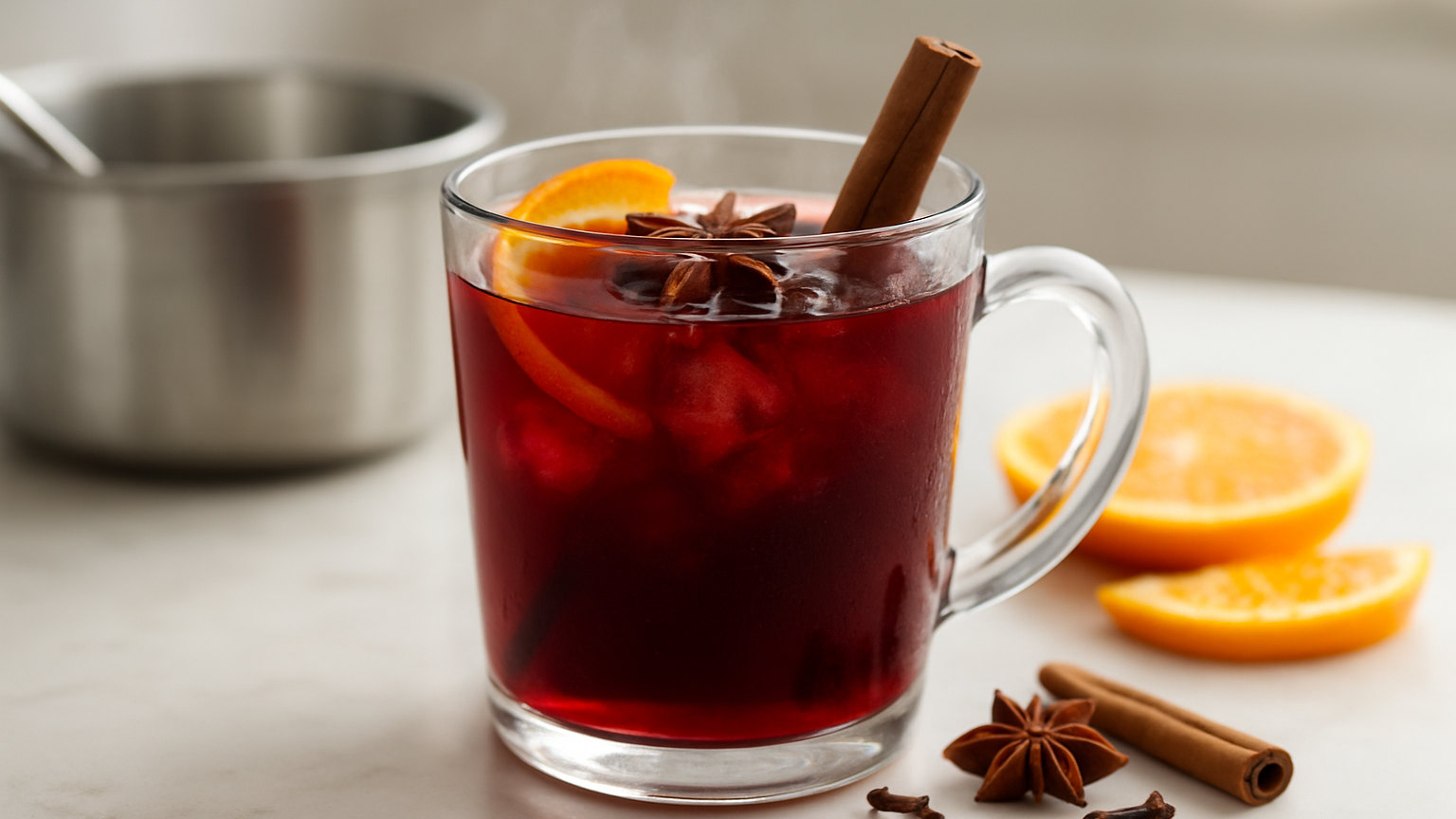
Mulled wine is difficult to ruin and easy to make mediocre. One technical point governs the result, and the rest is a matter of what you like in it.
What is the recipe?
For six servings:
- 1 bottle (750ml) dry red wine.
- 150ml water or orange juice.
- 80 to 120g sugar, to taste.
- 1 orange, sliced.
- 2 cinnamon sticks.
- 4 cloves.
- 2 star anise.
- A few gratings of nutmeg.
- 60ml brandy, optional, added at the end.
Why should it never boil?
Two reasons. Alcohol boils at 78 degrees, so a rolling boil drives it off rapidly and leaves a warm spiced juice.
More importantly, boiling wine tastes stewed. The delicate fruit character cooks off and what remains is flat and slightly bitter, which no amount of sugar disguises.
Heat gently to around 70 degrees, just below a simmer, with the occasional bubble at the edge and no more.
How much alcohol survives?
Most of it, if kept below simmering. Held at 70 degrees for half an hour, a good proportion remains, and the drink is meaningfully alcoholic rather than nominally so.
It is not a low-alcohol drink and should not be treated as one. A 200ml serving is around 1.8 units, more with brandy added.
Which wine?
Dry, fruity, medium-bodied, and inexpensive. Spanish, southern French or Chilean reds around the everyday price point are ideal.
Avoid heavily oaked wines, since oak and warm spice compete. Avoid anything expensive, since the spices and sugar cover most of what you would be paying for.
Should the spices be whole?
Always. Ground spice clouds the wine, will not strain out, and produces a gritty texture in the glass.
Whole spices can be added, tasted and removed. Star anise in particular is powerful, and two is usually enough for a bottle.
How long should it infuse?
Twenty to thirty minutes at low heat. Longer extracts more from the spices and starts to draw bitterness from the citrus pith.
Straining out the spices and citrus once it tastes right, then keeping the wine warm, avoids that entirely.
When should the brandy go in?
At the end, off the heat. Adding it at the start simply boils some of it away, and the point of it is the extra warmth and depth it brings.
Orange liqueur, port or a spiced rum all work as alternatives.
How do you keep it warm?
In a slow cooker on low, or a pan on the lowest hob setting with a lid. Both hold temperature without approaching a boil.
Serve in heatproof glasses or mugs. Pouring hot liquid into ordinary thin glassware risks cracking it, and a warmed glass is safer as well as pleasanter.
Can you make a white version?
Yes, and it is worth trying. Use a dry white with lemon rather than orange, plus cardamom, ginger and a vanilla pod in place of the heavier spices.
How much should you make?
One bottle gives roughly six 150ml servings, which is a small mug each. Mulled wine is served in smaller measures than table wine because it is warm and sweet.
For a party, allow two servings per person and make a second batch rather than one enormous pot that sits for hours.
Can you make it in advance?
Yes, and it is often better for it. Make it, strain out the spices, cool and refrigerate, then reheat gently on the day.
Reheating a strained batch avoids the risk of over-extraction that keeping the spices in for hours would cause.
What is the commonest mistake?
Boiling it, followed by leaving the spices in for hours. The first drives off the alcohol and stews the fruit character; the second draws bitterness from the citrus pith.
Gentle heat and straining once it tastes right solves both, and neither costs anything.
How should you serve it?
In heatproof glasses or mugs, filled around two thirds so it can be held comfortably. Ordinary thin glassware can crack when hot liquid is poured in, so warm the glass first with a little hot water if you are unsure.
A slice of orange or a cinnamon stick in the glass is worth adding for aroma, since you smell the drink continuously as you hold it.


