
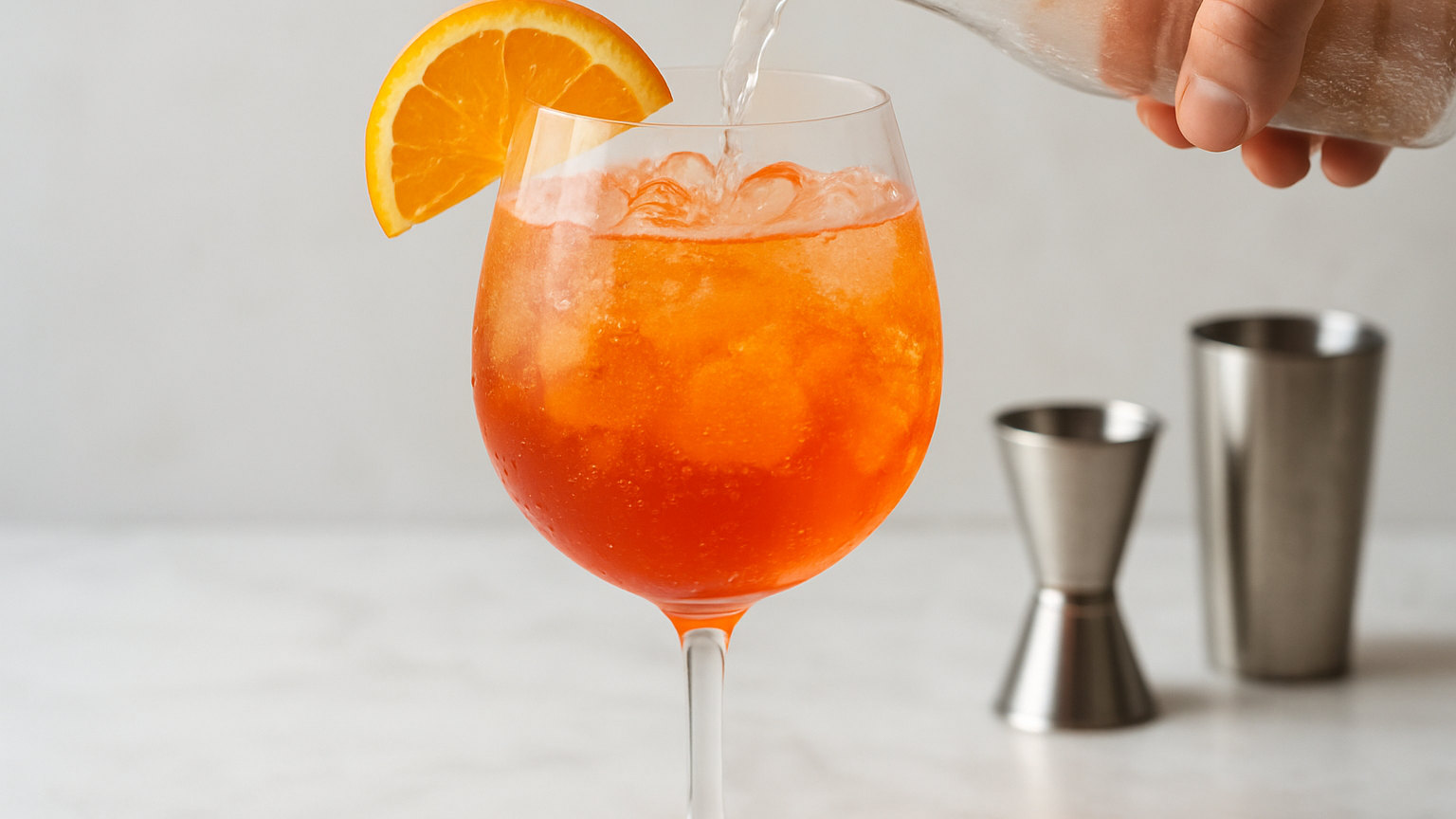
The spritz is among the simplest drinks there is and one of the most commonly served badly. The ratio is straightforward. What goes wrong is the ice, the order and the temperature.
What is the ratio?
Three parts sparkling wine, two parts bitter aperitivo, one part soda water.
In practice that is 90ml prosecco, 60ml bitter liqueur and 30ml soda in a large wine glass filled with ice. Garnish with a slice of orange.
Which sparkling wine?
A dry prosecco is traditional and correct. Cava works well, and any dry sparkling wine will do.
Avoid anything expensive, since the bitter liqueur dominates completely and the finer character of a good champagne is entirely lost. Avoid anything sweet, since the aperitivo already carries sugar.
Which bitter component?
A red or orange bitter aperitivo liqueur, typically 11 to 15 per cent. The lighter orange styles give the familiar mild version; a fuller red bitter gives a considerably more bitter and more interesting drink.
Swapping in a stronger bitter liqueur at around 25 per cent changes both the flavour and the strength noticeably, so adjust the measure if you do.
What order should it go in?
- Fill a large wine glass with ice, right to the top.
- Add the bitter liqueur.
- Add the sparkling wine, poured down the side of a tilted glass.
- Add the soda.
- Lift once gently with a bar spoon. Do not stir.
- Garnish with a slice of orange.
Why does the order matter?
Because the liqueur is denser than the wine. Adding it first means one gentle lift combines everything, where adding it last leaves it sitting at the bottom and requires stirring that kills the bubbles.
Hard stirring is the commonest fault. One lift from the bottom is enough.
Why fill the glass with ice?
Because a full glass of ice reaches equilibrium quickly and then melts slowly. Three cubes have to melt almost entirely to chill the drink, which dilutes it far more.
Everything should also be cold before it goes in. Warm prosecco hitting ice loses its carbonation immediately.
How strong is it?
Around 1.3 units with these proportions, which is genuinely low and is much of the appeal. It is a drink designed for a long early evening rather than a short strong one.
Using a stronger bitter liqueur or a heavier pour takes that closer to 2 units, which is still modest.
What variations work?
- Rhubarb or grapefruit bitter liqueurs in place of the standard orange.
- White vermouth spritz, with dry vermouth instead of the aperitivo.
- Sherry spritz, using a dry fino, which is drier and more savoury.
- Alcohol-free bitter aperitivo with sparkling water and a splash of non-alcoholic sparkling wine.
Can it be batched?
Partly. Pre-mix the bitter liqueur into a jug, keep it cold, and add wine and soda per glass. Batching the sparkling wine in advance means flat spritzes within twenty minutes.
What glass should you use?
A large wine glass, which is the standard Italian serve. It holds enough ice to keep the drink cold and the wide bowl carries the orange aroma to you as you drink.
A flute is the wrong shape entirely, since there is no room for ice and the drink warms within minutes.
Why has it become so popular?
Because it is low in strength, quick to make, requires no equipment and suits early evening drinking. It is one of very few cocktails that can be produced in ten seconds without a shaker.
What if it tastes too bitter?
Shift the ratio towards the wine, or use a lighter orange aperitivo rather than a red bitter one. Adding soda dilutes the bitterness without adding sweetness.
Can you make it with still wine?
You can, and it becomes a different drink closer to a wine and bitter over ice. The carbonation is doing real work in a spritz, lifting the bitterness and keeping it refreshing.
If you only have still wine, add more soda to compensate and accept that it will be softer.


