
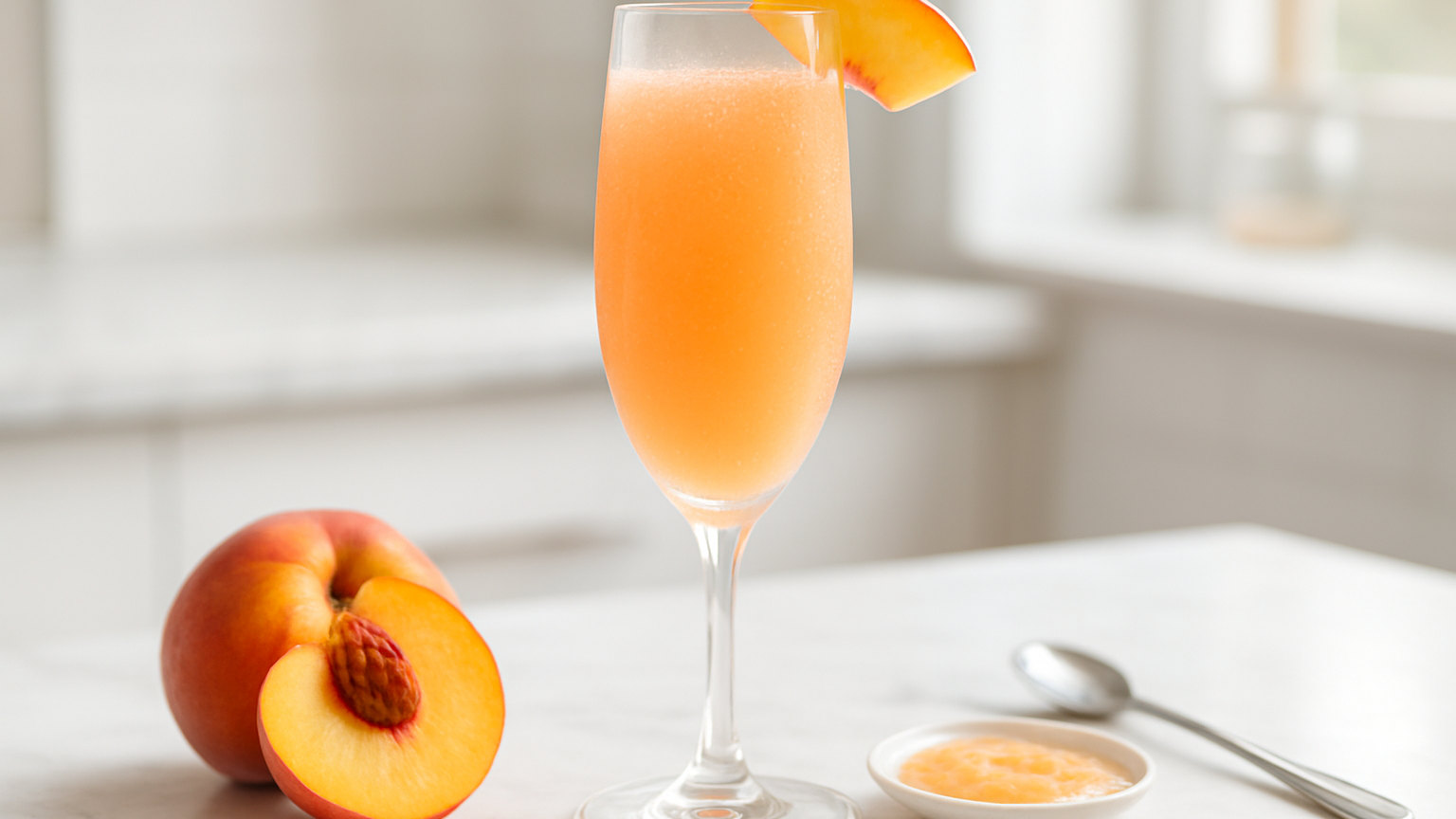
The bellini has two ingredients, so the quality of one of them determines everything. Made with fresh white peach it is excellent; made with bottled peach nectar it is a sweet fizzy drink with little to recommend it.
What is the recipe?
Two parts prosecco to one part white peach purée. In practice 100ml prosecco and 50ml purée in a chilled flute or wine glass.
Pour the purée in first, then add the prosecco slowly and stir once gently with a bar spoon.
Why white peach?
Because it is more delicate, more floral and less acidic than yellow peach, which suits the drink better. It is also what the original used.
Yellow peaches work and give a stronger, sweeter, more obviously peachy drink. Neither is wrong and the white version is the more elegant.
How do you make the purée?
Blend ripe peeled peaches with a little lemon juice and a small amount of sugar syrup if they need it. Pass through a sieve if you want it smooth.
Peeling is easier if you score a cross in the base, cover with boiling water for thirty seconds and refresh in cold. The skins slip off.
What if peaches are out of season?
Frozen peaches, blended from frozen, work well and are usually better than out-of-season fresh ones. Good quality bottled purée is the next option.
Peach nectar from a carton is thin and heavily sweetened and gives a poor result, which is what most disappointing bellinis are made with.
Which sparkling wine?
Dry prosecco, traditionally and correctly. It is soft, fruity and inexpensive, and its character suits peach.
Champagne is wasted here, since the purée covers most of its complexity. Cava works and is drier, which some prefer.
What are the related drinks?
- Rossini. Strawberry purée.
- Puccini. Fresh mandarin juice.
- Tintoretto. Pomegranate juice.
- Mimosa. Orange juice, in a slightly different ratio.
- Kir royale. Blackcurrant liqueur rather than fruit.
All follow the same principle: a small quantity of fruit against a larger quantity of dry sparkling wine.
Should it be shaken?
No. Shaking anything sparkling is a mistake, and the purée is thin enough to combine with a single stir.
If the purée is thick, loosen it with a little cold water or lemon juice before adding the wine rather than stirring harder.
How strong is it?
Around 1.2 units, which is genuinely low and part of why it suits daytime drinking. Two across a brunch is comparable to a single glass of wine.
Can it be batched?
The purée can be made hours ahead and kept cold. The wine goes in per glass, since a batched bellini is flat within twenty minutes.
For a group, set out a jug of purée and a bottle in an ice bucket and let people build their own.
What glass should you use?
A flute or a small wine glass, chilled. The original was served in a small tumbler, and any of the three works provided it is cold.
A warm glass drives the carbonation out immediately, which is the commonest reason a bellini goes flat before it is finished.
Is it worth making from scratch?
Yes, and it is the clearest example in this section of one ingredient determining the whole drink. The difference between fresh purée and bottled nectar is larger than the difference between two sparkling wines.
How much purée does a peach give?
Roughly 60 to 80ml per medium peach once peeled and blended, so three or four peaches cover a bottle of prosecco. Ripe fruit gives more and blends more smoothly.
How cold should everything be?
The purée from the fridge and the prosecco properly chilled, around 6 to 8 degrees. Warm sparkling wine foams over as it meets the purée and loses its carbonation within a minute or two.
Chilling the glass as well buys several more minutes of a lively drink.
Where does the drink come from?
It was created in Venice in the 1940s at Harry’s Bar, and named for the pink tones in a Bellini painting. White peaches were seasonal and local, which is why the original is built around them rather than any other fruit.
That seasonality is also why so many versions use bottled purée, and why the drink is at its best in late summer when good peaches are actually available.


