
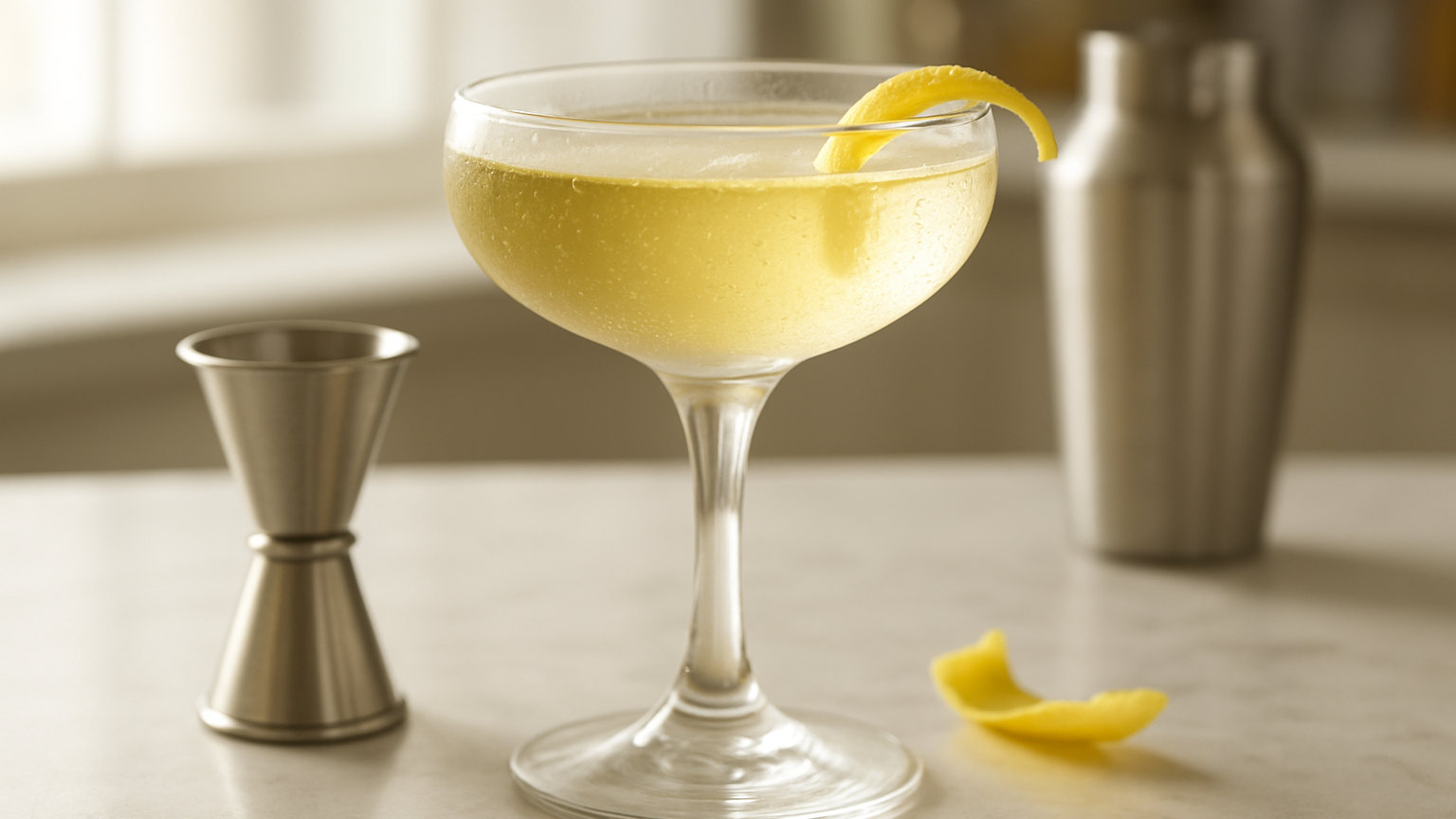
The French 75 is a gin sour with sparkling wine in place of the dilution. It arrives looking like a celebratory flute of something light, and it is considerably stronger than that suggests.
What is the recipe?
- 30ml gin
- 15ml fresh lemon juice
- 10ml sugar syrup
- 90ml dry sparkling wine
Shake the gin, lemon and syrup with ice. Strain into a chilled flute. Top slowly with sparkling wine. Garnish with a long lemon twist.
Why shake the base first?
Because gin, lemon and sugar need chilling and combining, and none of that can happen once carbonated wine is in the glass.
Shake, strain, then top. Shaking anything sparkling would lose all the carbonation and is one of the few genuine mistakes available here.
How strong is it?
Around 2.2 units, comparable to a large glass of wine and considerably more than a mimosa at 0.9 or a bellini at 1.2.
The name is said to refer to a French field gun, which gives a fair indication of the intent. Two is a reasonable start to an evening rather than a warm-up.
Gin or cognac?
Gin is the modern standard. Some early recipes specify cognac, and the cognac version is richer and rounder.
Both are defensible. Gin gives a brighter, more citrus-forward drink that most people expect from the name.
Which gin should you use?
A London dry at 40 per cent or above. There is lemon, sugar and sparkling wine here, so a delicate contemporary gin disappears entirely.
Which sparkling wine?
Dry and inexpensive. The gin, lemon and sugar cover most of what an expensive champagne offers, so cava, crémant or dry prosecco are all sensible.
Why a flute?
Because it preserves carbonation and it is the traditional serve. A coupe is also common and looks better, at the cost of the bubbles going faster.
Either should be chilled, since a warm glass costs more carbonation than any other single factor.
How much lemon should you use?
Fifteen millilitres, roughly half a lemon. It is doing structural work against the sugar and the wine, and a version without enough tastes flat and sweet.
Squeeze it fresh, since bottled lemon juice is noticeably duller.
Can you batch it?
The gin, lemon and syrup batch well and keep cold for a day. Shake or simply pour the chilled mix into flutes and top with wine per glass.
For a group, that reduces each drink to a pour and a top, which is practical for a party.
What are the related drinks?
- French 76. Vodka instead of gin.
- French 95. Bourbon instead of gin.
- Airmail. Rum, lime and honey topped with sparkling wine.
- Old Cuban. Aged rum, lime and mint topped with sparkling wine.
What ruins it?
Bottled lemon juice and shaking after the wine has gone in. The first tastes flat, the second removes all the carbonation.
How much syrup should you use?
Ten millilitres, adjusted to the sparkling wine. A brut wine takes a little more; anything off-dry needs less or the drink becomes sweet.
Where does the name come from?
A French field gun of the First World War, on the basis that the drink hit with comparable force. At 2.2 units in a flute that is a fair description.
Should it be served in a flute or a coupe?
Both are used. A flute preserves the bubbles longer and a coupe shows the drink better and warms faster.
Chill either one, since a warm glass costs more carbonation than any other single factor.
Is it worth using good gin?
A decent London dry rather than an expensive one. The lemon, sugar and sparkling wine cover a good deal, so mid-range at 40 to 45 per cent is exactly right.
Can you make it with vodka?
That is a French 76, and it is a recognised variation rather than a mistake. Bourbon makes a French 95, and both follow the identical method.
The gin version is the one people expect from the name.


