
Drinks built on sparkling wine look celebratory and modest. Some are, and a few are considerably stronger than the glass suggests, which is worth knowing before a third one.
How do you make a French 75?
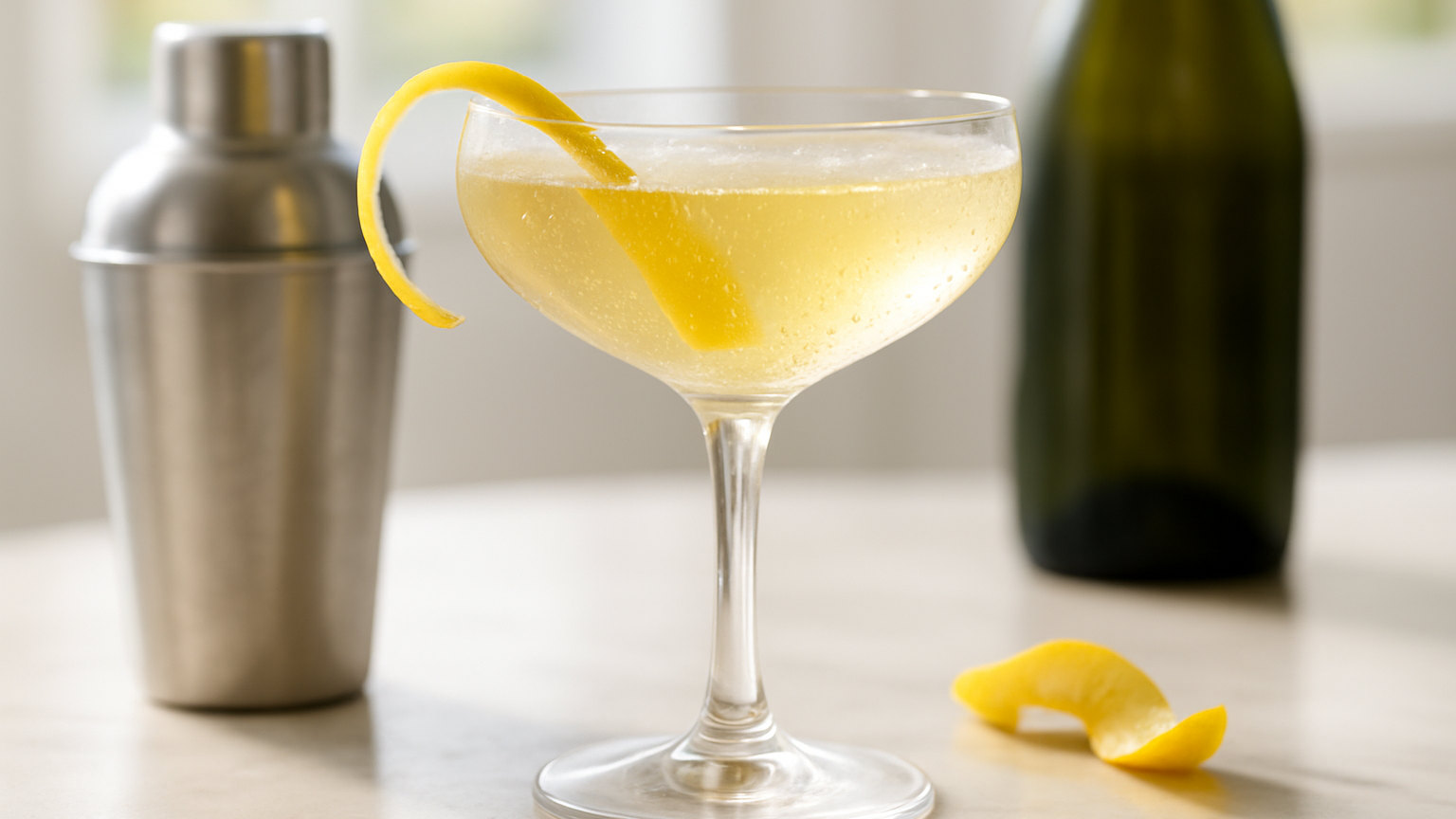
Thirty millilitres gin, 15ml fresh lemon juice, 10ml sugar syrup, shaken with ice and strained into a chilled flute, then topped with around 90ml of dry sparkling wine.
It is a gin sour with champagne in place of the dilution, which explains both the balance and the strength.
Why shake the base first?
Because gin, lemon and sugar need chilling and combining, and none of that can be done once the wine is in. Shaking anything carbonated is not an option.
Shake, strain, then top. That order is what the drink depends on.
How strong is it?
Around 2.2 units, which is comparable to a large glass of wine and considerably more than a mimosa. The name is said to refer to a French field gun, which gives a fair indication.
It tastes light and it is not. Two is a reasonable evening’s start rather than a warm-up.
How do you make a champagne cocktail?
Place a sugar cube in a flute, soak it with three or four dashes of aromatic bitters, add 10ml of brandy if you like, and top with dry sparkling wine.
The cube dissolves slowly, so the drink changes as you work through it, becoming gradually sweeter. That is the intended effect rather than a flaw.
What are the other classics?
- Death in the afternoon. Absinthe topped with sparkling wine. Very strong.
- Airmail. Rum, lime, honey syrup and sparkling wine.
- Seelbach. Bourbon, orange liqueur, a lot of bitters, topped with wine.
- Old Cuban. Aged rum, lime, mint and sparkling wine.
- Sbagliato. A negroni with sparkling wine instead of gin.
Which sparkling wine should you use?
Dry, and inexpensive. In every drink above the wine is a component rather than the subject, and its finer qualities are covered by gin, bitters or citrus.
Cava, crémant and dry prosecco all work. Save any good champagne for drinking on its own.
Why does the wine always go in last?
Because carbonation begins escaping the moment it is poured, and every subsequent action loses more. Adding it last and not stirring preserves as much as possible.
Pour it slowly down the side of a tilted glass rather than into the centre.
What is the sbagliato?
A negroni made with sparkling wine in place of the gin, in equal parts with sweet vermouth and bitter aperitivo. The name means mistaken, and the story is that it was created by accident.
It is around 1.6 units against a negroni’s 3, which makes it a genuinely useful lighter alternative rather than a lesser version.
What ruins these drinks?
Warm wine, warm glasses and stirring. All three lose carbonation, and a flat sparkling cocktail is noticeably worse than a flat still one.
How much wine does each use?
Around 90 to 100ml, so a bottle covers seven or eight drinks. That is worth knowing when buying for a group, since these use less wine per glass than a straight pour.
Which should you make first?
The French 75, since it demonstrates the structure clearly and uses ingredients most home bars already have. The champagne cocktail is the easier one and needs bitters and sugar cubes.
Should the flute be chilled?
Always. A warm glass costs more carbonation than any other single factor, and a flute from the fridge keeps a sparkling cocktail lively considerably longer.
What do they have in common?
The wine is a component rather than the subject, it goes in last, and nothing is stirred afterwards. Those three rules cover every drink in this article.
Do they need good gin or brandy?
Decent rather than expensive. In a French 75 the gin is one of four components and the wine covers a good deal of it, so a mid-range London dry at 40 to 45 per cent is ideal.


