
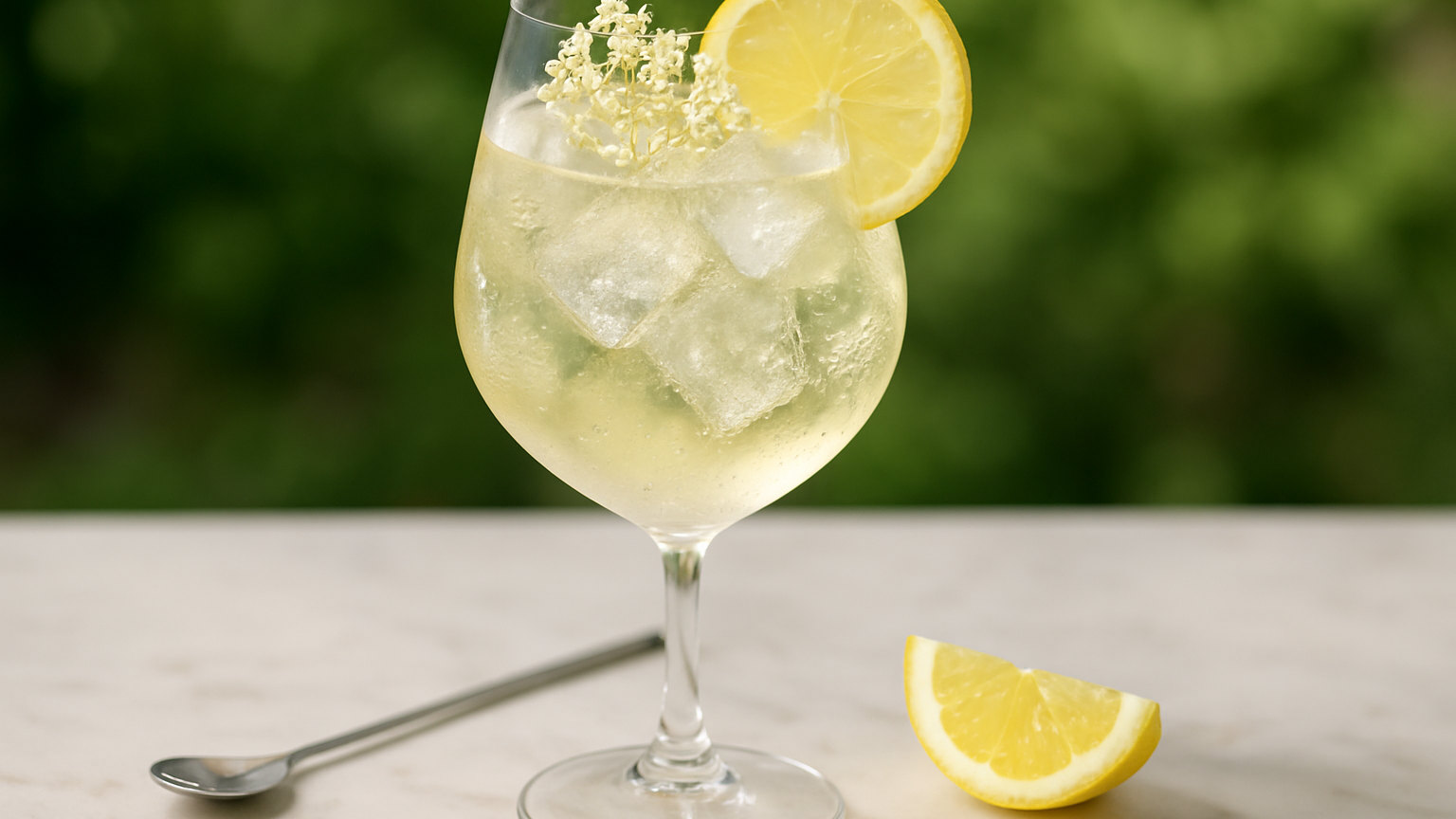
An elderflower spritz is elderflower, sparkling wine and soda over ice. It is one of the gentlest cocktails there is, and its main risk is tipping into something that tastes like a soft drink.
What is the recipe?
- 30ml elderflower liqueur, or 20ml cordial
- 100ml dry prosecco
- 40ml soda water
- 15ml fresh lemon juice
- A lemon slice and a sprig of mint
Fill a large wine glass with ice. Add the elderflower and lemon, then the prosecco poured down the side, then the soda. Lift once gently and garnish.
Liqueur or cordial?
Liqueur, at around 20 per cent, adds a little strength and a rounder, more floral character. Cordial is non-alcoholic, sweeter and considerably cheaper.
With cordial use less, around 20ml, since it carries more sugar per millilitre. It also makes the drink lighter, at around 1.1 units rather than 1.4.
Why is the lemon essential?
Because elderflower is sweet and floral with almost no acidity, and prosecco provides only a little. Without lemon the drink reads as sweetened fizzy water.
Fifteen millilitres is enough to give it structure. It is the difference between a cocktail and a cordial.
What if it still tastes too sweet?
Reduce the elderflower before anything else, then increase the soda. Adding more lemon works and eventually makes the drink sharp rather than balanced.
Can you make elderflower cordial?
Yes, in season, from fresh elderflower heads steeped with sugar, water, lemon and citric acid. It takes a day and produces a far better result than most bought versions.
Pick only from plants you can identify with certainty, since several hedgerow plants resemble elder and some are toxic. Buying cordial is the sensible option for anyone unsure.
What herbs work with it?
Mint, basil and lemon balm all suit elderflower. Slap the sprig once between your palms and add it whole rather than muddling, since crushed herbs turn bitter.
Cucumber ribbons also work and make a very light summer version.
How strong is it?
Around 1.4 units with liqueur, or 1.1 with cordial. Both are among the lowest of any cocktail, which is much of the point.
Is there an alcohol-free version?
A good one. Elderflower cordial, sparkling water and lemon over ice is genuinely refreshing rather than a compromise, and adding a non-alcoholic sparkling wine gets it closer still.
Put it out alongside the alcoholic version rather than producing it on request.
Can you batch it?
Mix the elderflower and lemon ahead and keep it cold. Add prosecco and soda per glass, since anything carbonated goes flat quickly.
What glass should you use?
A large wine glass filled with ice. The wide bowl carries the floral aroma, which is most of what the drink offers, and a flute wastes it entirely.
How does it compare to a hugo?
They are close relatives. A hugo adds mint and lime and uses more prosecco; this version leads with lemon and keeps the elderflower more prominent.
Both are floral, low in strength and built on the same idea, and the difference is largely which aromatic you want in front.
When should you serve it?
Early evening or a warm afternoon. At around 1.4 units it is one of the lightest cocktails available, which suits a long occasion.
What ruins it?
Leaving out the lemon, and using too much elderflower. Together they produce something that tastes like sweetened sparkling water rather than a cocktail.
Can you use fresh elderflower?
In season, yes, steeped briefly in the prosecco or made into cordial first. Fresh heads give a cleaner, less sugary result than most bought cordials.
Identify the plant with certainty before picking, since several hedgerow plants resemble elder and some are toxic.
Can you batch the base?
Yes. Mix the elderflower and lemon juice in a bottle and keep it cold, then add prosecco and soda per glass. That reduces each drink to two pours.
What glass should you use?
A large wine glass filled with ice, which is the standard spritz serve everywhere it is drunk.


