
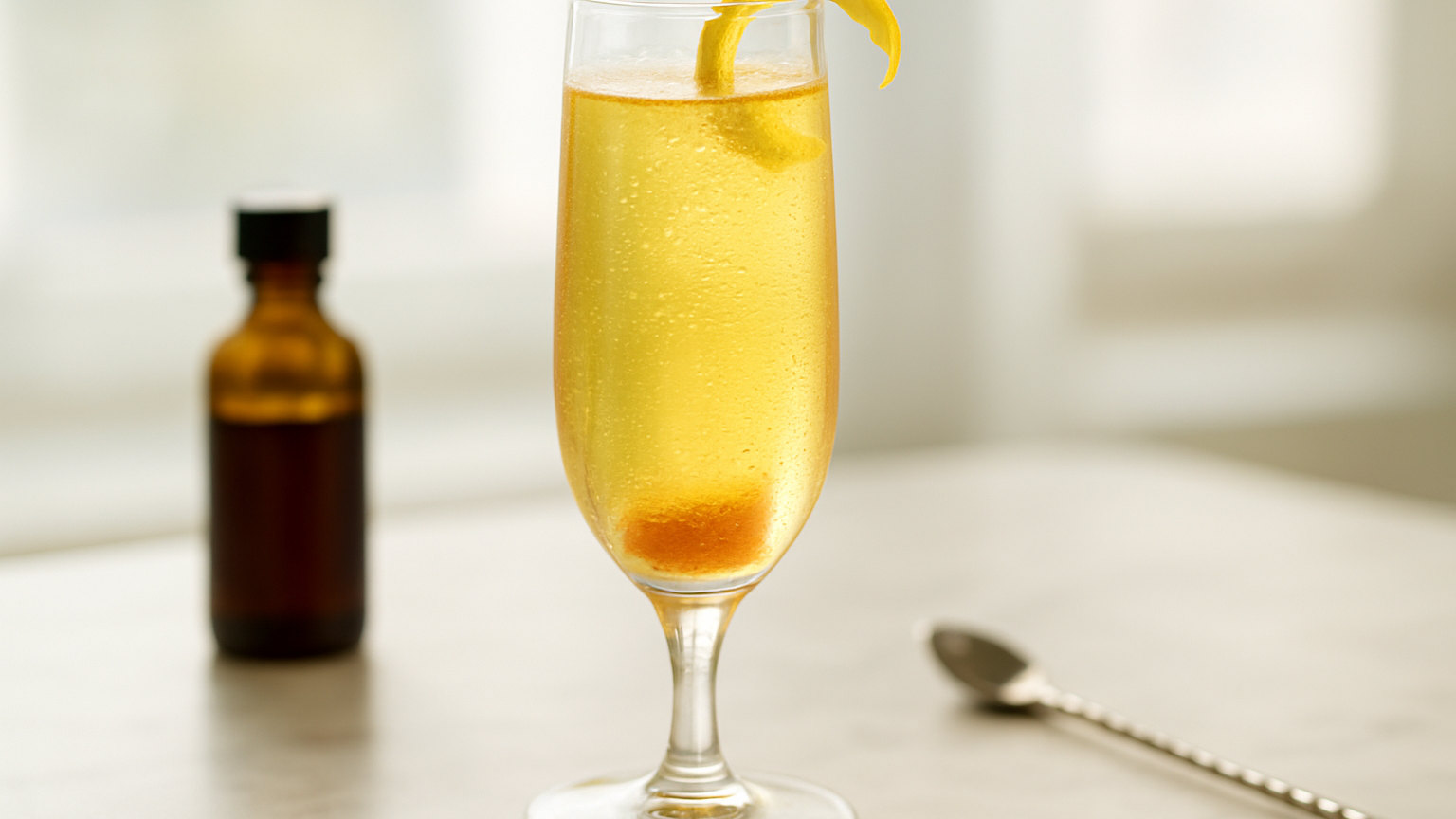
The champagne cocktail is one of the oldest recipes still in circulation, dating from the mid nineteenth century. It has three components and one of them behaves differently from anything else in cocktails.
What is the recipe?
- 1 sugar cube
- 3 to 4 dashes aromatic bitters
- 10ml brandy, optional
- 120ml dry sparkling wine
- A lemon twist
Place the sugar cube in a chilled flute and soak it with the bitters. Add the brandy if using. Top slowly with sparkling wine and garnish with an expressed lemon twist.
Why a sugar cube rather than syrup?
Because the cube dissolves slowly, which is the defining feature of the drink. It sits at the bottom releasing sugar and bitters gradually, so the last mouthfuls are sweeter and more aromatic than the first.
Syrup would dissolve immediately and produce a uniform drink, which is a different and less interesting thing.
Does it fizz?
Yes, and that is part of the appeal. The cube provides nucleation points for carbon dioxide, so a steady stream of bubbles rises from it throughout.
How many dashes of bitters?
Three or four, enough to soak the cube thoroughly and turn it brown. The bitters are what turn sweetened sparkling wine into a cocktail.
Aromatic bitters are standard. Peychaud style gives a lighter, more floral version.
Should you add brandy?
It is optional and common. Ten millilitres adds weight and warmth without changing the drink fundamentally, and it raises the strength noticeably.
The original recipes do not include it. Both versions are legitimate.
Which sparkling wine?
Dry, and it need not be champagne despite the name. Cava, crémant and dry prosecco all work.
Since sugar and bitters are being added, an expensive champagne is largely wasted. Something dry and decent is right.
Why must it be dry?
Because a sugar cube is already going in. An off-dry sparkling wine plus a cube produces something noticeably sweet, and the balance depends on starting dry.
How should you pour it?
Slowly, down the side of a tilted glass. Pouring onto the cube directly causes it to foam up over the rim.
Chill the glass first, since a warm flute drives out the carbonation immediately.
How strong is it?
Around 1.5 units without brandy, or 1.9 with. It is a light drink that looks celebratory, which is much of why it has survived.
What are the related drinks?
- French 75. Gin, lemon and sugar topped with sparkling wine.
- Death in the afternoon. Absinthe topped with sparkling wine.
- Seelbach. Bourbon, orange liqueur and a great many bitters.
- Kir royale. Cassis instead of sugar and bitters.
Can you batch it?
Not really. Prepare the cubes with bitters in the glasses ahead, then pour the wine to order. That is the practical approach for a party and it takes seconds per glass.
What ruins it?
An off-dry sparkling wine, a warm glass and too few dashes of bitters. The last leaves it tasting simply of sweetened wine.
Should you eat the cube at the end?
It will usually have dissolved by then. If any remains it is soaked in bitters and sparkling wine, which is a matter of taste rather than a rule.
What glass should you use?
A chilled flute, which shows the bubbles rising from the cube. A coupe works and loses the carbonation faster.
How long does it take to develop?
The cube dissolves over five to ten minutes, so the drink is noticeably sweeter and more aromatic at the end than at the start. That progression is the point rather than a flaw.
It is a drink to sip slowly, which is unusual for something served in a flute.
Why has it survived so long?
Because it is simple, it looks celebratory and the slowly dissolving cube gives it something no other sparkling cocktail has. It was published in the earliest cocktail books and has barely changed.
Which bitters work best?
Aromatic bitters are standard and give the warm spiced character the drink is known for. Peychaud style gives a lighter, more floral and slightly aniseed version.
Both keep for years, so having each is not a significant purchase.


