
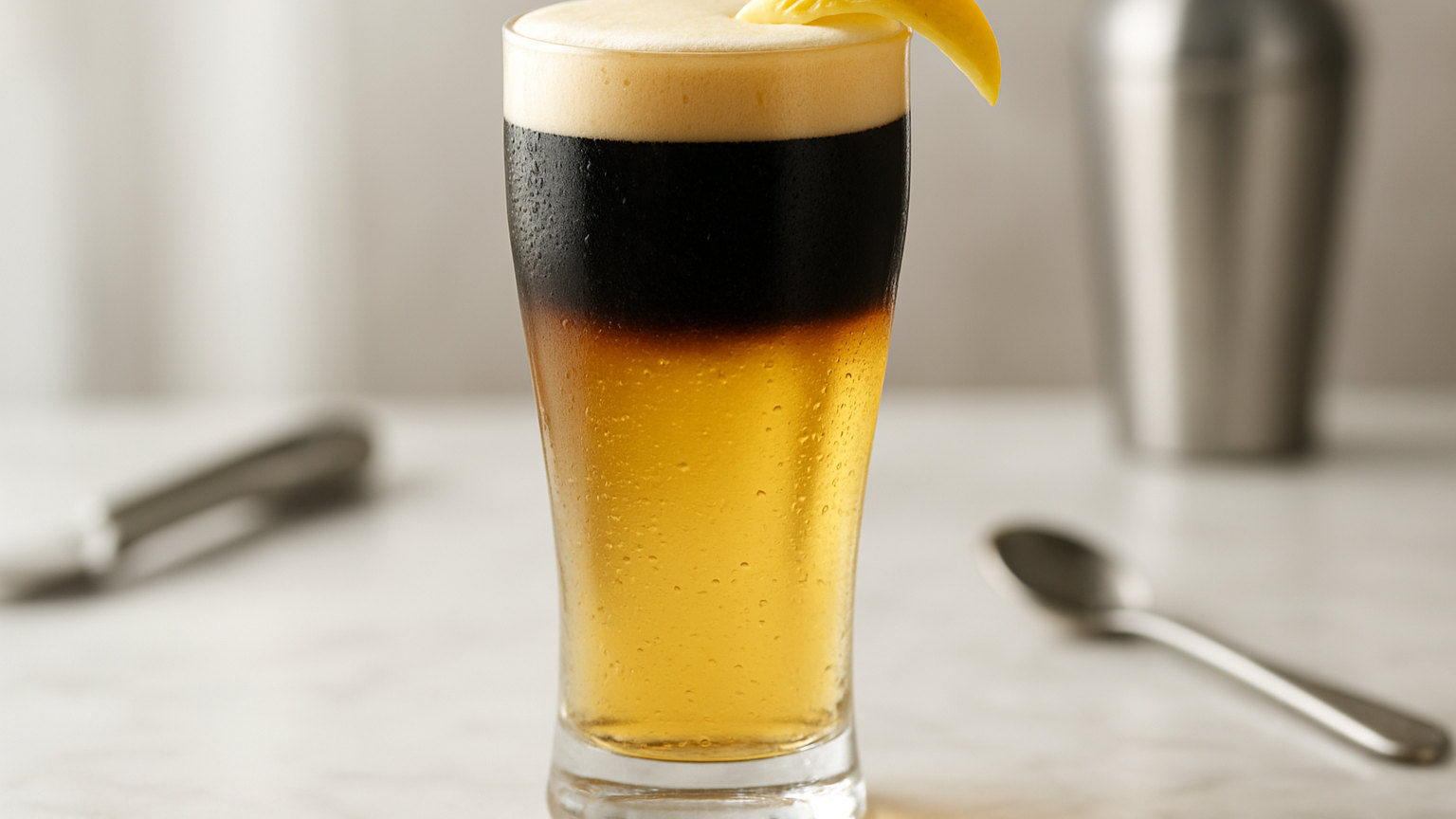
A black velvet is stout and sparkling wine in equal parts. The combination sounds unlikely and works because dry stout is roasted and faintly bitter while sparkling wine is acidic and light, and each cuts the other.
What is the recipe?
- 125ml dry Irish stout
- 125ml dry sparkling wine
Pour the sparkling wine into a tall glass first. Float the stout gently over the back of a bar spoon so it layers on top. Serve without stirring.
Why does the stout float?
Because dry stout is slightly less dense than sparkling wine, largely due to the nitrogen and carbon dioxide dissolved in it and the foam it carries.
Poured gently over a spoon, it settles as a dark layer above the pale wine. The effect is striking and it lasts several minutes before merging.
How do you pour it properly?
Hold a bar spoon just above the surface, curved side up, and pour the stout slowly over the back of it. Pouring straight in sends it through and mixes the two immediately.
A stout from a can with a widget gives a firmer head and layers more reliably than a bottled one.
Which stout should you use?
A dry Irish stout. Its roasted bitterness and low sweetness are what balance the wine.
A sweet or milk stout makes a cloying drink, and an imperial stout is far too heavy. This is a case where the standard everyday option is the correct one.
Which sparkling wine?
Dry and inexpensive. Champagne is traditional and entirely wasted, since the stout covers its character completely.
Cava or dry prosecco works perfectly well, and a dry sparkling wine matters more than an expensive one.
Why do they work together?
Because the roast character in the stout meets the acidity and carbonation in the wine. The wine lightens the stout and cuts its richness; the stout gives the wine body and depth it lacks alone.
It is the same logic behind pairing dry stout with oysters, where roast and minerality meet.
How strong is it?
Around 2.4 units for a 250ml serve, which is comparable to a pint of beer. Both components are modest in strength and the volume adds up.
Where does it come from?
London, in 1861, created at a gentlemen’s club to mark the death of Prince Albert. The name refers to the mourning colour, which is also why the stout sits on top.
What is a poor man’s black velvet?
Stout with cider instead of sparkling wine, in the same proportions. It is considerably cheaper and it works on the same principle, with the cider providing acidity.
It is worth trying and many people prefer it.
Can you batch it?
No. Both components are carbonated and the layering happens per glass. Pouring two bottles into a jug produces a flat brown drink within minutes.
What glass should you use?
A tall straight glass, so the layers are visible. A pint glass works and a narrower one shows the division more clearly.
Does the order of pouring matter?
Entirely. Sparkling wine first, stout floated on top. Pouring stout first and adding wine mixes the two immediately and loses the layering.
What ruins it?
A sweet stout, a warm glass and pouring too fast. The first makes it cloying and the other two collapse the layer.
Does the stout need to be from a can?
No, and a widget can helps. The nitrogen gives a firmer, creamier head that floats more reliably than a bottled stout does.
Bottled dry stout works with a slower pour over the spoon.
Is it worth making?
Once, certainly. It is one of the few cocktails combining two fermented drinks rather than a spirit and a mixer, and the roast against acidity is genuinely interesting.
The cider version is cheaper and arguably as good, which makes it the easier one to try repeatedly.
What proportion should you use?
Equal parts is standard and worth adjusting. More wine gives a lighter, sharper drink; more stout gives a richer one where the roast dominates.
Half and half is the version the drink is known by.


